
My Uncle Don had a different name for everyone.
I had no idea where he came up with all these labels. They were often colourful, and clearly he thought they were funny. Except nobody was really laughing.
To him, someone from South Asia was a Paki, an aboriginal person was, obviously, an Indian; a guy from Ukraine was a Bohunk; a Frenchman, a Frog. Germans were Krauts, and a Gook was someone from Southeast Asia, a name, no doubt, planted in his head from a racist epithet thrown at the Vietnamese. You get the picture.
But looking back—this was the 1970’s we’re talking here—I don’t think there was hate behind the labels he gave those from other countries, or those of other religions or other customs. It was mostly his way of making distinctions, as if a person’s race, country of origin, or belief was everything you needed to know about that person. Slurs like these took the whole person and reduced him or her to a simple, memorable epithet. Easy. And. Efficient.
The 1970’s were a time when people also used words, even in polite company, like “homos,” or “kikes” referring to gay men and Jewish people. Slurs casually hurled at entire groups of people allowed you to put them in a box, to classify them, set them apart with a label that curtailed further thought. Many times these labels would be flung without understanding that the person who was the subject of the label might feel lesser, or unworthy of respect. I don’t think my Uncle Don was a racist, but looking back now, he sure sounded like one. If he was told his slurs were in poor taste, he’d probably throw up his hands and say, “Look, I’m no racist, but a dark guy is probably from Pakistan so he’s a Paki,” or something equally clueless.
Uncle Don, like many working-class men of his generation, made caricatures of people based on their race or nationality or religion. He was an industrial plumber and lived in Winnipeg, a melting pot of a city where ribbons of steel converged in vast railroad yards and the trains dumped immigrants from all corners of the earth into the centre of Canada’s heartland. There were Scots and Irishmen, Slavs, Asians, Blacks, and numerous pockets of Canada’s indigenous people.
Hearing the use of the term “anti-vaxxer” today gives me the same gut reaction I had when listening to Don wax on about people who were visibly different from him. “Anti-vaxx”, while in vogue today and uttered without any form of introspection or understanding, is clearly a term of laziness, a mostly defensive maneuver to shield a person from having to engage with another’s ideas. In short, the term is a quick way to mark that person as morally deficient, selfish, and contemptible.
Scorning “anti-vaxxers” has become a way to signal one’s inherent righteousness and correctness, telling the world in a single word that there are those of us who care about others and untrustworthy people who don’t. In a nutshell, the word says: “Imagine how dumb you have to be to seriously question the safety or usefulness of injectable pharmaceutical products that are the most innovative health technology in the history of humankind?” How dumb indeed.
As a straight, white guy, I don’t think anyone has ever hurled a slur at me. Until Covid.
The first time someone called me an “anti-vaxxer” was in 2021, after the Pfizer mRNA Covid vaccine was approved. This was before the Pfizer trial was published and everyone in my office at the University rushed to get their shots. I waited.
I knew the likelihood of me, a healthy 58-year-old guy, developing complications and dying from Covid were miniscule. I was on record for seriously questioning previous government policies around the influenza vaccine which—because I read the company’s own studies—I determined were next to useless, and coercive to healthcare workers. I believed in the precautionary principle, and Covid didn’t scare me one bit. When asked by a colleague about why I was not yet vaccinated, I told him, “I’m waiting for the Pfizer trial to be published because I’m still wondering if it shows any evidence of long-term harm.”
“Oh, Alan, you’re one of those. You’re an anti-vaxxer.”
Pretty innocent right? I worked in a small branch in the University’s Faculty of Medicine that analyzed clinical trials and advised physicians and pharmacists on drug evidence. We were all about evidence. In our world, before Covid, there were no “pro” or “anti” camps when it came to drugs. Until then….
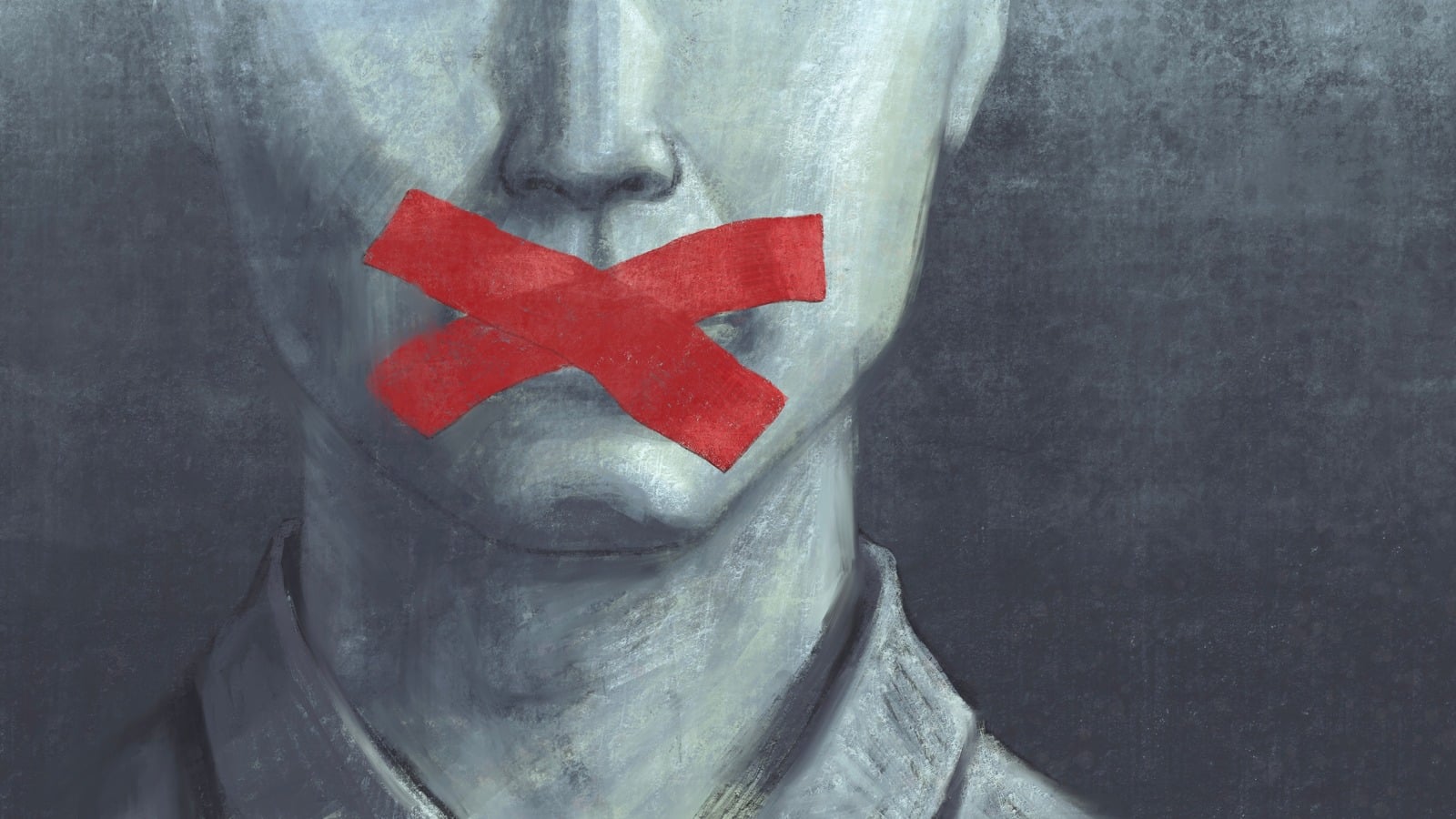
Clearly, “anti-vaxxer” is not an identity-based slur in the historical sense, but there are enough similarities to conclude it’s meant to be degrading nonetheless. Drilling down a bit, the term does a few things. It:
- Treats a belief spectrum as a fixed identity.
- Erases distinctions between skepticism, selectivity, and rejection.
- Encourages moral contempt rather than intellectual engagement.
In short, it behaves like a heresy label.
It also acts as an absolute term, which is black and white. You can’t be half an “anti-vaxxer,” like someone who might think some vaccines are okay but not vaccine mandates. Or someone who believes in basic childhood immunizations but wonders whether 72 vaccines before the age of 12 is wise health policy. Or a pregnant woman who is unsure whether getting injected with a substance she doesn’t know anything about might harm their unborn child. No. Question any of these, and someone slaps “anti-vaxx” on your forehead. Not quite the equivalent of a racial or ethnic slur in terms of harm—it is equivalent in function.
During Covid If you think calling someone an “anti-vaxxer” or a “tinfoil hat-wearer” settles the argument, congratulations: you’ve carried out the intellectual equivalent of a temper tantrum. But here’s something I learned by listening to Uncle Don—insulting someone doesn’t prove a claim right; it just proves that you’re lazy.
Dipping back into the depths of history, we’ve seen this rodeo before. Galileo got called a heretic for suggesting that the Earth wasn’t the center of the universe. Semmelweis was treated like a madman for insisting that doctors wash their hands before attending births. Researchers Barry Marshall and Robin Warren said that the bacterium Helicobacter pylori (H. pylori) causes most cases of gastritis and peptic ulcers and people thought they were nutjobs. Those nutjobs eventually revolutionized gastroenterology and won a Nobel Prize in Medicine.
In each case, the problem wasn’t the science; it was the people defending consensus like it was holy Scripture, punishing anyone who dared question it.
Fast forward to today: the same instinct survives, repackaged in social media posts, think pieces, and snarky tweets. Ask a legitimate question about vaccines, or express concern about 5G towers, and suddenly your intelligence, morals, and judgment are under fire. The target isn’t the claim—it’s you, the asker. Meanwhile, many among the unwashed masses take legitimate disagreement and label it as a moral failure.
Karl Popper argued that scientific knowledge advances by conjecture and refutation—by exposing claims to criticism, not by slapping warning labels on people who ask questions. From a Popperian perspective, not challenging so-called scientific assertions is itself anti-science. Calling someone an “anti-vaxxer” is basically a social immunization strategy: it protects your theory from scrutiny by discrediting the critic instead of confronting the claim. That’s exactly what Popper warned against.
Now, I know some of you will say, “But public health emergencies are so dire we have to use strong language.”
Maybe.
But come on: do we have to be so condescending about it? Especially when this sort of moralistic name-calling is less about evidence and more about virtue signalling—a way to demonstrate your moral superiority, and how “correct” you are.
The term “anti-vaxxer” is a finely-wrought barometer of rhetorical laziness. It lumps together selective skeptics, cautious parents, ethically concerned citizens, or just people who just want more data—then declares all of them intellectually inferior.
Where else do you see these slurs? You don’t have to look too closely to see the pattern repeated across a range of domains such as wireless radiation, chemtrails, nutrition, human-induced climate change—any question that intersects with complexity, uncertainty, and social anxiety provokes the same sort of knee-jerk ridicule. It’s easier to mock than to think. Easier to call someone dumb than to unpack uncertainty, weigh evidence, or admit ignorance.
Wouldn’t it be better if our society rewarded people who were able to show off their intellectual humility instead of their ability to moralize, scold, and slap labels?
So what’s the takeaway? Science—and society—benefit when people can ask questions without fearing character assassination. Real inquiry demands curiosity and courage. We need a much higher willingness to tolerate ambiguity, withstand criticism, and focus on the idea, not the person.
If Uncle Don were still alive, I would ask him why he felt an urge to slap a label on a person from a different country or ethnic origin. Maybe instead of pointing out the person’s differences, he could use the opportunity to find out what he has in common with a Paki, or an Indian.
I think it’s time we dispense with the slur “anti-vaxxer,” or any other epithet that is used to shut down inquiry instead of open it up. Using an ad hominem commentary is the weakest form of criticism. When you use a slur, it says more about you and your biases and prejudices than it does about the person you are slurring.
Join the Conversation
Published under a Creative Commons Attribution 4.0 International License
For reprints, please set the canonical link back to the original Brownstone Institute Article and Author.