In my day, being young was dominated by three basics: sex, drugs, and rock ’n’ roll.
Boy, that world has changed.
Seems like our kids aren’t having much sex these days.
Drugs? Yes, mostly of the prescribed type.
And rock ‘n’ roll? Well, not much anymore, as the listening tastes of today’s youth center on hip-hop and AI-enhanced electronic pop that hardly passes for music nowadays.
But it is the lack of sex that seems to be most concerning.
Apparently, the fact that young people aren’t having much sex today is being captured in surveys from around the world. This is proving to be worrisome not simply as a cultural artifact, but because the lack of sex is resulting in plunging birth rates, causing fertility in nearly every OECD country to drop to historic lows. The lack of sex is not only shrinking populations, but also causing huge demographic changes as countries turn older. What exactly is going on?
Those who study the sexual habits of young people generally point to three key reasons: There’s the unaffordability of housing, which makes younger people live at home longer (not exactly conducive to lots of sex). There’s the lack of booze—the social lubricant that used to be a precursor to most intimacy—and apparently kids aren’t as drinking much today as we used to. Then there’s the third one: youth mental health issues, which are exacerbated by too much screen time, isolation, and loneliness.
Seems like kids aren’t dating much these days, at least not in person. Probably spending so much time with your face buried in your phone will leave you less interested and less competent in successfully hooking up with a real person you would otherwise want to shag.
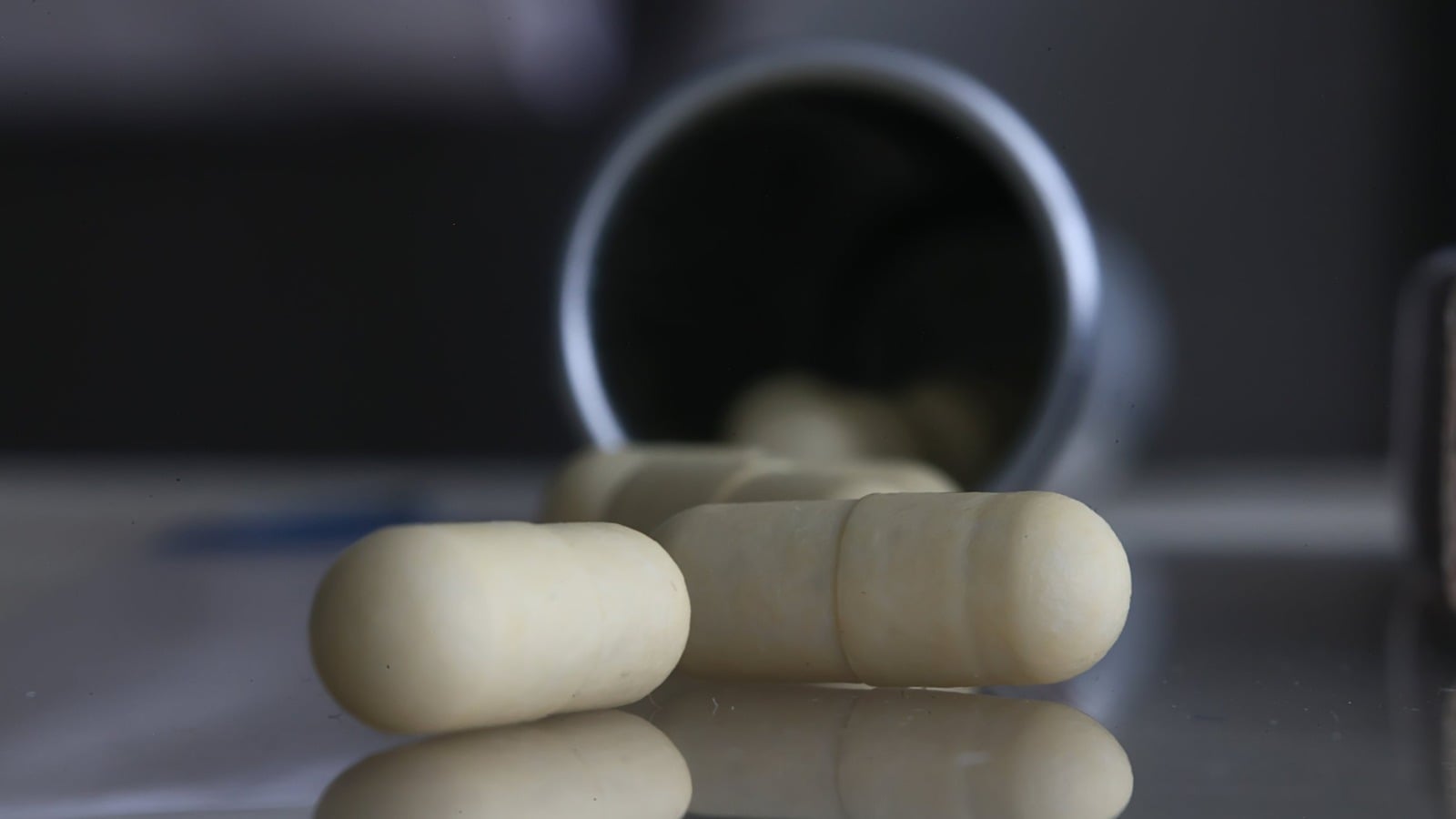
I would add a fourth reason, and one that is slowly gaining attention in medical circles. Several commonly prescribed drugs, particularly antidepressants, are causing sexual dysfunction in youth. The most surprising aspect of this is that sometimes the sexual dysfunction is permanent and continues after the person stops taking the drug, a phenomenon well enough documented to have its own name, PSSD (Post-SSRI Sexual Dysfunction).
SSRI antidepressants, such as Prozac, Zoloft, and Paxil, among others, as well as drugs for acne (isotretinoin) and baldness (finasteride) are at the top of the list of treatments capable of causing serious and sometimes long-term sexual dysfunction, described as numb genitalia, inability to orgasm, emotional blunting, and so on.
The proportion of our youth taking antidepressants—despite warnings against using these drugs in young people—grew enormously during and after Covid. The medical journal Pediatrics reported that in the US monthly antidepressant dispensing rates to ages 12–25 increased 66.3% from January 2016 to December 2022 (from ~2,576 to ~4,285 per 100,000 people). The number of individuals in this age group with more than one dispensed antidepressant rose 46.1%. More recent data from the CDC shows that about 19.3% of adults in the US currently “take medication for their mental health,” which would mostly be SSRI antidepressants.
All of this poses the question: Is the rate of SSRI prescribing affecting sexual activity across a broad spectrum of people in America today?
A Long Time Coming for Warning About What’s Happening in Plain Sight
It was 23 years ago (2003) that the Medicines and Healthcare Products Regulatory Agency (MHRA) in the UK issued its first warning that SSRIs increased suicide and self-harm risks in young people, even though they knew of this problem for a long time. The US FDA followed with its own black box warning in 2004, later extended through age 24. The UK’s 2003 warning was likewise limited to young people, until this month.
Fast forward to now, the MHRA issued warnings this month about suicidal thoughts and behaviours associated with SSRIs in patients of all ages—not just those under 25—as covered by the US black box warning—as well as warnings about post-SSRI sexual dysfunction.
Shockingly, the US FDA has yet to require a specific warning about persistent post-SSRI sexual dysfunction (PSSD), revealing even further how much the US system has been captured by the drug companies it allegedly regulates.
At least 35 countries in the world that regulate prescription drugs have national warnings on antidepressants. In 2019, the European Medicines Agency (EMA) officially concluded that Selective Serotonin Reuptake Inhibitors (SSRIs) and Serotonin-Norepinephrine Reuptake Inhibitors (SNRIs) can cause long-lasting, persistent sexual dysfunction that remains even after a patient stops taking the medication.
If you live in Canada, Australia, the UK, and most countries in Europe there are warnings on antidepressants that they can cause patients to suffer permanent sexual dysfunction. As for the US? Nada.
Emma: A Real-Life Situation
The issue of antidepressant sexual dysfunction arrived at my doorstep late in 2019 when I was contacted by a young woman with a story to tell. She knew that I wrote a lot about drug safety and she asked to meet me. She had an unimaginably tragic story.
Emma met me in my office, and I turned on my voice recorder. For the next two hours, her voice often quivering with emotion, she told me how, at 17 and still in high school, she was prescribed the antidepressant citalopram (also known as Celexa). It is one in a class of selective serotonin reuptake inhibitor (SSRI) antidepressants, a class that includes drugs like escitalopram (Lexapro), sertraline (Zoloft), fluoxetine (Prozac), and paroxetine (Paxil).
The psychiatrist told her that it might help her deal with her impulsiveness and depression. Emma admitted that over the years the drug might have helped some, but there was also something very worrying happening: she felt she was losing whatever libido she had.
Growing increasingly concerned about how it might be affecting her sexuality, she asked her physician directly if the drug could be the problem. She was assured that the antidepressant might “lead to some loss of libido, but it would come back after she stopped the drug.” Emma was persistent, bothered by what was happening to her body, and eventually her doctor switched her to a different antidepressant, which she stopped several months later.
She described what happened next: “I woke up one morning to abruptly discover that all sexual sensation I had disappeared from my body. My clitoris was now no more than an inert and sensationless nub of flesh. I was unable to feel attraction, arousal, or orgasm.” Not only did her body seem incapable of responding, but she was also engulfed by a kind of emotional blunting that was almost too hard to take.
“Now I wonder if I will ever find romance or love, or have a normal life,” she says, eyes brimming with tears. “Instead of desire and libido returning, they disappeared.”
Antidepressants and Sexual Dysfunction:
“No one knows a prescription drug’s side effects like the person taking it.”
Sixty years ago, psychiatrist Frank Ayd, credited with pioneering the clinical use of early antidepressant amitriptyline, noticed that this drug affected the libido, causing effects that weren’t otherwise due to the patients’ depression.
While psychiatrists typically maintain that depression can have a debilitating effect on one’s sexual function, it has taken a long while to suspect the drug. Over the years published reports and case studies have accumulated, detailing a condition definitely linked to antidepressants, which some people can suffer from for months, years, or decades. It can include genital numbness, total lack of arousal or orgasm, and a blunted ability to feel emotions. Like many drug safety issues, where the Eli Lillys of the world have a financial interest in shaping the public record of their products, it has taken a long time for this knowledge to penetrate the medical literature in a way that seriously influences prescribing.
Nobody knows this better than Dr. David Healy, an Irish psychiatrist and psychopharmacologist who lives in Wales.
I have known Dr. Healy for decades, and heard of him first when he was in the headlines in the early 2000s after being accepted for a job at the prestigious Centre for Addictions and Mental Health (CAMH) at the University of Toronto, only to have it rescinded after giving a lecture about SSRIs and their potential dangers. The case drew international media coverage and became a cause célèbre for debates over industry funding of academic medicine.
Because of the new warnings in the UK applied to antidepressants announced this month I called to talk to Dr. Healy.
I was quickly reminded of how much the PSSD issue has dominated his research over the last 20 years or so. Dr. David Healy has become, probably by accident, the world’s foremost expert on PSSD. Not only does he know the history of sexual dysfunction and psychiatric drugs, he knows about it from the ground up—from first-hand accounts of patients. He has studied and written about this extensively and told me that while some early reports were made to British regulators of a patient with post-treatment genital arousal disorder in the late 1980s, the first report of PSSD was filed with regulatory agencies in 1991.
Dr. Healy told me he saw his first patient with what was later called PSSD in the year 2000. She was a 35-year-old woman who told him that three months after stopping treatment, “she could rub a hard-bristled brush across her genitals and feel nothing.”
Wondering how frequently these effects occurred and generally concerned about sexual impacts caused by SSRI antidepressants, and drugs for prostate problems (finasteride) and acne (isotretinoin), Dr Healy started a website to collect case studies. The key principle of his website, Rxisk.org, is captured in its motto: “No one knows a prescription drug’s side effects like the person taking it.”
By 2018, he had enough reports to publish his results: a series of almost 300 cases of sexual dysfunction collected from 37 countries and linked to 14 different drugs. He wrote that some symptoms were unique to antidepressants, such as premature ejaculation and persistent genital arousal disorder (PGAD), but other drugs were also linked to “genital anesthesia, pleasureless or weak orgasm, loss of libido and impotence.”
When he published those initial results the impact of that paper was huge, because, finally, there was a body of research that could make regulators around the world start warning prescribers, and in turn patients, of the sex-destroying potential of these drugs.
To strengthen the warnings on these drugs, Dr. Healy and his colleagues filed petitions on the sexual side effects of SSRIs and SNRIs with the US FDA, Health Canada, and the European Medicines Agency (EMA). Probably thanks to Dr. Healy’s assistance, the EMA was the first to issue warnings of SSRI/SNRI antidepressants and their links to sexual side effects.
For Dr. Healy, the facts indisputably show that SSRI and SNRI antidepressants often cause sexual dysfunction in both men and women. It seems astonishing to say this, but Dr. Healy contends that almost everyone taking an SSRI/SSRI experiences some form of sexual dysfunction. He estimates that given current prescribing rates, as much as 20 percent of the population may not be able to make love the way they want as a result of the drugs.
Think about that for a second….
Thankfully, some of that effect is transitory and minimal, yet for others, people like Emma who have been reporting their symptoms and joining online chat groups around the world to exchange information, this is no small matter. For them, the impact is profound, with faint hope of any cure at the moment. And they are angry. Really angry.
Today Dr. Healy has more than 1,000 case studies across most countries in the world. These case studies expand the range of antidepressant problems he’s seeing, including what is known as VSS or Visual Snow Syndrome. This neurological condition is linked to serotonin reuptake inhibiting antidepressants (SSRIs, SNRIs, and related agents).
Why Weren’t We Told?
Emma’s main frustration in what happened to her sexuality was that no one ever told her that taking an antidepressant for a short period of time was going to substantially alter her sexuality. She had no warning whatsoever. She had never heard of PSSD.
David Healy reminds me that antidepressants aren’t the only drugs that are related to PSSD.
“What if a man is told he could take this drug for hair loss but it could disrupt his ability to make love? Or what if you tell a young woman that this acne drug could also permanently impact that person’s sex life? Would they take it?“
“Of course they’d say no to those drugs,” he says. This is the crux of the issue, how physicians, when prescribing these drugs, “inform” the patients of the potential problems.
He suspects those conversations still aren’t happening when it comes to the prescribing of antidepressants, despite these new warnings in the UK.
For Emma, the whole issue comes down to what she refers to as “informed consent.”
She doesn’t think that antidepressants should be banned or that people shouldn’t be prescribed them, when there is no alternative. It was the not knowing that stings so much.
“None of the doctors over the years ever mentioned the sexual side effects of these drugs. Not a word,” said Emma, the anger rising in her voice. Asked why she came to me to tell me her story she was firm: “I don’t want anyone else to go through what I’m going through.”
Time will tell whether the word is getting out.
And if it is getting out, we could have a revolution on our hands.
But speaking of revolutions, David Healy said something quite compelling: When young guys want to avoid baldness, and they take a drug, they are doing something revolutionary that their fathers couldn’t do. Similarly, when a young woman takes an acne drug, that might be a way to revolt against the wishes of her mother. But if both of those people were told by the prescriber that these drugs could cause them to never have the ability to make love, they would absolutely slam on the brakes.
But antidepressants are different. Maybe a quarter of families will have one parent on them, and hence the message about the impact of the drug on their sex lives might not hit home.
Consider the Math
There are about 100 million youth in the US under 25. Coincidentally, these people would have all been born after Dr. Healy was seeing his first patients for PSSD.
Of those, maybe 10% are on antidepressants. That’s 10 million youth whose sex lives could be up for grabs. Of those 10 million, maybe 20% have serious impediments in their sex lives. That’s 2 million young people possibly facing these issues.
Many will be suffering in silence over sexual difficulties or a completely absent sex life, and have no idea their situation is linked to antidepressants. Those who find out about how their lives have been absolutely broken by drug harms they were never told about are going to be angry. This is how revolutions are made.
Dr. Healy and I looked at each other and wondered aloud: “When is the Revolution going to start?” When a substantial and vocal body of youth in the US realize they’ve been ripped off of one of life’s most important things, and they realize the government is behind this, heads are going to roll.
Perhaps you can say you heard it here first, and that after reading this article, the youth of today cannot now say that they haven’t been warned.
Join the Conversation
Published under a Creative Commons Attribution 4.0 International License
For reprints, please set the canonical link back to the original Brownstone Institute Article and Author.