
The following was originally published as a chapter in the book, Man and Woman in the Order of Creation, and is reprinted here with the publisher’s permission.
Naturam expellas furca, tamen usque recurret.
–Horace, Epistles, 1:10
The above epigraph, a Latin proverb from the poet Horace, translates, “You can try to drive out nature with a pitchfork, yet nature will always return.” Or as my colleague Bill Hurlbut at Stanford University, a physician and ethicist, likes to say, “Human nature always bats in the bottom of the ninth inning.”
My purpose here is to look at what science, medicine, and psychiatry can tell us about biological differences between men and women and some of the implications for those differences beyond simply our role in reproduction.
Biology and Sex Differences
Sex differences between men and women are not confined to the reproductive organs. They run through all levels of human biology—from subtle features of organs and tissues to differences on the cellular and molecular level. It turns out that aside from our reproductive organs, the most sexually differentiated human organ is the brain. The differences are not just physical but also psychological, influencing our cognitive, behavioral, and emotional functioning.
There are important and measurable sex differences in our experience of emotion, memory, vision, and hearing. Men and women differ in our perceptual processing of faces, in pain perception, navigation, neurotransmitter levels in our brain, and the effects of stress hormones our bodies. We are prone to different diseases, and we respond differently to the same medical treatments.
Many of these differences are innate rather than acquired—they are present from before birth and persist throughout life. Keep in mind also that these differences are subtle, and we should not exaggerate them, as sometimes happens in popular treatments of this issue—“Men are from Mars and women are from Venus,” and so forth.
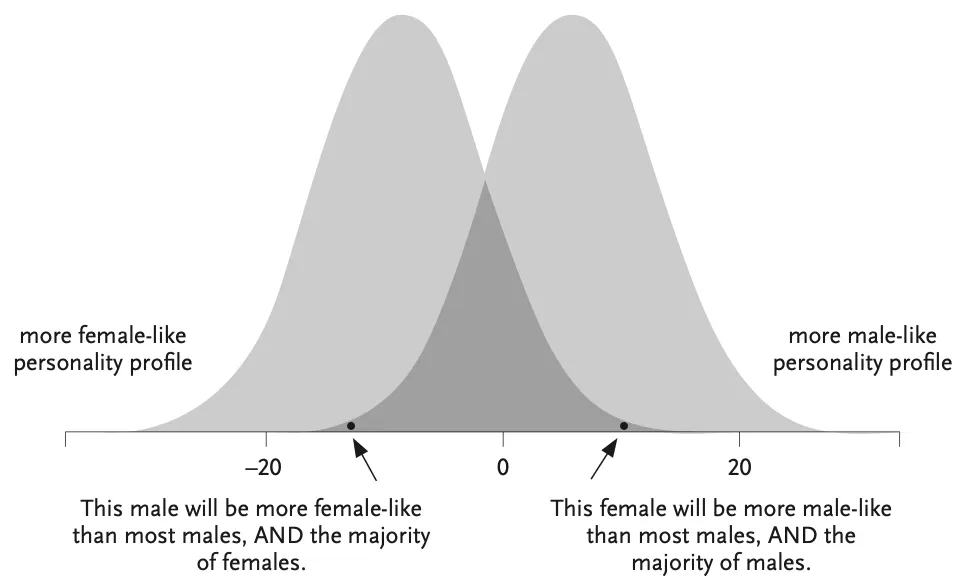
There is also considerable intrasex variation—sex traits exist on a bell curve, with considerable overlap between the sexes. One mistake that gender ideology makes is the notion that a man with some characteristically feminine traits or interests is “really a woman,” and vice versa. This is not true: he is simply a man at the tail end of this normally distributed bell curve—a boy who likes ballet, or a girl who likes football. That’s all.
Gender ideology fails to acknowledge the full extent of intrasex variation (and overlap between the sexes) in gender-specific traits. In this way, transgenderism ironically “defines” male and female too narrowly.
We should note in this context that biologists distinguish between the sexes on the basis of their role in reproduction, not gender-typical behaviors or traits. Also, rare “intersex” conditions, which are caused by genetic or hormonal abnormalities, do not undermine the basic biological fact of sexual dimorphism—the biological norm of male and female. For example, biological males have an XY complement of sex chromosomes, and females have XX chromosomes. Intersex conditions may cause someone to be born with XXY chromosomes.
These genetic variations are found in less than 1% of the population. Medicine understands these conditions to be anomalies or disorders of sexual development: they involve functional and reproductive deficiencies, like infertility, when measured against the natural norm of male and female.
These scientific findings on sex differences are ignored today by a theory of gender that rejects our embodied sexuality and attempts to divorce gender entirely from biological sex. On the contrary, contemporary scientific findings suggest that sex and gender can be distinguished but not completely separated.
As Nature Made Him: The Case of David Reimer
The tragic case of David Reimer is instructive here.[1] David was born a boy in 1965, but a botched circumcision left his genitals badly burned. His parents were referred to a psychologist at Johns Hopkins Hospital, John Money, who was at the time considered among the world’s leading experts on gender identity. Money advised the boy’s parents to have their baby undergo a sex change operation and then raise him as a girl.
According to his theory, gender identity, gender roles, and behaviors were almost entirely socially constructed.[2] Therefore, he reasoned, if baby David was surgically given female sex characteristics and raised as a girl, he—eventually she—would accept the female gender role and live a normal life as a woman, albeit an infertile one.
David provided an ideal experimental model to demonstrate the theory that nurture, not nature, determines sexual identity. This was because David had an identical twin: his brother, Brian, would serve as an ideal matched control who shared David’s genes but would be raised as a boy. Money published reports in the 1970s claiming that the procedure was a success and that the twins were happy in their assigned gender roles. But as David Reimer’s biographer recounted:
The reality was far more complicated. At age 2, Brenda [formerly David] angrily tore off her dresses. She refused to play with dolls and would beat up her brother and seize his toy cars and guns. In school, she was relentlessly teased for her masculine gait, tastes, and behaviors. She complained to her parents and teachers that she felt like a boy; the adults—on Dr. Money’s strict orders of secrecy—insisted that she was only going through a phase. Meanwhile, Brenda’s guilt-ridden mother attempted suicide; her father lapsed into mute alcoholism; the neglected [twin brother] Brian eventually descended into drug use, pretty crime, and clinical depression.[3]
Once David turned 14, a psychiatrist convinced his parents to tell him the truth. Upon hearing the news, David recalled, “Suddenly it. . .all made sense why I felt the way I did. I wasn’t some sort of weirdo. I wasn’t crazy.” David then began the difficult process of converting back to his natal sex, but the damage was already done. He eventually married a woman named Jane but continued to struggle with depression. Tragically, in May 2004, at the age of 38, still tormented by his childhood ordeal, David Reimer took his own life.
Dr. Milton Diamond, who later became involved in David’s care, subsequently published papers undermining Money’s socially constructed theory of gender.[4] What can we learn here? Altering David’s primary and secondary sex characteristics did not seem to alter his sense of being a male—that is, his gender identity—even in the face of strong social conditioning. Being raised socially as a girl did not seem to move him in the direction of characteristically feminine interests, behaviors, pursuits, or sense of self.
In recounting this case, it is important to recognize that Reimer was not suffering from what is now termed “gender dysphoria”—a phenomenon I will discuss in the next section—since his feelings were congruent throughout his development with his biological sex. As David Reimer’s case suggests, scientific and medical evidence does not support a complete division between biological sex on the one hand, and socially constructed gender identity on the other.
Other studies of children born with ambiguous genitalia who undergo genital reconstructive surgery at birth confirm what we saw illustrated in this case—namely, that gender is neither arbitrarily assigned nor easily divorced from biological sex. A biological male (or female) will typically not come to identify as the opposite sex after being altered physically and immersed into the corresponding gender-typical environment. In short, the ability to manipulate gender medically or socially appears to have inherent limits.
Gender Dysphoria and Transgenderism
How should we interpret the claims, or the distress, of individuals who do not readily identify with their biological sex? What is happening in the case of individuals who suffer from what used to be called gender identity disorder, now known as gender dysphoria? We should first clarify that these are not intersex individuals—they have no biological or hormonal abnormalities that would account for the incongruence. And yet, in their own words, they feel “trapped in the wrong body.”
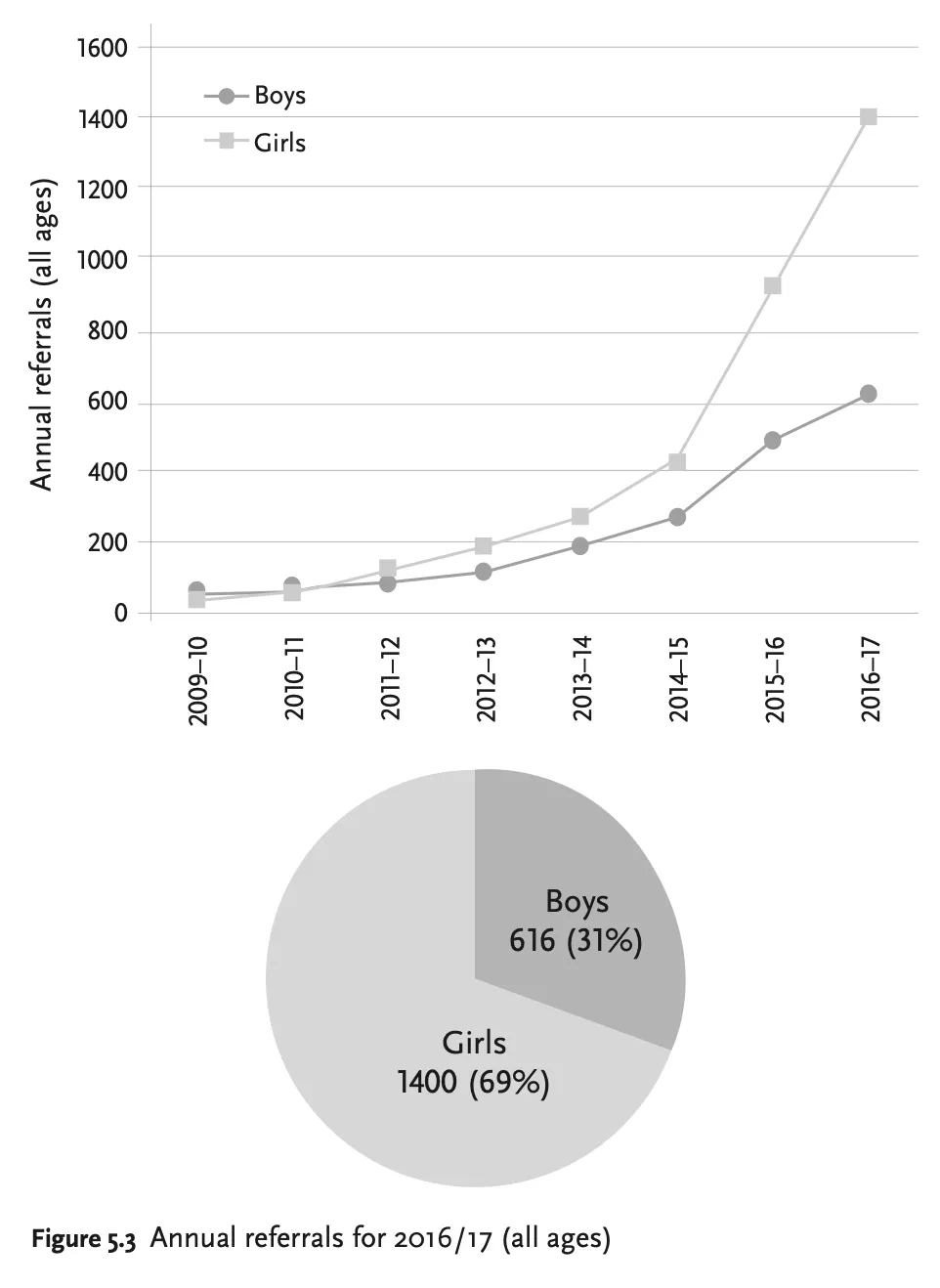
Gender dysphoria is a real clinical phenomenon; these individuals suffer distress. They deserve compassionate care—but care that actually helps them. Until very recently, rare cases of gender dysphoria typically presented early in life, usually in toddlers, usually boys. But many of the cases now presenting to clinics are the result of social and cultural factors. “Rapid onset gender dysphoria” occurs among groups of friends, typically teenage girls.[5] There is evidence for a social contagion element to the explosion of self-identifying “trans” adolescents.
But even for cases of gender dysphoria that manifest early in childhood, there is no credible scientific evidence that people suffering from these conditions were somehow “born in the wrong body.” Some researchers have tried to show that these individuals have brain features closer to their “desired gender” than to their biological sex. But studies have not found that such individuals have a brain with female traits stuck in a male body, or vice versa.
Stanford biologist Robert Sapolksy published an article titled “Caught between Male and Female” in the Wall Street Journal in 2013.[6] In it, he claimed that transgendered brains resemble the brains of their desired sex more than their natal sex. Sapolsky cited mentioned brain imaging studies to support his claim. But even a cursory examination of the original studies contradicts his conclusion. He was probably assuming that readers would not bother to check his sources.
In any case, there is no evidence that brain differences cause gender-nonconforming behavior or gender dysphoria. The causal arrow could run in the other direction, from transgendered behavior to brain changes (even if all potentially confounding factors were controlled for). Prospective longitudinal studies would be required to establish causation from innate brain characteristics to the behavior in question. These studies have not been done, and they would be challenging given the relatively low rates of transgenderism in the general population, even with the recent spike in cases.
Rather than having a biological or neurological basis, the subjective distress of individuals with gender dysphoria is analogous to the distress found in other psychiatric conditions like anorexia or body dysmorphic disorder. These conditions involve, for example, believing that one is obese when the opposite is true, or focusing obsessively on physical traits that one hasn’t accepted. Each of these conditions involves discomfort with one’s appearance, a distorted body image, strong and persistent desires to have different physical traits, subjective distress, and problems integrating one’s identity and sense of self.
Treatment Approaches
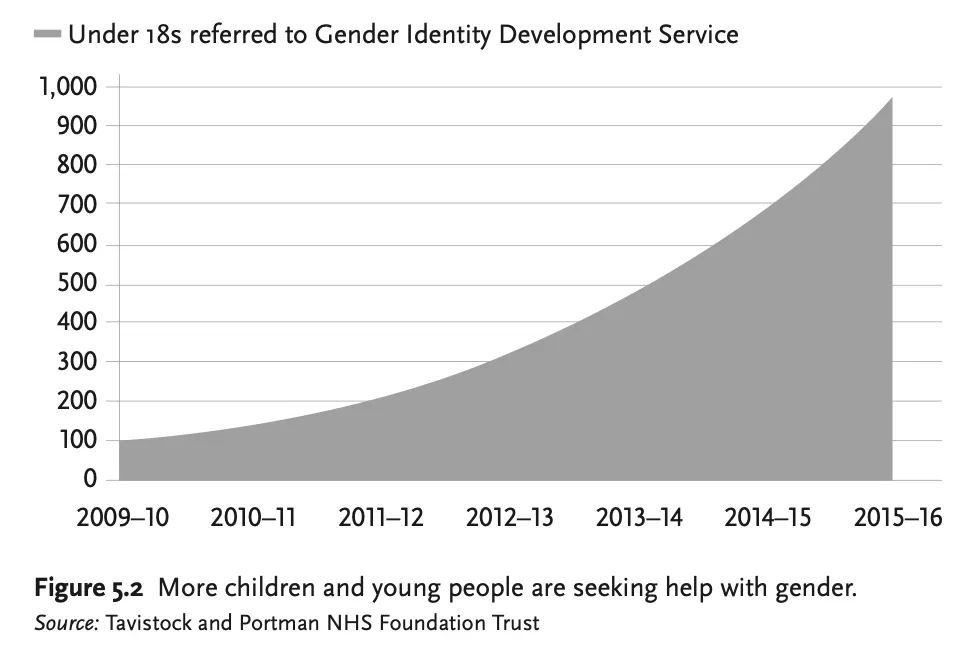
Data from Britain’s National Health Service and other sources show skyrocketing rates of people presenting to gender clinics over the past ten years, particularly adolescent girls. How should we best help these individuals?
For those whose gender dysphoria persists into adulthood, the notion that gender reassignment procedures are the best medical or psychiatric approach has not been sufficiently demonstrated. There is inadequate safety and efficacy data on these interventions, and the research that we do have paints a concerning picture. Available studies on long-term health outcomes after these procedures suggest that they do not typically resolve the underlying problems.
The National Health Service in the United Kingdom commissioned a review of all the available data on gender reassignment procedures. The results were recently published as the Independent Review of Gender Identity Services for Children and Young People. Colloquially known as the Cass Review, it found that while a considerable amount of research has been published in this field, systematic evidence reviews demonstrated the poor quality of the published studies, meaning there is not a reliable evidence base upon which to make clinical decisions, both for children and for their families to make informed choices.[7]
The report also found that the strengths and weaknesses of the evidence base on the care of children and young people are often misrepresented and overstated, both in scientific publications and social debate. The rationale for early puberty suppression remains unclear, with weak evidence regarding the impact on gender dysphoria and mental or psychosocial health. The effect on cognitive and psychosexual development remains unknown.
Similarly, the use of cross-sex hormones in those under the age of 18 also presents many unknowns, despite their long-standing use in the adult transgender population. The lack of long-term follow-up data on those commencing treatment at an earlier age means that we have inadequate information about the range of outcomes for this group.
Furthermore, the report found, clinicians are unable to determine with any certainty which gender reassignment patients will go on to have an enduring trans identity. The authors recommended that for most young people, a medical pathway (puberty blockers, cross-sex hormones, and surgery) will not be the best way to manage their gender-related distress.
I will mention just one other study, the largest of its kind, which was done in Sweden. The study followed more than 300 individuals (half of them male-to-female, the other half female-to-male) ten years after gender reassignment surgery.[8] The results found that these individuals suffered very poor outcomes: their overall mortality rate was nearly three times higher (driven mostly by elevated rates of suicide), and their rate of psychiatric hospitalization was three times higher than general population. They had suicide attempts at seven times the rate of the general population, and most alarmingly, they completed suicide at rates nineteen times that of general population.
In short, ten years down the road, these procedures did not resolve their distress or solve their mental health problems. Indeed, we would be hard-pressed to find a surgical procedure that had worse outcomes. We should not be surprised that treatment approaches based upon false ideas about gender identity, and a faulty dualistic anthropology, are typically ineffective. A better approach would address the wider mental health problems and the underlying psychological, social, and spiritual issues driving the current wave of self-identified “trans” youth.
[1]. For a well-known journalistic account of this case, cf. John Calopinto, As Nature Made Him: The Boy Who Was Raised as a Girl (Harper Perennial, 2000). For a briefer summary, see Calopinto’s “Gender Gap: What Were the Real Reasons behind David Reimer’s Suicide?,” Slate, June 3, 2004, https://slate.com/technology/2004/06/why-did-david-reimer-commit-suicide.html.
[2]. Money’s summary account of his gender theory is found in his Gendermaps: Social Constructionism, Feminism, and Sexosophical History (Continuum, 1995), and his account of the Reimer case is found in John Money and Anke A. Ehrhardt, Man and Woman, Boy and Girl: Gender Identity from Conception to Maturity (Bloomsbury Academic, 1996).
[3]. Calopinto, “Gender Gap.”
[4] Referred to as the “John/Joan” case in medical literature: Diamond, M., & Sigmundson, H. K. (1997). Sex reassignment at birth: Long-term review and clinical implications. Archives of Pediatrics & Adolescent Medicine, 151(3), 298–304. https://doi.org/10.1001/archpedi.1997.02170400084015
See also Beh, H. G., & Diamond, M. (2006). David Reimer’s legacy: Limiting parental discretion. Cardozo Journal of Law & Gender, 12(1), 5–30. (This discusses the ethical and legal ramifications, building on the 1997 paper’s findings.)
[5] Littman, L. (2018). Parent reports of adolescents and young adults perceived to show signs of a rapid onset of gender dysphoria. PLOS ONE, 13(8), e0202330. https://doi.org/10.1371/journal.pone.0202330
Sapir L, Littman L, Biggs M. The U.S. Transgender Survey of 2015 Supports Rapid-Onset Gender Dysphoria: Revisiting the “Age of Realization and Disclosure of Gender Identity Among Transgender Adults”. Arch Sex Behav. 2024 Mar;53(3):863-868. doi: 10.1007/s10508-023-02754-9. Epub 2023 Dec 18. PMID: 38110845; PMCID: PMC10920421.
[6]. Robert Sapolksy, “Caught between Male and Female,” Wall Street Journal, December 6, 2013, https://www.wsj.com/articles/SB10001424052702304854804579234030532617704.
[7]. Independent Review of Gender Identity Services for Children and Young People (National Health Service, 2024), https://cass.independent-review.uk/wp-content/uploads/2024/04/CassReview_Final.pdf.
[8] Dhejne C, Lichtenstein P, Boman M, Johansson AL, Långström N, Landén M. Long-term follow-up of transsexual persons undergoing sex reassignment surgery: cohort study in Sweden. PLoS One. 2011 Feb 22;6(2):e16885. doi: 10.1371/journal.pone.0016885. PMID: 21364939; PMCID: PMC3043071.
Republished from the author’s Substack
Join the Conversation
Published under a Creative Commons Attribution 4.0 International License
For reprints, please set the canonical link back to the original Brownstone Institute Article and Author.