Yesterday, almost 2,000 people, mostly young children, died of malaria because they could not access effective and relatively cheap treatment quickly enough. About 4,000 people died of tuberculosis (TB), including many young adults leaving orphans. This happens every day. Progress in reducing these numbers is stalling, as partly due to the continuing economic damage from the Covid-19 response.
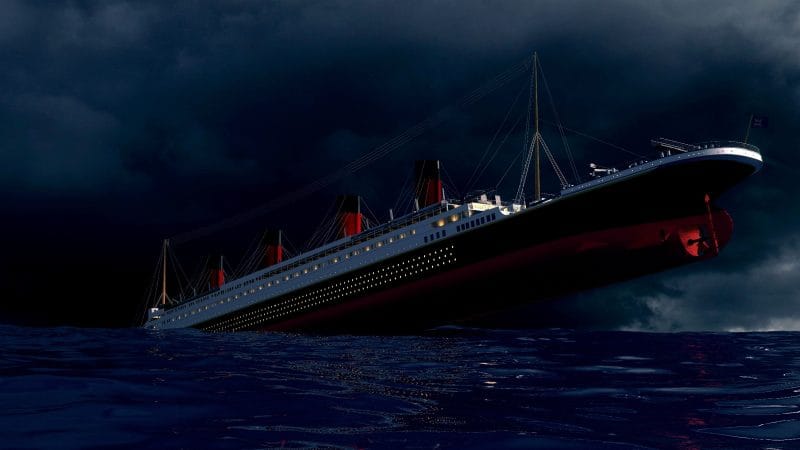
In the past two weeks three tourists unfortunately died among about 150 passengers and crew on a cruise ship MV Hondius off the west coast of the African continent where most of those malaria and TB deaths occurred. The Hondius had a hantavirus outbreak, known to have infected less than 10 people but including at least two of those that died.
The World Health Organization (WHO) estimates that 10,000 to 100,000 hantavirus cases occur every year, spread across the Americas, Europe, Africa, and Asia. The current media coverage and WHO news conferences therefore concern about one-thousandth of the cases expected this year. The United States averages about 30 – they simply have not been newsworthy.
Hantavirus is transmitted from mice and rats through their feces, urine, saliva, or their bite. The Andean variety, which occurred on the cruise ship, can also sometimes transmit from a sick infected person. However, as the low number of cases on the ship demonstrates, the risk of human-human transmission is not great. It is, however, a nasty virus, with reported mortality around 15% of cases and sometimes significantly higher.
So, among the 170,000 average deaths in the world each day, and thousands from the WHO’s traditional focus diseases, why the excitement over Hantavirus? Why the pictures of hazmat-suited emergency response crews and desperate contact tracing, when we don’t usually notice? Why is the Director-General of the entire WHO spending so much time on this, when diseases of poverty are rising and basics such as nutrition funding are falling? A fascinating question.
The WHO wants the United States and Argentina to rejoin, and WHO DG Tedros Ghebreyesus has raised this in his hantavirus briefings. Multilateral cooperation in global health has demonstrably helped in addressing malaria and TB in the past, but reliance on detached and homogenous WHO recommendations for Covid worked out really badly. The WHO is wisely claiming the MV Hondius is not heralding a pandemic, but nonetheless are making all the mileage they can from the fear created around this epidemiologically irrelevant event.
Just two weeks ago, African nations also rejected (again) a pathogen-sharing requirement for the WHO’s new Pandemic Agreement (treaty). This would require them to implement surveillance at their expense and provide data on pathogens to the WHO, which will then provide it to large Pharma companies to produce vaccines that the WHO will recommend and market.
Malaria and TB deaths should increase further through this process because the WHO wants over $10 billion from donor countries diverted to its pandemic agenda, and $20 billion spent by low- and middle-income countries to support it (the world spends about $3.5 billion on malaria each year). While malaria, TB, HIV, nutrition, and improving access to primary care clinics may be a greater priority for such countries, false charges of putting the world at risk by failing to sign the WHO’s Pandemic Agreement may eventually prove too much to withstand.
A further potential influence is conflict of interest, though its impact on the current situation is unclear. The WHO’s largest donor is now the Gates Foundation, a private operation directed by Bill Gates with a strong history of investment in the mRNA vaccine company Moderna. Moderna is working on a hantavirus mRNA vaccine, which is surprising from an investment perspective as the market seems small. How would a viable commercial market be ensured for a vaccine for such an obscure disease? This viable market requires large swathes of the population to be convinced that they are at far higher risk than they actually are, or coerced into taking it. In the United States the risk is about 1 case per 10 million people per year, with perhaps 1 per million to 1 per 100,000 globally.
A direct connection between Moderna’s market problem and the current hysteria does not need to be made. The point is that the WHO is now an organization in which its largest funder also has large, vested interests in the sales of specific health products. Through specified funding, the funder also determines which activities the WHO will undertake.
The WHO’s second largest funder over 2024-2025 was Gavi, a public private parentship for vaccines, again involving Gates and Pharma companies. Public-private partnerships, which the WHO has itself essentially become, are intrinsically designed around vested or conflicted interest – the justification for private companies expending resources is gain for their investors.
No sane approach would allow vested commercial private interests to determine global health policy. Pharma’s job is to maximize profit, while the WHO’s job is to maximize health and health equity. One of these must be failing.
A vast global health industry has been built in which private investors determine priorities, taxpayers foot most of the bill, and populations have become markets. As this plays out, public health messaging becomes increasingly incoherent and detached from reality until several cases of hantavirus among tourists on a cruise ship, out of up to 100,000 expected this year, appear as an international crisis.
The result is not just fear and confusion, but a massive institutional failure that allows huge numbers of children to die disregarded while public health workers don hazmat suits as media celebrities. We need to ask why. There is a path for an organization such as the WHO to act in an ethical, proportionate manner that serves humanity rather than parasitizing it. The hantavirus roadshow can be an impetus for change, but not to further enrich and empower those promoting it. We need to, as citizens and as a public health community, insist that institutions such as the WHO do better, or insist on replacing them with something better.
Join the Conversation
Published under a Creative Commons Attribution 4.0 International License
For reprints, please set the canonical link back to the original Brownstone Institute Article and Author.