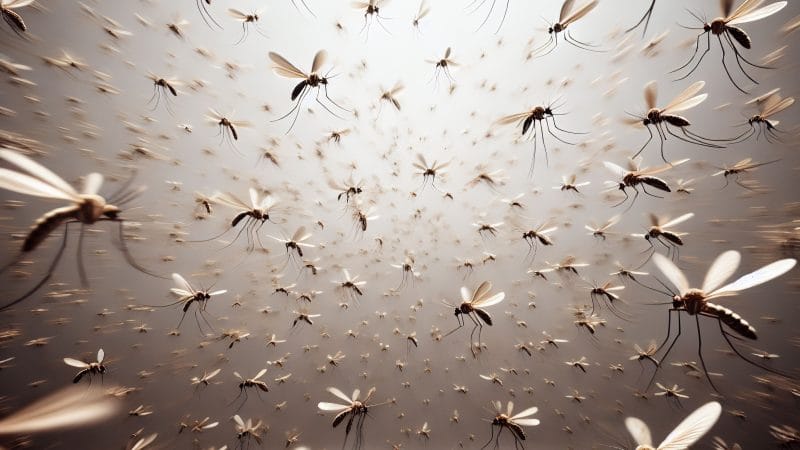

In medicine, silence can be more alarming than noise. For example, a patient who abruptly stops voicing discomfort or a monitor that ceases activity may signal system failure rather than resolution. Ecology presents a similar scenario, and currently, the silence is deeply concerning.
Insects are disappearing across vast regions globally. This is not a modest decline or a simple geographic shift, but a rapid vanishing of beetles, butterflies, moths, flies, mosquitoes, bees, and entire functional groups. This phenomenon is not speculative or anecdotal; it is among the most consistently documented biological trends of the past 50 years and remains insufficiently addressed. For context, the total biomass of lost insects is comparable to the combined weight of all commercial aircraft worldwide, representing a profound ecological and economic loss.
For decades, insects were treated as background noise—annoyances at best, pests at worst. Their abundance was assumed, their resilience taken for granted. We designed agricultural systems, urban environments, chemical interventions, and technological solutions on the unspoken assumption that insects would always be there. They were too numerous to fail.
This assumption has proven incorrect.
The Data Are Not Subtle
One of the most widely cited early warnings came from a long-term German entomological study that tracked flying insect biomass across protected areas over nearly three decades. The result shocked even the investigators: a decline of more than 75% in total flying insect biomass between 1989 and 2016.¹ These were not industrial zones or pesticide-saturated fields. They were nature preserves. However, many regions like Africa and large parts of Asia still lack comprehensive, long-term insect monitoring, leaving significant gaps in our understanding of global insect declines.
Subsequent studies confirmed that this was not an anomaly. A global review published in Biological Conservation concluded that approximately 40% of insect species are threatened with extinction, with declines accelerating in recent decades.² Longitudinal data from the United Kingdom, the Netherlands, Puerto Rico, North America, and East Asia tell the same story with local variation but consistent direction.³-⁶
The loss is not limited to rare or specialized species. Common insects—the ones that once filled the air—are disappearing fastest. Entomologists now openly discuss “functional extinction,” a state in which species technically still exist but no longer play their ecological roles in meaningful numbers.⁷
The significance of this issue is often underestimated.
Insects Are Not Optional
Insects occupy a central role in terrestrial and freshwater ecosystems. They pollinate plants, recycle nutrients, regulate microbial populations, control pest species, and serve as the primary food source for numerous birds, amphibians, reptiles, and fish. Rather than being peripheral, insects form the structural foundation of these systems. The loss of these foundational species could result in the disappearance of familiar foods such as coffee, chocolate, apples, and almonds, directly impacting daily nutrition.
Approximately three-quarters of global crop species rely at least partially on animal pollination, predominantly by insects. The economic value of insect pollination alone is estimated in the hundreds of billions of dollars annually. But focusing on economics understates the issue. Without insects, food systems collapse not just quantitatively, but qualitatively. Nutrient diversity declines. Resilience vanishes. Dependency on industrial inputs increases. A study published in PLoS One found that the decline in insect pollinators could lead to a reduction in the concentrations of key vitamins such as vitamin A and folate worldwide, amounting to a 40% decrease in nutrient density in certain crops.
Ecological systems tend to fail abruptly rather than gradually once critical thresholds are exceeded.
The Windshield Phenomenon Was a Warning We Dismissed
Long before peer-reviewed journals quantified insect loss, ordinary people noticed something odd: windshields stayed clean. Anyone who drove regularly in the 1970s or 1980s remembers scraping insects off headlights and bumpers after short trips. That experience is now rare enough that younger generations often find it hard to believe.
The so-called “windshield phenomenon” was not merely a matter of nostalgia; it represented an informal yet consistent observational indicator of declining insect abundance.¹⁰ When millions independently notice the same biological absence, the observation warrants scientific attention. Nevertheless, it was often dismissed as anecdotal, unscientific, or irrelevant.
In medical education, trainees are instructed not to disregard patient-reported symptoms solely due to challenges in quantification. In ecological science, however, similar observational evidence was often disregarded.
Mosquitoes, Misunderstood, and Essential
Few insects are more universally despised than mosquitoes. Their role as vectors of infectious disease makes them easy targets for eradication campaigns, and their decline is often celebrated. But ecosystems do not allow selective deletions without consequences.
Mosquito larvae are a primary food source for fish and amphibians. Adult mosquitoes feed birds, bats, reptiles, and other insects. Their disappearance reverberates through food webs in ways that are poorly modeled and rarely discussed.¹¹
The belief that undesirable species can be selectively removed while maintaining ecosystem stability reflects a mechanistic misconception, similar to the outdated medical notion that symptom suppression equates to disease resolution.
Natural systems do not benefit from simplification; rather, they are adversely affected by it.
This Is Not Simply “Climate Change”
Climate variability undoubtedly influences insect populations, but attributing the magnitude and speed of current declines solely to climate change is scientifically insufficient. The temporal pattern, taxonomic selectivity, and geographic clustering point to multiple interacting drivers, many of them anthropogenic and poorly regulated.
Key contributors include:
- Chronic pesticide exposure, particularly systemic insecticides such as neonicotinoids, which persist in soil and water and affect non-target species.¹²
- Herbicide-driven loss of flowering plants, eliminating food sources for pollinators.¹³
- Monoculture agriculture, which replaces complex habitats with biological deserts.¹⁴
- Soil degradation and microbial collapse, undermining insect life cycles.¹⁵
- Light pollution, which disrupts navigation, mating, and feeding behaviors in nocturnal insects.¹⁶
- Urban sprawl and habitat fragmentation, reducing genetic diversity and resilience.¹⁷
Each of these factors is concerning individually. Collectively, they impose a cumulative biological burden that exceeds the adaptive capacity of ecosystems.
Why This Should Terrify Physicians, Not Just Ecologists
As physicians, we are trained to recognize early warning signs of systemic failure. Just as an unexplained rise in C-reactive protein (CRP) can indicate underlying inflammation or infection needing urgent attention, the decline in insect populations serves as a critical red flag for ecological instability. Progressive weight loss, immune dysfunction, and unexplained anemia are not mere curiosities—they are red flags, akin to these environmental indicators. Insect decline is the ecological equivalent of these medical signals.
Human health relies heavily on environmental health. Nutritional density, food security, infectious disease patterns, and immune resilience all depend on intact ecosystems. A biologically impoverished planet produces biologically fragile humans. The rise in chronic disease, metabolic dysfunction, and immune dysregulation cannot be cleanly separated from the ecological context in which humans now live. Clinicians may observe these impacts as patients present with increased allergic reactions, resistance to antibiotics, and nutritional deficiencies. For instance, a patient experiencing recurrent respiratory infections could be linked to pollen shifts due to changing insect populations. Practitioners can address these issues by considering ecological factors when diagnosing conditions and advising preventative measures such as dietary changes or promoting environmental stewardship.
Yet medicine and public health continue to treat the environment as background scenery rather than foundational infrastructure. To address this, integrating environmental health concepts into medical and public health curricula could be transformative, fostering an understanding of the interconnectedness between ecological and human health. Medical institutions might also adopt policies that prioritize environmental stewardship, such as reducing waste and energy consumption in health facilities. Encouraging research into the health impacts of ecological degradation within the medical community would further reinforce this integration. Such system-level interventions would bridge the gap between medicine and ecology, ensuring that practitioners recognize and respond to environmental health issues as an integral part of their practice.
A Clinical Lens: When Ecology Becomes Medicine
From a physician’s perspective, the disappearance of insects should be interpreted as a population-level biomarker of environmental toxicity and physiologic stress. In medicine, when a sensitive system fails first, we recognize it as an early warning. Insects occupy that role in biology. Their short life cycles, high metabolic rates, and dependence on environmental cues make them exquisitely sensitive to chemical, electromagnetic, and nutritional disruption—often long before humans manifest overt disease.
There is growing evidence that many of the same exposures implicated in insect decline correlate with human endocrine disruption, immune dysregulation, neurodevelopmental effects, and metabolic disease. Neonicotinoids, for example, were designed to target insect nicotinic acetylcholine receptors, yet homologous pathways exist in mammals, including roles in neurodevelopment and autonomic regulation.²⁰ Chronic low-dose exposure does not produce acute toxicity, but medicine has learned—often too late—that absence of acute toxicity does not equal safety.
Pollinator loss also directly affects micronutrient density in human diets. Fruits, vegetables, nuts, and legumes—key sources of folate, magnesium, polyphenols, and antioxidants—are disproportionately affected by pollination deficits.²¹ Nutritional depletion does not present as famine; it presents as chronic disease, immune fragility, impaired wound healing, and increased susceptibility to infection—phenomena clinicians increasingly encounter but rarely trace back to food system integrity.
Imagine a diabetic patient struggling with persistent slow-healing ulcers. These wounds, resistant to typical treatment, become a vivid illustration of micronutrient decline due to pollinator loss. Reduced levels of essential nutrients such as vitamin C and zinc, critical in collagen synthesis and immune function, exemplify how nutritional shortfalls manifest in real clinical settings.
Finally, insect decline mirrors a broader biologic pattern physicians recognize well: systems pushed beyond adaptive capacity do not fail linearly. They compensate quietly, until suddenly they do not. The ICU is filled with patients who were “fine” until they weren’t. Ecosystems behave the same way.
For clinicians, ignoring insect collapse is analogous to ignoring rising lactate levels in a patient who “looks stable.” The number itself matters—but what it represents matters far more.
Technology Will Not Save Us from Biology
There is a growing confidence—often unspoken—that technology will compensate for ecological loss. Artificial pollination. Synthetic food systems. Lab-engineered substitutes for biological complexity. These ideas are attractive because they promise control.
But insects perform trillions of micro-interactions every day, across scales and contexts that no centralized system can replicate. They evolved over hundreds of millions of years, adapting continuously to local conditions at no energy cost and no maintenance budget.
Replacing that with machines is not innovation. It is delusion.
Captured Science and the Problem of Silence
One of the most troubling aspects of the insect collapse is not the loss itself, but the muted institutional response. Funding for entomology has declined. Long-term ecological monitoring is rare and poorly supported. Chemical approvals often rely on short-term toxicity testing while ignoring chronic, sublethal, and ecosystem-level effects.¹⁹
This mirrors patterns seen in modern medicine: narrow endpoints, short horizons, and an overconfidence in intervention divorced from system-level understanding.
When science becomes captured by industrial timelines and regulatory convenience, early warning signals are reframed as “unproven” rather than investigated as urgent.
What Restraint Would Look Like
This is not an appeal for panic, but rather a call for restraint and transparency.
We need:
- Long-term, independent ecological monitoring
- Environmental safety testing that evaluates chronic, cumulative, and synergistic effects
- Reduction, not expansion, of chemical environmental load
- Agricultural practices that restore biodiversity rather than suppress it
- Intellectual humility about what we do not yet understand
Advancements that undermine their own biological foundation do not represent true progress; instead, they constitute a depletion of essential resources.
Moreover, healthcare leaders hold a unique position of influence and responsibility. By utilizing their platforms and professional networks, they can advocate for stronger environmental monitoring and policy changes. This advocacy could involve pushing for legislation that supports sustainable practices, investing in research that links environmental health to patient outcomes, and collaborating with public health and environmental organizations to enact meaningful change. As stewards of human health, healthcare leaders can amplify the urgency of this ecological crisis and champion initiatives that contribute to healthier ecosystems.
We must take action now. By adopting a local habitat, even as small as one square yard, each of us can contribute to the preservation of biological diversity. This is a call for shared stewardship, converting the warning into tangible agency. When individuals take part, the collective effort in sustaining our environment is amplified. This participatory hope can temper despair while sustaining the urgency of our cause.
Clinicians, specifically, hold a pivotal role in this effort. They can integrate ecological awareness into their practice by educating patients about the connection between environmental and human health. By advocating for healthier ecosystems and supporting local health-environment initiatives, clinicians empower not only their patients but also their communities. Through these efforts, they amplify the importance of ecological stewardship, ensuring that both current and future generations maintain a healthy linkage with their environment.
Insects do not communicate through press releases, organize protests, or appear in financial reports. They simply vanish. By the time their absence is evident through crop failures, nutritional deficits, ecosystem instability, and increased human disease, it will be too late for effective intervention.
This is a call to action for medical professionals. As early responders, doctors and healthcare providers play a crucial role in recognizing ecological warning signs and advocating for preventative measures. It is essential for medical professionals to integrate environmental health assessments into their practice, amplifying the connectivity between ecological and human health. By acting now, clinicians can help avert an ecological crisis and ensure a sustainable future for both the planet and human life.
Civilizations do not fall only from war or economics. They fall when the living systems that sustain them are quietly dismantled.
The current silence should not be interpreted as stability.
It is a warning.
Join the conversation:

Published under a Creative Commons Attribution 4.0 International License
For reprints, please set the canonical link back to the original Brownstone Institute Article and Author.