In-group or out-group. Clean or unclean. With us or against us. The post-pandemic world seems dominated by themes of a society corrupted by political hatreds, born of hostile emotions constantly on the hunt for targets.
Remember the masked and the unmasked, the vaccinated and the unvaccinated, the essential workers and the nonessential? This wasn’t just a national issue. It burrowed deep into our personal lives and into our own hometowns.
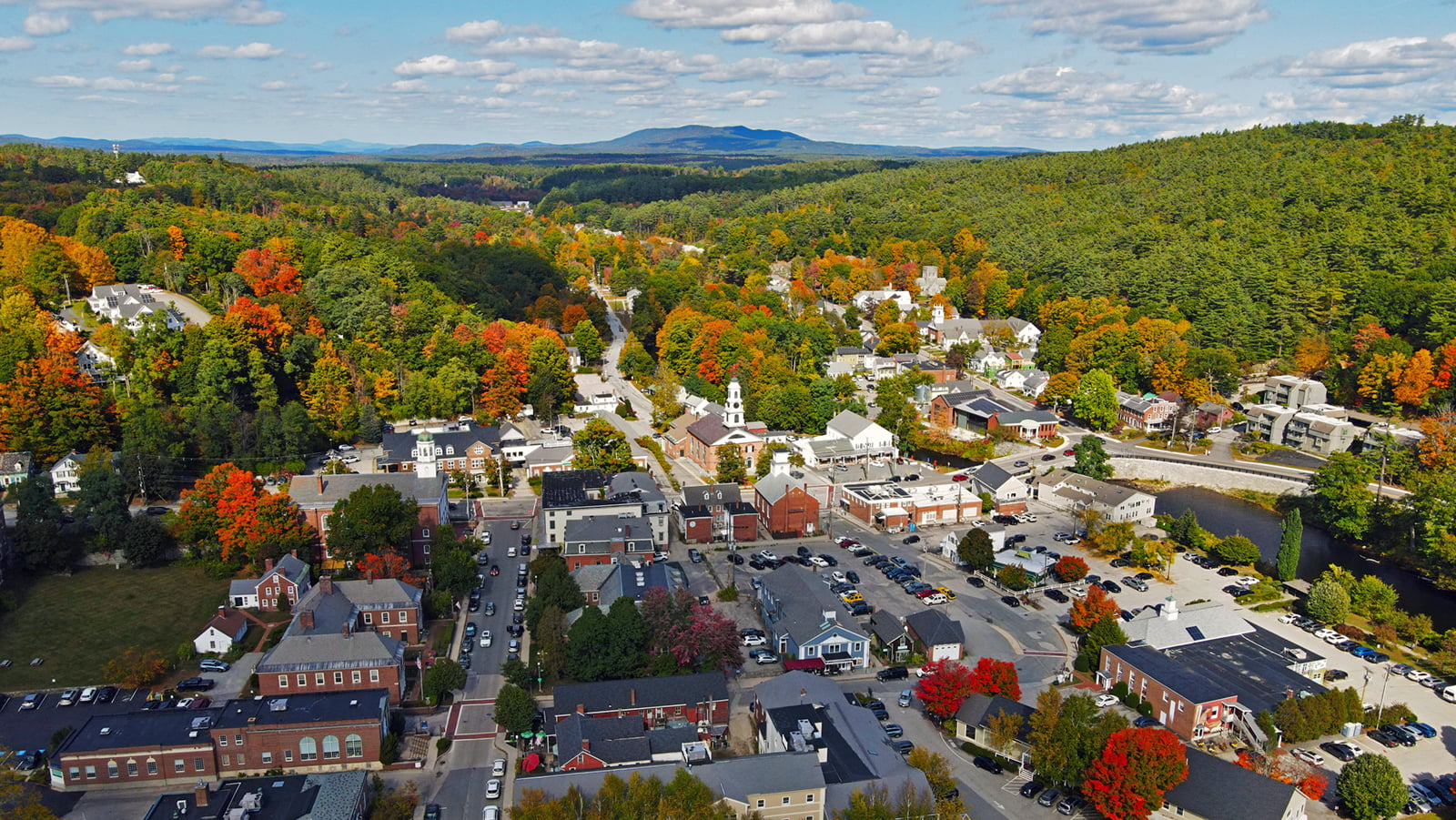
I moved from Utah to the small New England town of Peterborough, NH 20 years ago to begin a new life, a new job, and to discover new ideas and perspectives. It was a return to “home” in a way. My ancestry settled near here (Temple, Alstead, Amherst, Effingham) after my 8th great-grandfather sailed across the Atlantic Ocean on the ship Confidence and landed at the Massachusetts Bay Colony in 1638.
I chose Peterborough for its abundance of art, music, friendship, activities, and a real sense of being welcomed by neighbors and locals. Even the local politics seemed fairly tame. Granted, there were always a few hotheaded barflies, but their curmudgeonly personas were easy to ignore and chalk up to loneliness or general grumpiness. There are many wonderful people here who I call friends and consider very neighborly to this day.
When Covid hit in March of 2020, my perspective was yanked completely out of focus. The ugliness that surfaced when power and fear combined revealed how thin the veneer of neighborliness had always been. This was a hard contrast to the ice storm of December 2008 that wiped out power for weeks. In that scenario, people stepped up and really made a difference by helping those in actual need. But with Covid, everything was very different. Dark and full of nervous suspicion.
It’s ironic that the town that inspired Grover’s Corners, the setting of Thornton Wilder’s Our Town and America’s shorthand for small-town decency, set about casting out its own. Some people became the missionaries of compliance, then guardians of virtue, then something far worse…true believers in the righteousness of exclusion.
It seems so odd for me to say now, but for nearly 15 years I really thought Peterborough was, as its motto (much sighed over by local English teachers) states, “a good town to live in.”
Skip forward 6 years and it seems that the same suspicious Covid-era paranoia permeates a class of individuals in town who constantly test in-group loyalty and out-group hatred. I can’t help but recognize the vein of tribalism or purity politics running through the community. There’s a pathos, a highly emotional connection to “my truth” within the collective that has a deep psychological drive toward this behavior. It’s the same pathos that drove the Covid response.
It’s not just a Peterborough problem either. Drive an hour southwest to Greenfield, MA and you’ll find Last Ditch, a small lesbian bar that has been requiring KN-95 masks “or better” since it opened. As reported in the Boston Globe, the bar is drowning in debt and the owner made masks optional one night per week. For that, her own community accused her of eugenics and “a mass disabling event.” One commenter even hoped the bar would get firebombed. The collective does not care that she is one of them. It never did. That’s the point.
Barbara Oakley and her co-editors collected research on this pattern in Pathological Altruism. In chapter 16, “Genocide: From Pathological Altruism to Pathological Obedience,” Augustine Brannigan shows how easily people enter what Stanley Milgram called an agentic state. They follow the orders of authority or of their in-group loyally. The scale is obviously different here; the mechanism isn’t. Such obedience, Brannigan writes,
“…suggests not a failure of socialization (the usual control approach) but that they are/were oversocialized. Pathological obedience appears to be based on the development of a mentality that reflects long-term patterns of affiliation that inculcate a suppression of self-control in which executive function cedes its autonomy to external sources of direction.”
The dominant political machine within this local culture treats every disagreement as unbelief, and every loss as someone else’s crime, while rejecting their own allies for thought crimes or worse: entertaining the opposition’s platform or positions.
Consider Jonah Wheeler, a local Democratic member of the New Hampshire House of Representatives from Peterborough, and one of the youngest state legislators in the country.
His “crime” is that he decided to research claims about sex and gender policy and found them lacking in evidentiary support. He voted for HB 148 (allowing facilities to separate by biological sex), HB 377 (banning puberty blockers and cross-sex hormones for minors), and HB 712 (limiting most gender-affirming surgeries for minors).
For this, he became the out-group: a pariah. A write-in challenger materialized overnight for the recent primary. Jonah survived by 19 votes in a recount. Nineteen votes between a career of service and excommunication.
Apparently, some people who voted for Jonah cannot fathom that someone who worked the Bernie Sanders campaign, who interned with Rights & Democracy, who organized around education justice, and earned a John Lewis Youth Leadership Award—someone who sponsored bills on school funding and environmental protection and later start times—might actually look at evidence and conclude something different than the accepted narrative.
My distant cousin, Max Eastman, recognized this kind of behavior in his personal witnessing of the aftermath of the Bolshevik Revolution, wherein he recorded a massive political movement projecting the wishes and moral will of the party onto the world instead of testing claims against evidence. It’s the assumption that the world has intentions and that history or morality is on your side. The same kind of “animistic thinking” that envelops our current news cycle.
“The crime of Socrates was deeper than disobedience to the laws of the state. It was disobedience to the laws of animistic thinking.”
~Max Eastman
Eastman knew the price firsthand. Once a celebrated voice of the American left, he looked honestly at what he’d seen in Russia and changed his mind. “When I came home from Europe in 1927 most of my old political friends refused to speak to me on the street,” he wrote. “I was a traitor, a renegade, a pariah, a veritable untouchable, so far as the communists were concerned.”
Jonah Wheeler committed the same unforgivable sin. The machine cannot tolerate cogs that develop self-awareness. This is the very same machine that ran throughout the Covid years. Having built the technical infrastructure for the Great Barrington Declaration, I recognize the pattern of excommunication intimately.
And the irony compounds further now that some of those same people who made Covid a regulatory and collective nightmare, and who now seek to unseat Jonah, also serve on an inclusion board in town.
The hypocrisy couldn’t be more naked.
Those who screamed furious condemnations of “Grandma killer!” and “Plague rat!” now craft sensitivity guidelines and safe-space policies. They lecture on the violence of marginalization while the memory still burns of how they treated the unvaccinated, the mask-hesitant, and the ones who asked too many questions.
I think people are beginning to wake up to this behavior coming from those who consider themselves the adults in the room. I know I am very grateful for the friends and neighbors who question these dark motives and personas. But I think there are many out there who still believe that they are doing the right thing.
If you find yourself shifting in your seat, wondering whether this might apply to you, regardless of where you call “home”…good. That discomfort is the beginning of honesty. However, memory is selective, and righteousness has a way of editing its own archives. So let me make a simple request.
Grab a mirror. Stare long and hard into it. No, really…keep gazing. Keep gazing until you see the machine reflected back at you, until you recognize the same reflex that cast out the questioning neighbor in 2020 is the same one now trying to primary a John Lewis Award winner over biology. The target changes. The mechanism doesn’t.
And Our Town keeps running, shedding cogs, wondering why the engine sounds wonky.
Join the Conversation
Published under a Creative Commons Attribution 4.0 International License
For reprints, please set the canonical link back to the original Brownstone Institute Article and Author.