At school, my son is studying King Lear.
In a recent test, he came fifth best of twenty-two students.
‘What was the subject of the test?’ I asked him.
‘It is impossible to feel sorry for Lear in the first two scenes of Act One,’ he told me.
‘What did you write?’ I asked.
‘That it is not impossible to feel sorry for Lear. Because of Lear’s cognitive decline.’
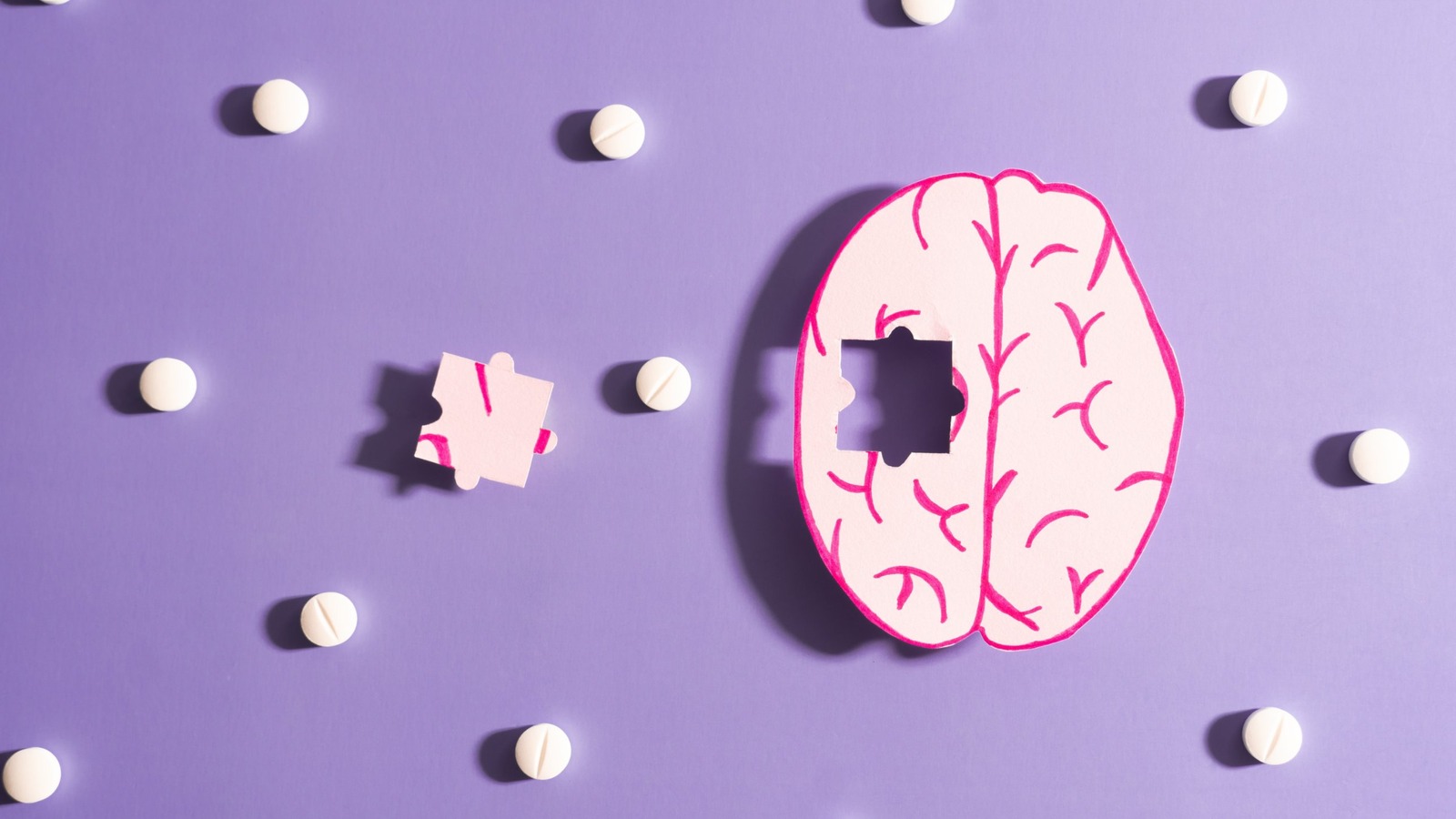
Lear, victim of Alzheimer’s disease.
One of the richest literary outputs of human history: swallowed by a diagnosis.
Lear’s impossible yearning for proof of love; Lear’s cleaving to paltry signs of power; Lear’s torture by impulses that define human lives by their ambiguous relation to weakness and to strength: silenced by a diagnosis.
Every spur to human reason, every catalyst for human feeling: levelled into an open plain of bedside sentiment, an Ah, Bless landscape without interest or relief.
There are two people in my immediate circle who are a little like Lear.
One is a woman in her seventies. She has seven siblings, near all of whom she lived until she was in her early sixties, at which point she relocated so as to support one of her children. Over six years ago, she was locked in her own house by her own government, warned relentlessly of threat from a deadly virus. In mortal dread, she submitted to being injected with an untested pharmaceutical technology and has continued to be injected ever since. Now, she no longer knows the daughter she wished to be near to.
The other is a man in his eighties. He founded a company that became a great success; for him, the looming inevitability of retirement was compounded by the mixed blessing of a son to take his place. Over six years ago, he was locked in his own house by his own government, warned relentlessly of threat from a deadly virus.
Unable to consider that he might be the dupe of corporate agenda, he submitted to being injected with an untested pharmaceutical technology on three occasions. Now, he grows more and more extreme in his attitudes and behaviour.
The stories of this woman and this man are worth telling. The importance of home to a woman and of work to a man; the disorientating effect of uprooting, from domestic routine or corporate reward; the joys and pains of a sense of self extended into the company of sisters or the fate of sons; the trauma of being wrenched from life, summarily and without recourse; the degradation of a drug experiment in which one did not mean to enrol: so many lessons to be interpreted and learned from.
But such lessons are lost in a diagnosis that carries all before it – a label, which opens up a space of sentimental innocence in exchange for the closing down of reason and true feeling.
Nothing to see here, folks. Nothing to think about. Nothing to learn. Just Alzheimer’s disease. Ah, Bless.
Physiological change is real, of course. And it may sometimes be well described by labels of the medical establishment. But it is not the end of our stories. On the contrary, our stories weave in and out of physiological causes and effects.
Dr. Michael Nehls has accounted for the conditions under which the hippocampus renews or shrinks away, directly affecting our engagement with the world and those in it. These conditions include isolation from family and friends, and loss of a sense of purpose. They may also include the introduction of a spike protein to the bloodstream.
We are not only mad. We are sent mad. Madness has a story to tell. And it would tell this story if we would let it. For there is reason and true feeling even in madness.
Autism is another diagnosis that has opened up a space of innocence in exchange for reason and feeling.
Now that it is mainstream to suggest the diagnosis may have been overused, there is an opportunity to return to reason and feeling – to tell those stories the label Autism has worked to drown out.
There is the story of clinical damage. The research is muddied and suppressed, but experience of the strange dysfunction of some of our young children, and the trajectory of their descent into a madness that never recedes, suggests brain development that has been artificially truncated.
There is the story of social and cultural damage. The story of clinically damaged young children dovetails with the story of many more children whose development is truncated by social and cultural conditions. The professionalization of so-called ‘care;’ endless subjection to institutional strategies; exposure to the derealizing and depersonalizing effects of screens; subjection to abstract versions of all experiences: these and other features of our globalist quasi-culture have produced dysfunction in increasing numbers of young people.
There is the story of normalization. The label Autism has had the effect of medicalizing even innocuous aspects of the human condition. Ordinary characteristics of human beings have been drawn by diagnosis of Autism into the sphere of disability, where they are reconfigured as problems that require to be mitigated by institutional interventions of all kinds.
There is the story of pharmaceutical profit. From a diagnosis of Autism there follows a lifetime of drug-taking if you are not determined to resist it. Amphetamines, sedatives, laxatives, and many other products are given and taken consistently before it is time for the usual regime of middle-years drugs-until-death.
There is the story of submission to state authority. A diagnosis of Autism intensifies the feeling of helplessness of parents, from which follows application to professional solutions, and submission to institutional strategies and surveillance, so total that parents effectively relinquish charge of their own children to accredited people and settings.
There is the story of control. An instance of clinical autism does not only take out of circulation one small child; it takes with it an entire family, whose economic and emotional resilience is greatly reduced by the immense practical and psychological demands of the condition.
An instance of social and cultural autism is almost equally effective in preoccupying an entire family: not only is the affected child actively removed from normal life by exposure to anti-social devices and routines and treatment with anti-social strategies and drugs, the child’s family are busied with chasing the appearance and accoutrements of a condition for which they unwittingly feed even as they seem to resist with all their might. All of which readies a sizable and growing cohort of would-be productive members of society for complete intersection with the institutional control to which we are all more or less subjected.
There are young people in our midst – more and more of them – who have stories to tell us, stories to make our ears burn, stories to spur us to reason, stories to stoke our strongest feelings.
These stories are silenced by the label Autism, which relates to us instead a simple tale, a board-book narrative whose innocent tone belies its effects of pacification and degradation.
Diagnoses of Autism and Alzheimer’s now encroach upon our lifespan from its beginning and its end, two walls closing in.
Soon, we will have no stories left to tell. We will have no human condition. The labels’ reach will have extended into every nook of our existence.
Diagnostic labels have an air of scientific rigour; this allows them to lord it over those homespun, grassroots interpretations of ourselves, others, and the world on which human reason and feeling have always relied.
And yet diagnostic labels have an infinite plasticity, which lets them take ownership over all manner of even contradictory thoughts and actions.
If you are socially awkward, you are on ‘the spectrum.’ If you are socially confident, you are ‘masking.’ Autism will get you either way.
Diagnoses chew up our stories and spit them out as an undifferentiated pulp fiction, offering dumb and docile consolation in place of questions and answers, recriminations and regrets.
A little while ago, I was in the queue at a sports shop. Ahead of me were a man and woman with a small child in a buggy. By their manner of dress and talking, and their being out in the world at that time of day, I judged that theirs was a household surviving on benefits, as many households do where I live.
The man was holding a pair of Nike trainers. While waiting to purchase them, he chatted with the woman behind. He explained to her that when his trainers get the slightest scuff, he has to buy a new pair. ‘Because of my OCD,’ he said.
Another diagnosis, to rob a grown man of all reason. Another diagnosis – possibly self-administered – to empty a grown man of all feeling.
We would do well to stop talking about our diagnoses and start telling our stories.
There are many instructive things to be observed of King Lear. The least revealing, the least edifying, the least productive of any kind of realization, is that he may have had Alzheimer’s disease.
Join the Conversation
Published under a Creative Commons Attribution 4.0 International License
For reprints, please set the canonical link back to the original Brownstone Institute Article and Author.