The sounds in my mother’s room during her final days stood in stark contrast to those that have defined most of my professional experience. There were no ventilator alarms piercing the air every few minutes, no overhead announcements echoing down hospital corridors, no infusion pumps demanding attention in the middle of the night. There were no teams rushing through doors, pushing carts full of medications, no physicians frantically adjusting machines that were temporarily holding physiology together, no organized chaos that defines the modern intensive care unit. Instead, there was quiet.
For decades in intensive care units, where noise signifies action and action equates to survival, quietness has felt unsettling. Intensive care medicine depends on urgency, real-time monitoring, and rapid decision-making to prevent death. I have lived my professional life in that environment. But in that room, I was not the physician. I was a son. And now, as I write this, I am a son whose mother has died.
My mother did not die in an intensive care unit. She was not surrounded by machines, alarms, or artificial light. She died at home, in a room imbued with the quiet weight of memory. Decades of life were embedded in those walls, which had witnessed birthdays, conversations, laughter, arguments, and the countless ordinary moments that, in retrospect, constitute the true foundation of a life. A peripherally inserted central catheter (PICC) line rested in her arm, serving not as a symbol of escalation but as an instrument of compassion. Medications were given to relieve discomfort rather than to reverse disease. Nurses entered the room with calm, deliberate purpose rather than urgency. Their voices were soft, their movements measured. Their objective was not to save her life, but to honor it. There was no battle being fought. There was acceptance. And in that acceptance, there was dignity.
Around her, the people who loved her most gathered. Children. Grandchildren. Family members who had traveled from different places, not in panic, but in recognition that this moment, this final chapter, was one that mattered deeply.
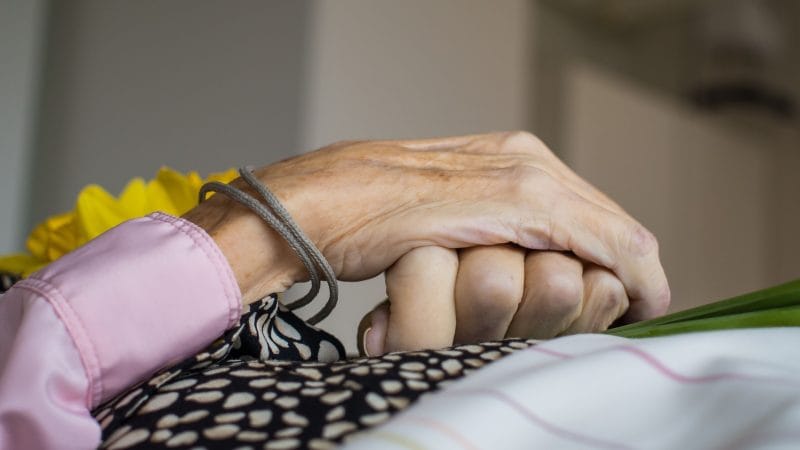
Sometimes we spoke. Sometimes we sat in silence. Sometimes we simply held her hand.
There is a form of communication in those moments that medicine cannot teach or measure. It is neither physiological nor quantifiable, yet it is real.
Meanwhile, my phone would not stop. Dozens of calls. Hundreds of text messages. Colleagues from across the country. Students from years past. Friends, patients, acquaintances. All reaching out with genuine compassion. And almost every message carried the same underlying sentiment: “We are praying she improves.” “We hope she pulls through.” “Let us know what else can be done.” I understood the intention behind every one of those messages. They were kind. They were sincere. They were deeply human. But they were also revealing.
Because what they reflected, collectively and unconsciously, was something we rarely acknowledge openly: We have become a culture that no longer knows how to accept death.
Over the past century, medicine has achieved extraordinary success. We have extended life expectancy, eradicated diseases, developed technologies that can temporarily replace failing organs, and established systems capable of sustaining biological function long after the body can no longer do so independently.
Ventilators can breathe for failing lungs. Dialysis machines can replace kidney function. Vasopressors can maintain blood pressure when the cardiovascular system collapses. Extracorporeal support can oxygenate blood outside the body. Artificial nutrition can sustain metabolism indefinitely.
These are remarkable achievements. However, these advancements have also fostered a dangerous illusion: the belief that death is optional, and that with sufficient intervention, escalation, and technological force, the inevitable can be indefinitely postponed. We cannot.
Every experienced physician knows this. Not intellectually, but experientially. We have seen it. We have lived it. We have stood at the bedside when the machines are running, the medications are maximized, the monitors are active, and yet the patient is still dying.
There comes a moment when biology cannot be negotiated with. And when that moment arrives, the question changes. It must change. The question is no longer: How do we keep this patient alive? The question becomes: How do we allow this patient to die without suffering?
This is where modern medicine, despite its many strengths, often falls short. The failure is not due to insufficient knowledge, but rather a lack of cultural and institutional willingness to adapt. Comfort care has been mischaracterized, misunderstood, and in many cases, quietly stigmatized. Families are often led—explicitly or implicitly—to believe that choosing comfort care means “giving up,” that it represents abandonment, or worse, that it reflects a lack of love or commitment. Nothing could be further from the truth.
Comfort care is not the absence of medicine. It is the most honest application of medicine. It is the moment when we stop assuming that technology can reverse the irreversible, and instead use our knowledge, skill, and compassion to reduce suffering, preserve dignity, and support both the patient and the family through the most profound transition in human existence. In many ways, it is the highest form of care we can provide. And yet, despite this, we have built a system that often resists it.
Modern healthcare systems, particularly in the United States, are not neutral in these decisions. They are structured, incentivized, and organized to favor intervention over reflection, escalation over restraint, and procedure over presence. There are financial incentives associated with intensive care unit, procedures, and prolonged hospitalization. Institutional pressures often encourage clinicians to “do everything,” even when such actions no longer serve the patient. There is also legal fear: fear of being accused of insufficient intervention, fear of litigation, and fear of retrospective judgment. And there is something even more pervasive: A cultural refusal to acknowledge that death is not a medical error.
We have, in many ways, medicalized death to such an extent that we have stripped it of its humanity. We have transformed the final chapter of life into a technical problem to be solved, rather than a human experience to be understood. We measure oxygen saturation, blood pressure, and heart rate variability. We adjust ventilator settings. We titrate medications. We track and react to lab values. But we rarely ask the most important question: What does this person want? It is not what we can do, but what we should do.
Standing beside my mother in those final days, I reflected on the thousands of conversations I have had with families in intensive care units. I have explained mechanical ventilation, described dialysis, outlined survival probabilities, and guided families through decisions that carry immense emotional weight. But what I now understand more deeply than ever is this: The hardest part of those conversations is not medical. It is existential.
Families are not just confronting the decline of a loved one. They are confronting the limits of control. The limits of medicine. The limits of life itself.
In a culture that has spent decades reinforcing the idea that everything is fixable, that every problem has a solution, and that every decline can be reversed, this confrontation becomes almost unbearable.
At home, the experience was different. There were no alarms. No overhead pages. No artificial urgency. The pace slowed. The noise disappeared. And in that quiet, something essential emerged. Clarity.
There was time to remember. Time to speak. Time to sit in silence without feeling that something needed to be done. Presence became the primary form of care.
Holding a hand became more meaningful than adjusting a machine. A whispered word carried more weight than another intervention. The absence of chaos allowed something deeply human to take its place. We do not teach this in medical school. But we should.
My mother’s passing reinforced a lesson that extends far beyond medicine and into every household, every family, every individual. End-of-life conversations are not optional.
They are essential. They are not conversations to be avoided, postponed, or delegated to “later.” Because later, in medicine, it often arrives suddenly, and without warning.
What do you want when your body begins to fail? Not in abstraction. Not in theory. But in reality. Do you want aggressive life support if recovery is unlikely? Do you want prolonged mechanical ventilation, invasive procedures, extended hospitalization, if the outcome is survival without quality, without independence, without dignity? Or do you want comfort? Familiar surroundings? The presence of those you love? A peaceful transition rather than a prolonged struggle? There is no universal right answer. But there is a universal mistake: Not asking the question at all.
When these conversations do not happen, families are left to guess. And in that space of uncertainty, decisions become heavily burdened by guilt, fear, doubt, and the haunting question of whether they are doing the right thing. I have seen families fracture under that weight.
I have seen individuals carry that burden for years. And all of it could have been alleviated by a conversation that never took place. Advance directives, living wills, open discussions. These are not bureaucratic exercises. They are acts of love. They are gifts we give to those who will one day have to speak on our behalf.
Medicine today stands at a crossroads. We possess unprecedented technological capability and can extend biological life in ways that were once unimaginable. However, we have not developed an equally sophisticated cultural framework to guide how and when to use this power. We have confused capability with obligation. Just because we can do something does not mean we should. And yet, increasingly, our systems behave as if intervention is the default, and restraint requires justification. That inversion is dangerous.
My mother’s final days, and her passing, brought that reality into sharp focus.
There was no chaos. No unnecessary suffering. No prolonged medicalization of a process that, at its core, is deeply human. There was dignity. There was peace. There was acceptance.
And in that environment, I was reminded of something that medicine must never forget:
Our role is not only to extend life. It is to honor it.
We fight when fighting makes sense. We intervene when recovery is possible. We deploy every tool we have when there is a reasonable chance of restoring meaningful life. But when that chance disappears, wisdom must replace reflex. At that moment, the role of medicine does not end. It transforms. It becomes quieter. More deliberate. More human. And, perhaps, more important than ever.
My mother’s final lesson was not spoken. It was lived. It was in the stillness of the room. In the presence of family. In the absence of unnecessary intervention. In the quiet dignity of a life reaching its natural conclusion. She taught me that death is not the enemy. Suffering is.
She taught me that acceptance is not surrender. It is understanding. She reminded me that the measure of medicine lies not only in how long we can prolong life, but also in how well we can guide its final moments.
In the end, we cannot stop the circle of life. But we can decide how we meet its final turn. With fear or with clarity. With chaos or with dignity. With denial or with truth. My mother chose dignity. In doing so, she imparted one final lesson, which I will carry into every intensive care unit, every patient encounter, and every difficult conversation. Not how to fight death. But how to respect it.
Join the conversation:

Published under a Creative Commons Attribution 4.0 International License
For reprints, please set the canonical link back to the original Brownstone Institute Article and Author.