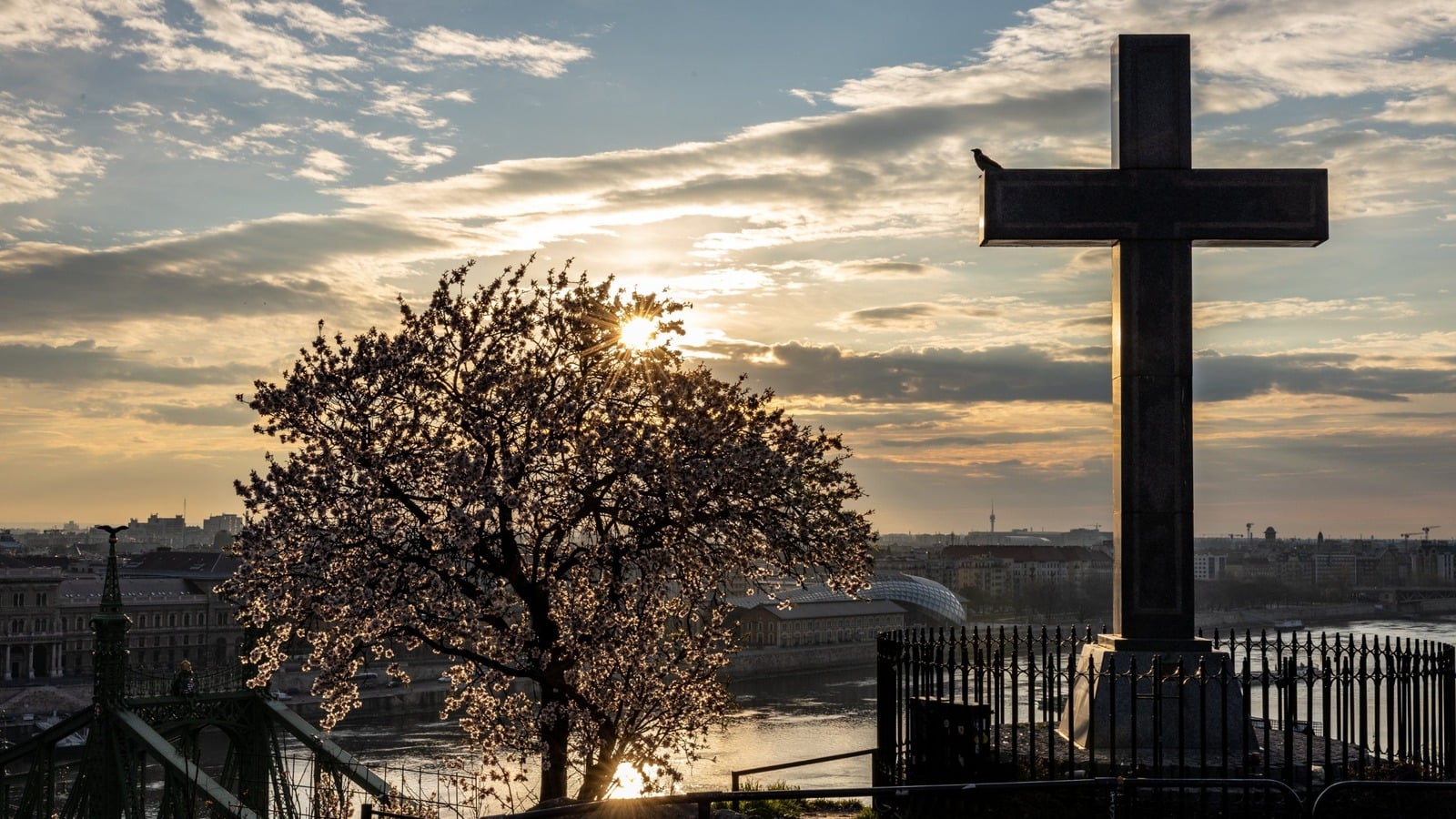
They prayed. They researched. They decided. Across Pennsylvania, loving parents have discerned that introducing ingredients that carry both known and unknown risks of harm to their children’s health is incongruous with their faith, such as Christians who believe in God’s perfect design and His direction to maintain their bodies as sacred vessels for His Holy Spirit.
“Or do you not know that your body is a temple of the Holy Spirit within you, whom you have from God? You are not your own”
-(1 Corinthians 6:19, ESV).
For years, these parents have submitted religious objections to compulsory school vaccinations, and their decisions of conscience have been honored. Their children were raised in the faith their parents chose to pass on. Today, some of their lawmakers want to tell them that their consciences no longer matter.
Despite more than a century of our nation valuing and prioritizing the conscience of man, like conscientious objectors serving in the military or Jehovah’s Witnesses not being required to salute the flag or recite the Pledge of Allegiance, our nation’s turn toward secularism has seemingly distorted public perception of what the free exercise of religion or liberty of conscience even means.
The last half century has been marred by erosion of religious freedom in the country that supposedly boasts freedom for all. The news constantly amplifies cases of forcing businesses to serve customers seeking accommodations violating the business owner’s beliefs, compelling religious hospitals to use certain medications or conduct certain procedures that are prohibited by their dogma, terminating employment or military service over religious exemptions, and shuttering religious gatherings during Covid. These are just some of the examples of interference with people’s exercise of their religious beliefs.
So, the framework has been cast permitting the government to interfere with liberty of conscience across America. Not even the premier state recognizing religious liberty, Pennsylvania, is immune. Amid the rising rhetoric against religious beliefs that are inconsistent with “The Science,” Pennsylvania legislators are moving to reverse a four-decades-old regulation protecting religious and moral objections to childhood vaccinations—and with it, the right of parents to say no, in good conscience, to a medical intervention for their own children.
Senator Amanda Cappelletti (D) disseminated a memorandum to all Pennsylvania Senate members seeking to repeal that regulation along with the religious-belief exclusion in the Child Protective Services Law. That exclusion concerns certain instances of withheld medical care, but it already permits court-ordered intervention when a child’s life or long-term health is threatened. Senator Cappelletti justified her intended revisions on public health and child welfare grounds, and the effect of her reasoning is to position someone other than parents as the rightful decider of what care and treatment children receive. She also points out that courts have upheld similar measures in other states.
Deeply disturbing is Senator Cappelletti’s rationale behind the effort to restrict religious practice and parental rights to make medical decisions for their own children. Her memo protests that parents make choices for their children, and especially choices consistent with their beliefs that she may disagree with or dislike.
She decried the religious exemptions: “[T]hese two provisions risk depriving children of lifesaving care or preventive options, determined not by their own choices but by those made for them.” Parents necessarily make consequential choices for their children who cannot yet decide for themselves. But should religious bases for those choices justify restricting parental authority?
One should question further: who should be making these choices for children? People with no legal, custodial, or financial obligations with respect to the children, like the government or school officials or doctors? The children themselves? If the parents have capacity to make informed decisions in their own lives, why does she assume their religious beliefs render them incapable of making decisions for their children?
The reversal specifically targets citizens who hold, profess, and practice religions that may dissent from or contradict current medical practices. The remedy, as she proposes, is that religious exemptions to compulsory childhood vaccinations for school must be prohibited by removing them. The foreseeable result is that families will be required to choose between their faith and school attendance. Families who cannot afford to stay home to school their own children would be coerced to vaccinate lest they lose employment or their children not receive education as required by law.
If parents decline vaccination and cannot arrange other lawful education, what consequences would follow? Based on Pennsylvania’s mandatory school attendance and truancy laws, these parents could be fined, jailed, or potentially even lose custodial rights to the state. There could even be unintended consequences. Consider the business of forged vaccine records or medical exemptions like the black market that arose during Covid.
Doctors were prosecuted for accepting payments to falsify vaccine records or give out fake medical exemptions, and purchasers were prosecuted too. Would this legislation create a similar black market to avoid the consequences of a bad law?
Parents who do make the difficult decision to vaccinate against their conscience must grapple with the personal and internal conflict of disobedience to the Creator and the disparity between their established religious practice and the control of that practice being involuntarily stripped away. And what happens to the children who have yet-to-be-discovered contraindications or who suffer adverse reactions that they otherwise would not have experienced if exempted by their family’s religious beliefs?
Since all of Pennsylvania’s compulsory school vaccines remain on the Childhood Immunization Schedule, parents who are forced to vaccinate despite their religious convictions will have only limited recourse for any vaccine injuries under the 1986 National Childhood Vaccine Injury Act. Injury claims must first go through a no-fault compensation program, not a courtroom; the manufacturers and many providers are shielded from most lawsuits; and compensation is far from guaranteed.
No one who made the decision for them will be responsible, the doctors will not be responsible, the manufacturers will not be responsible, and the schools will not be responsible. Meanwhile, the parents whose choice was stolen from them will be footing the bill and taking the blame.
Beyond vaccination, Cappelletti proposes removing a religious-belief exclusion from the Child Protective Services Law, potentially changing how some refusals of medical care are classified. The existing law already requires an agency to seek court-ordered medical intervention when the lack of care threatens a child’s life or long-term health.
Her memo does not supply detailed replacement language. Consider parents whose child has cancer: if they reject chemotherapy on religious grounds while exploring alternatives beyond the provider’s abilities or standard of care, how would the proposed repeal affect an abuse or neglect determination? The central question is how to distinguish a parental decision that includes religious convictions from a failure to provide necessary care.
Her memo points toward a system in which a doctor is expected to report parents who make difficult decisions out of love for their children to CPS to be investigated for neglect or abuse. Repealing the religious-belief exclusion invites the state to wedge itself into the family’s religious practice, override the parents’ informed consent, and petition a judge to interfere. A judge who has no personal knowledge of the child—who was born to, raised by, and loved by the parents—would decide the case with limited information instead of a lifetime of experience between the parents and child.
Senator Cappelletti also leans on the claim that other states are doing it and that their courts agree. Instead of considering the tax and wasteful spending implications of the inevitable legal defense of this abysmal breach of liberty, which she obviously recognizes will arise if this law passes, she assumes the litigation burden is worth the results of her proposal. She identifies California, Connecticut, Maine, New York, and West Virginia as the states that have eliminated non-medical exemptions and claims that courts have “consistently upheld these repeals.” A closer look at those states tells a very different story.
The constitutional language in these states differs from Pennsylvania’s. New York’s constitutional liberty-of-conscience provision is limited. There, religious liberty “shall not be so construed as to excuse acts of licentiousness, or justify practices inconsistent with the peace or safety of this state.”
California’s state constitution and Connecticut’s state constitution include similar language limiting exercise of religion with the caveats of peace and safety.
Maine’s constitutional clause protects religious professions and sentiments “provided that that person does not disturb the public peace, nor obstruct others in their religious worship.” Pennsylvania’s guarantee, by contrast, carries no such caveat.
Unlike the preceding states, West Virginia’s constitution has no public peace or safety limitation. Its compulsory school vaccination law, however, only offers medical exemptions as a basis for refusing vaccination. West Virginia is embroiled in litigation over whether its failure to have a religious-based vaccine exemption for compulsory school attendance violates its Equal Protection for Religion Act of 2023.
Connecticut’s Supreme Court rejected the parents’ constitutional challenges to the repeal of religious vaccination exemptions, reasoning that a religiously neutral law of general applicability need only be rationally related to a legitimate government interest. In Spillane v. Lamont, the court relied upon US Supreme Court doctrine, the Employment Division v. Smith framework, when it determined that compelling vaccination despite conflicting religious beliefs did not trigger a stricter standard of review.
The court did allow the parents’ statutory religious-freedom claim to proceed, and the legislature responded by rewriting that statute to carve out school vaccination—changing the rules in the middle of the game, as the plaintiffs’ attorney put it.
Maine’s removal of religious exemptions is still in litigation, though the US District Court for the District of Maine denied a petition for a preliminary injunction and the First Circuit declined to enjoin enforcement while the case proceeds. An emergency application is now pending before the US Supreme Court (SCOTUS). The denial of interim relief, contrary to Cappelletti’s interpretation, is very different from an adverse verdict. The case has not yet been decided on the merits, meaning the conflict is not yet settled.
Similarly, New York’s repeal of religious exemptions for compulsory vaccination and its law fining schools for non-compliance is under appeal to SCOTUS. In New York, Amish plaintiffs have been fined more than $100,000 for non-compliance with the state’s mandate that school-aged children be vaccinated without religious exception.
Traditionally, Amish communities reject vaccinations based on their religious beliefs, and their children are educated in private, Amish schools. The Amish are faced with an impossible choice: vaccinate or leave the state. The community cannot afford to pay the fines for continued non-compliance.
In this conflict between New York and Amish citizens, SCOTUS had already sent the case back once to the Second Circuit to reconsider its findings in light of the holdings in Mahmoud v. Taylor after vacating a prior order in favor of New York. That parental rights and religious liberty case held that parents who object on religious grounds to a school’s LGBTQ+ storybook instruction were entitled to a preliminary injunction requiring notice and the opportunity to opt out.
In its analysis, SCOTUS outlined certain truths with respect to religious freedom and parental rights: (1) the First Amendment protects the daily ability of those who hold religious beliefs to practice their faith; (2) parents have the right to direct the religious upbringing of their children regardless of whether the children attend public or private schools; and (3) applying pressure to conform to viewpoints and lifestyles contrary to the religious exercise of the parents and children is a violation of the First Amendment. Whether these truths will apply to compulsory vaccination remains an open question.
SCOTUS further found disingenuous the school’s argument that permitting religious opt-outs from the curriculum would cause classroom disruption because the school permitted other bases for opting out. The compulsory vaccination context raises a similar question: some states have removed religious exemptions for students but still permit unvaccinated students to attend if they have medical exemptions. Thus, if a doctor signs off on the exemption, it will be honored; but if a parent professes his or her reasoned and sincere faith-based objection to vaccination on behalf of his or her children, it will be ignored?
The result is the same: some children are permitted to go to school unvaccinated while others are either denied their freedom to be educated in a school environment or denied the right to liberty of conscience. Although the courts seem to treat medical and religious exemptions as meaningfully different, the end result where unvaccinated children are categorized and treated differently because of their religious beliefs warrants stricter review.
The debate is not only about how federal courts interpret religious freedom. It is also about the tradition of liberty of conscience that Pennsylvania’s own constitutional language demands the Commonwealth honor.
Pennsylvania’s founding placed liberty of conscience at the heart of its colonial experiment. Its founder, William Penn, regarded freedom of religious conscience as a matter beyond the proper control of earthly government. Penn challenged the idea that coercion could produce genuine belief, questioning why “men should think clubs, prisons, and banishments the proper mediums of enlightening the understanding.”
During Penn’s time in England, he witnessed religious persecution at the hands of the government and the courts. He sought a society united in Christian morality without enforced uniformity of worship, and he established Pennsylvania for religious dissenters—even ones with whom he disagreed. He called the Commonwealth a “holy experiment.”
Penn was profoundly Protestant and disagreed theologically with Roman Catholics. Nevertheless, he recognized that his disagreement did not make the practice of Catholicism deserving of punishment: “yet do I not intend that any person or persons should be in the least harmed for the external exercise of their dissenting consciences in worship to God, though erroneous.” Indeed, Penn felt that religious toleration led to prosperity in a civil society, where common morality rather than strict adherence to any established religion would lead to personal wealth and civic strength.
Consistent with these founding ideals, an elected General Convention drafted and adopted Pennsylvania’s Constitution in 1776, before the US Constitution. Its preamble described the purpose of government as enabling individuals to enjoy “their natural rights and the other blessings which the Author of existence has bestowed upon man.” This language expresses a foundational principle: rights are not gifts that government may withdraw at will. Pennsylvania’s constitutional protection of conscience gives that principle particular force in the debate over religious liberty.
Pennsylvania’s Constitution further secures, “All men have a natural and indefeasible right to worship Almighty God according to the dictates of their own consciences; no man can of right be compelled to attend, erect or support any place of worship, or to maintain any ministry against his consent; no human authority can, in any case whatever, control or interfere with the rights of conscience, and no preference shall ever be given by law to any religious establishments or modes of worship.”
Fast forward to 2020, and Pennsylvania’s churches fell silent. Pennsylvania government under emergency powers encouraged restricting religious gatherings. The Archdiocese of Philadelphia, of the Roman Catholic denomination, suspended the celebration of public Mass and dispensed the obligation for the faithful to attend Mass.
For other denominations, both Christian and non-Christian, religious leaders kowtowed to the fear, propaganda, and “greater good” promotions of the government’s actions. Although church doors may have remained open, religious gatherings were still marred by masking and social distancing requirements or were turned into virtual spectacles instead of in-person, community-based events.
Pennsylvania’s Religious Freedom Protection Act further restricts laws that interfere with the free exercise of religion absent “compelling justification.” Compelling justification means that the government’s goal is essential and the government action is the least restrictive means necessary to accomplish the goal.
Is excluding some unvaccinated children while permitting other unvaccinated children to attend school the least restrictive means of accomplishing the public health goal of disease control and prevention? If unvaccinated children are not attending school, would not their participation in society at all also undermine the public health goal? Are we to exclude children from life and normal childhood activities and label them with a scarlet letter for practicing their faith with their families when they do not qualify for (or doctors refuse to give) medical excuses?
Pennsylvania State Representative Dan Frankel (D) offers a less restrictive option: keep the religious exemption but make it harder to get. In a memorandum seeking legislative sponsorship that is keenly titled “Ensuring Parental Access to Current Vaccine Information Act,” Representative Frankel does not propose easier access to vaccine information for all parents to build informed consent, as the title suggests. Rather, his bill seeks to add barriers to make asserting religious exemptions more difficult.
His memo says the religious exemption to compulsory school vaccination would remain, but demands parents attend annual counseling that would address disease risks, current outbreaks, possible exclusion or quarantine during outbreaks, and the benefits and risks of recommended immunizations. The parents would be compelled to “revisit this important decision regularly” by being force-fed widely and publicly available information as a condition of their exercise of conscience.
The concept is chillingly reminiscent of the Nationalsozialistischer Lehrerbund, or National Socialist Teachers League. Under Nazi rule, membership was made effectively compulsory, public-school teachers were subjected to ideological retraining, and those who resisted faced dismissal, blacklisting, or denunciation, while Jewish and politically unreliable teachers were purged from the system. The question here is whether government may condition the exercise of conscience on repeated participation in instruction designed to change a parent’s decision.
Will those punishments faced by dissenting teachers in Nazi Germany be the consequences here for parents who refuse to comply? What is the enforcement mechanism? Fines? Jail? Exclusion of the child from school? Is the requirement that the parents sit and listen to the medical provider? Or must the parents interact and affirmatively deny consent for vaccinations? At what point do annual retraining classes on vaccinations become coercive or overly burdensome? Will the parents be required to pay for these sessions, or taxpayers in general?
“[W]e have long recognized the rights of parents to direct ‘the religious upbringing’ of their children.” So the Supreme Court reaffirmed in Mahmoud, quoting its earlier decision in Espinoza v. Montana Dept. of Revenue. Government policies that substantially interfere with the parents’ ability to raise their children in their faith violate that right. Pennsylvania’s Constitution prohibits the government from interfering with or controlling individual exercise of conscience, and it prohibits the state establishment of religion.
From the highly politicized rhetoric surrounding vaccinations, it seems that these legislators have become religious fanatics in their own rights, worshipping vaccines as holy miracles and essential to human life. Despite recognizing by law in 1986 that vaccines cause injury, vaccine advocates consistently ignore manufacturers’ warnings of adverse events and reactions listed right on the package information sheets and turn blind eyes to VAERS and reports of injuries up to and including death from vaccinations—reports that, at the very least, demand investigation rather than dismissal.
Such advocates invoke ad hominem attacks against any person who attempts to seek truth and balanced information regarding vaccinations. Attempts to have meaningful dialogue on the subject with those believing vaccines are the end-all-be-all of modern medicine are in vain.
Cappelletti echoes pro-vaccine propaganda that there is an “ongoing national campaign of disinformation and chaos surrounding vaccinations and sound public health measures.” Public debate and dissenting opinions are characterized as chaos. Frankel also parrots media talking points that “vaccines remain one of the most effective public health tools ever developed.” Ironically, he suggests that parents who claim religious exemptions to vaccinations base their decisions on “assumptions made years earlier.”
That is perhaps the biggest assumption of all. That both lawmakers assume that parents who claim religious exemptions are fanatic zealots, underinformed, or both reflects today’s dismissive, secular mindset. It is as though they cannot fathom or rationalize that these parents are well educated, well informed, well researched, and spiritually stable. Are they themselves so blinded by fear that they mistake confidence and conviction for folly, abuse, or neglect?
As I watch those who swore oaths to uphold, obey, and defend Pennsylvania’s Constitution undermine the very core of Pennsylvania’s founding, religious freedom, I cannot help but question their sincerity. After all, the US Constitution serves as a base or a minimum for protecting freedoms, but the states can go even further to uphold and protect inherent rights like practicing religion and raising a family. Pennsylvania’s long history rooted in liberty of conscience is intended to do just that—protect families’ right to practice and raise their family in their faith.
If states, including the Commonwealth of Pennsylvania, are meant to offer more protection than federal law, how can it be that the federal government recognized and approved my husband’s religious exemption to vaccinations during his immigration, but Pennsylvania seeks to remove that protection for families like ours?
How can it be that he is informed, educated, and sincere enough to make those decisions and be recognized for them by federal officials, but the state questions the making of those same decisions within our family, including for our future children? When our own lawmakers do not trust We the People to manage our own affairs, why should we trust them to manage anything at all?
Author’s Note: Religious exemptions were used on behalf of my own children for years. After a custody dispute in which compulsory school vaccination was used as leverage, however, my children were vaccinated by court order. I have lived what happens when a conscientious decision is overridden by the state, and I do not believe I am alone.
Join the Conversation
Published under a Creative Commons Attribution 4.0 International License
For reprints, please set the canonical link back to the original Brownstone Institute Article and Author.
Author