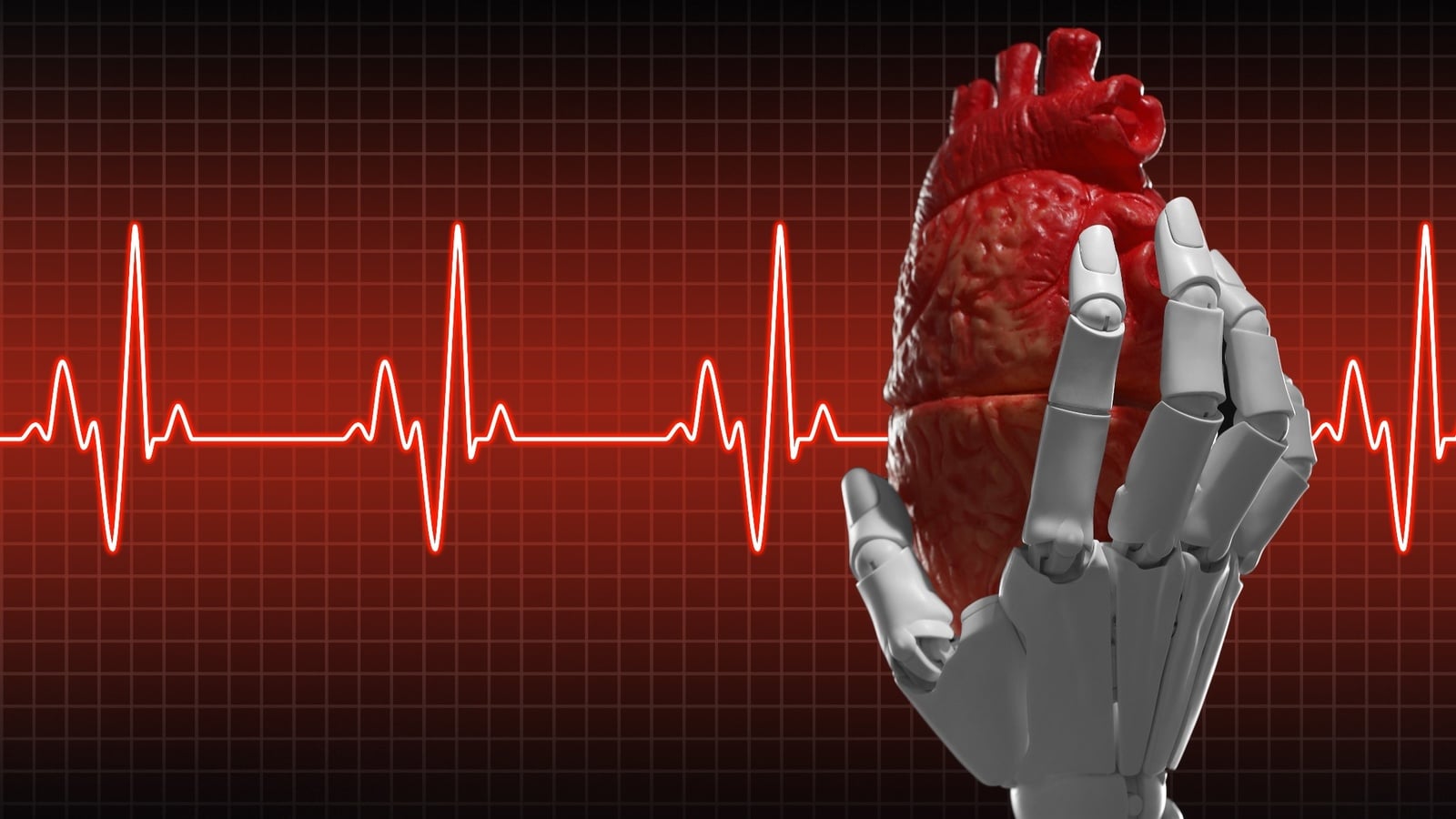
Medicine is always changing. In my career, I have seen intensive care units go from simple rooms with oxygen, monitors, and clinical intuition to places where artificial intelligence can predict problems before we notice them, bedside ultrasound helps us avoid guessing, and robotic systems help surgeons work with great precision. Telemedicine now lets specialists care for patients who are far away. These advances have saved lives, made care more accessible, improved efficiency, and helped doctors reach patients who might not have seen a specialist otherwise.
Many studies show how valuable telemedicine is, especially in underserved areas and critical care settings where specialists are scarce (1). I welcome these innovations and use many of them daily. I am convinced that artificial intelligence (AI) will become one of the most important tools doctors have ever had. Recent reviews also suggest that AI will help doctors make decisions, not replace them (2). Still, no matter how advanced our tools get, they should help us do our jobs better, not change what our jobs are about.
A recent lawsuit about the death of a very sick young man has sparked a lot of talk in the medical community (3). Reports say that one question is whether the doctor in charge ever actually examined the patient in person. The courts will figure out what really happened, so I won’t guess or assign blame. What worries me is not the lawsuit itself, but the bigger question it raises. Are we starting to think that because technology lets us care for patients from a distance, being there in person is no longer necessary?
When I started practicing medicine, this question would have seemed impossible. We took blood pressure by hand, read chest X-rays on lighted boxes, and depended on physical exams because we had no other choice. We were always close to our patients. We shook hands, sat with families during hard times, and listened not just to heartbeats and breaths, but also to the pauses, the worry in a spouse’s voice, the fear behind hopeful words, and the small signs that told us more than any lab test. Sometimes I think those moments taught us as much as any textbook.
Today, we have abilities my mentors never dreamed of. We can look at scans from across the world in seconds. A neurologist can check on a stroke patient from far away. An intensive care doctor can watch over several ICUs at once from a central location. Algorithms constantly review patient data and spot patterns we might miss. These advances are real progress, and many people are alive today because doctors were willing to try new technology. Ignoring these innovations would not just be unwise—it would be wrong.
Presence Begins before the First Word
One of the first lessons I learned as a young physician was never formally taught during medical school. It did not appear in anatomy, physiology, pathology, pharmacology, or any board examination I ever took. Yet it has influenced my practice. One of the first things I learned as a young doctor was never taught in medical school. It wasn’t in any class or exam, but it has shaped how I practice more than any lecture or textbook.
Before we say anything, look at lab results, or make a diagnosis, our patients are already deciding if they trust us. Turning our attention to the computer screen. None of these actions appears in clinical guidelines. None contributes directly to a hospital quality score. Yet they often determine whether patients truly hear what we are trying to tell them. Information delivered without trust rarely changes behavior. Information delivered by someone who has earned trust often changes lives.
With all our excitement about efficiency, connection, and new technology, I worry that we are forgetting one of the oldest and most important parts of medicine: simply being there with another person. Presence is hard to measure. It doesn’t show up on dashboards, billing codes, or reports. Artificial intelligence can’t chart it, and it’s hard for anyone to put a price on it.
Nevertheless, every experienced physician understands its extraordinary importance. Presence reassures before a single medication is administered. Presence builds trust before difficult decisions must be made. Presence allows physicians to observe details that no monitor can. Still, every experienced doctor knows how important presence is. Just being there can comfort someone before any medicine is given. It builds trust before tough choices. It lets us notice things no machine can pick up.
Most of all, it reminds patients and families they are not facing illness by themselves. Conversations influence decisions, strengthen therapeutic alliances, and frequently reveal information that would otherwise remain hidden. A frightened patient often tells us something entirely different after five quiet minutes than during the first hurried 60 seconds. Families ask different questions when they believe their physician is genuinely listening. These moments cannot be programmed into an algorithm because they are not transactions of information. They are exchanges of humanity.
The Physical Examination Is More Than Diagnosis
Medical students often see the physical exam as just a way to gather information for a diagnosis. But with experience, doctors learn it means much more. The physical exam is often the first way we help our patients.
When I place a stethoscope on a patient’s chest, I am certainly listening for murmurs, crackles, wheezing, or diminished breath sounds. But I am also communicating something much deeper. I am telling that patient, when I use my stethoscope to listen to a patient’s chest, I’m checking for things like murmurs, crackles, or wheezing. But I’m also sending a deeper message. Without words, I’m telling the patient, “You have my attention. You matter. I am here.” The coolness of an extremity. The slight tremor that no monitor records. The fear hidden behind forced optimism. Every experienced clinician has stories in which these seemingly insignificant observations altered diagnosis, redirected therapy, or changed an entire conversation with a family.
Artificial intelligence will likely become the best tool ever made for spotting patterns. I truly believe that. But people can do something just as important—we notice when someone is suffering.
Those are not the same thing.
Telemedicine Is One of Medicine’s Greatest Success Stories
Let me be clear. I am not arguing against telemedicine. In fact, I fully support it.
Telemedicine has transformed healthcare. It has brought stroke neurologists into rural emergency departments within minutes. It has allowed intensivists to support community hospitals lacking around-the-clock critical care expertise. It has connected specialists with patients separated by oceans, mountains, and deserts. During the Covid-19 pandemic, it allowed physicians to continue caring for patients while limiting unnecessary exposure. Countless lives have been improved, and undoubtedly many have been saved because physicians embraced this remarkable technology rather than resisted it.
I have participated in telemedicine consultations myself. Its future is extraordinarily bright. It represents one of the finest examples of technology extending the reach of experienced physicians to places where those physicians cannot physically be.
But extending our reach and replacing our presence are not the same thing.
Technology was made to help us reach across distances, not to take away our presence when we can still be there. If we mix up these ideas, we might start thinking convenience is more important than what truly helps our patients.
Artificial Intelligence Should Make Us Better Physicians
Artificial intelligence will change medicine more than anything else I’ve seen in my career. It will quickly summarize records, spot medication problems, help with diagnoses, find small changes in images, predict problems before we see signs, and cut down on mistakes. These are exciting changes, and doctors should welcome them, not fear them.
Doctors who don’t learn about AI will eventually be left behind. Every generation has had to adapt to big changes. My mentors learned to use ventilators, CT scans, and bedside ultrasounds. My generation got used to electronic records and advanced monitors. The next generation will become experts in artificial intelligence.
The mistake won’t be using AI. The mistake will be thinking that just because AI can think, it can also care.
Medicine has always been about both science and relationships. Science gives us many answers, but relationships help us with questions that science can’t solve.
The Illusion of Efficiency
Modern healthcare is very focused on efficiency. We track things like how long patients stay, how often they come back, paperwork, patient flow, and many other numbers. These measures are important, and using resources wisely does matter.
But we can’t let our focus on efficiency make us forget about the human side of medicine.
Technology has definitely saved doctor’s time. But, ironically, most of that time hasn’t gone back to patients. Instead, it’s been taken up by paperwork, admin tasks, rules, and emails. The same tools that were supposed to free us often end up keeping us stuck at our computers.
Perhaps the greatest irony of modern medicine is that technology has made it easier than ever to communicate. Maybe the biggest irony in medicine today is that technology makes it easier to communicate, but real human connection is becoming rarer. A physician sitting quietly with a frightened family may prevent misunderstandings that would otherwise require days to repair. Sometimes the fastest way to solve a medical problem is to slow down long enough to understand the person who is experiencing it.
Teaching the Next Generation
I have spent much of my career teaching. Whether I’m in Houston, Jakarta, Bali, Mexico City, or anywhere else, I am always impressed by today’s trainees. They have instant access to medical knowledge that older generations couldn’t imagine. They pick up technology quickly, and many already use artificial intelligence in smart and careful ways.
I hope that we teach them something technology can never replace. Let’s teach them to sit down before delivering devastating news. Let’s teach them that silence sometimes communicates more than another explanation. I hope we teach them that touching a patient’s shoulder may provide reassurance that no medication can duplicate. Medicine has become afraid of touch. Yet a hand on the shoulder. Holding a patient’s hand. Touching a forehead. Helping someone sit up. Those things matter. AI can never reproduce that.
Most of all, I want to show them that every monitor, algorithm, scan, lab result, and AI tool is there for one reason; to help us care better for another person. If technology ever becomes more important than the patient in medicine, we will have lost sight of what medicine is really about.
Looking Forward without Looking Away
Sir William Osler told doctors long ago that it’s more important to know what kind of person has a disease than what kind of disease a person has (5). Even after a hundred years, this is still true. Diseases follow science, but patients have families, cultures, fears, hopes, values, and beliefs. If we forget that, medicine might be technically great but emotionally empty.
That may be why I continue traveling. Maybe that’s why I still travel the world to teach, even after all these years. Whether I’m in North America, Latin America, Europe, or Asia, I keep seeing the same thing. Doctors may speak different languages, work in different systems, and deal with different challenges, but they all know the same moment: when a doctor walks into a patient’s room, and everything changes just because someone is truly there. That moment can’t be turned into data, outsourced, or given to artificial intelligence.
Choosing between technology and humanity has always been a false choice. We should enthusiastically embrace artificial intelligence, telemedicine, predictive analytics, robotic surgery, and every innovation capable of improving patient care. We should invest in them, teach them, refine them, and continue pushing the boundaries of what medicine can accomplish. But we must never confuse assistance with replacement. Technology should expand the reach of compassionate physicians, not provide an excuse for compassionate physicians to disappear.
The lawsuit that made me think about all this will go through the courts, and the facts will come out in time. No matter what happens, though, the questions it raises are important for every doctor to consider. As we build the hospitals of the future, what kind of medicine do we want to see? Should it be all about connection, efficiency, and computing power? Or should technology be a powerful tool that supports something deeply and unchangeably human? I hope the answer is obvious.
One day artificial intelligence may analyze every laboratory value before I even open a patient’s chart. It may recognize physiologic deterioration hours before I do. Telemedicine may connect every specialist on Earth with every patient who needs them. Those achievements will represent extraordinary victories for medicine, and I will enthusiastically celebrate every one of them. But, I hope we never reach a point where a scared patient thinks a screen is the same as a doctor, an algorithm is the same as judgment, or data is the same as compassion. Medicine has always been a science, but at its best, it is also a deeply human relationship.
Technology can extend our reach. It must never replace our presence. When historians look back at this era of medicine, they will undoubtedly marvel at artificial intelligence, genomic medicine, robotics, and technologies we can scarcely imagine today. I hope they will also be able to say that physicians had the wisdom to preserve the one innovation that never needed improving: the simple act of one human being caring for another.
References
- Totten AM, Hansen RN, Wagner J, et al. Telehealth for Acute and Chronic Care Consultations. Comparative Effectiveness Review No. 216. Rockville, MD: Agency for Healthcare Research and Quality; 2019.
- Topol EJ. Deep Medicine: How Artificial Intelligence Can Make Healthcare Human Again. New York: Basic Books; 2019.
- Fierce Healthcare. Yale New Haven Health hospitals’ tele-ICU model highlighted in wrongful death lawsuit. 2026.
- Peabody FW. The care of the patient. JAMA. 1927;88:877-882.
- Osler W. Aequanimitas: With Other Addresses to Medical Students, Nurses and Practitioners of Medicine. Philadelphia: P. Blakiston’s Son & Co.; 1904.
Join the Conversation
Published under a Creative Commons Attribution 4.0 International License
For reprints, please set the canonical link back to the original Brownstone Institute Article and Author.