
Vanity can make people do stupid things. Want to look better in a bathing suit? Great goal, now with a small potential wrinkle: the treatment your doctor prescribes might be so good you won’t see your fat anymore, because that treatment made you go blind.
This latest dispatch from the world of pharmaceutical safety comes from that drug class that is a gift that keeps on giving, the blockbuster weight-loss drugs known as GLP-1’s. Branded as Ozempic, Wegovy, or the pill version Rybelsus, these drugs continue to be hailed as modern miracles, loved by Oprah and other “influencers.”
They are the darlings of Tech billionaires whose love affair with “innovative” cosmetic pharmacology has created some of the most costly and otherworldly disfigurements on the planet.
You gotta be careful talking about these drugs because almost everyone you know, and their cousin, has been experimenting with them. Slagging Ozempic these days has been likened to a modern form of fat-shaming which is a line even an unwoke person like myself would never cross.
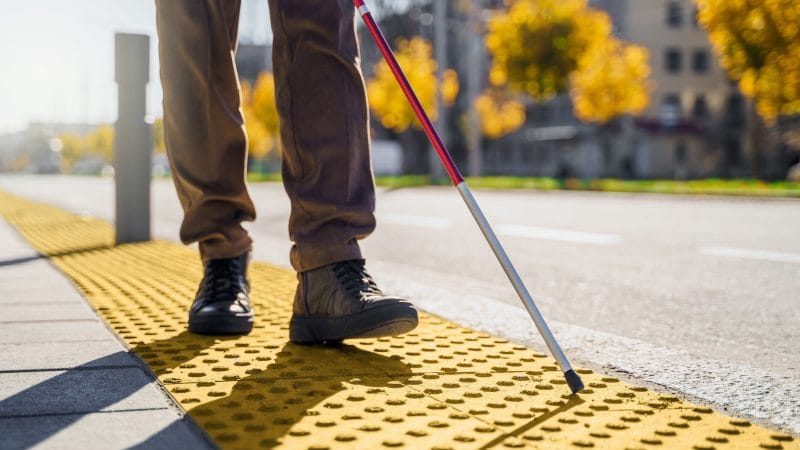
Anyways, the drugs promise to shrink your waistline, rein in your appetite, and possibly extend your life. We hope. But now here’s a new twist in the plot. According to a recent study published in the British Journal of Ophthalmology, people taking Wegovy may face a five-fold greater risk of a condition charmingly known as NAION for non-arteritic anterior ischemic optic neuropathy. The European Medicines Agency released a warning last year about this risk, known in plainer English as an “eye stroke.”
Consider the optic nerve as the cable connecting your eyeball to the brain’s projection room. Now imagine that cable suddenly losing blood flow. The lights flicker. The film stops. Curtains down.
Vision gone.
This is the pharmaceutical version of “Oops, didn’t see that coming.”
As usual in the world of drug safety warnings, this blindness risk is described as rare, which I hope you will allow me the indulgence to translate. It means: “Don’t worry your pretty little head about going blind, just remember bathing suit season is coming.”
Apparently it affects about one in 10,000 users. While that might seem ‘small,’ it is a similar order of magnitude as the risk of a middle-aged healthy man like me, dying from Covid in 2020; a magnitude of risk so small yet so wildly exaggerated, that it caused massive paroxysms of regulatory safetyism which essentially shut down our societies.
Here no individual looking at these data will even blink an eye at a 1 in 10,000 risk of going blind but when you multiply that by the millions of people on the GLP-1 bandwagon, that’s thousands more blind people than before. The real risk could be higher, 10, possibly 100 times higher but we won’t really know until the experiment runs its course.
On this file regulators are quick to reassure us that the “benefit-risk profile remains favorable,” a cliché so bland it has pretty much lost its meaning among researchers like me who actually pay attention to these things. When the manufacturers face the bad news they turn up their noses like someone reacting to a fart in an elevator, and go back to emphasizing the positives: fewer heart attacks, better blood sugar control, great weight control. It’s all rainbows and roses. Nothing to smell here. Sure hope they’re right.
Still, there’s something darkly comic about the situation. Millions of people are sprinting toward these injections hoping to see a thinner version of themselves in the mirror…while a small but real number might end up not seeing much of anything at all.
This irony practically writes itself.
The study suggests the higher dose used in Wegovy, compared with Ozempic, might be the culprit. Faster weight loss, stronger effect, higher risk. In other words, when it comes to these drugs, sprinting faster towards a more ideal weight may literally blind you.
The lesson I’d leave to consumers after having spent 30 years sifting through the underwear drawer of drug safety: you never know what gems you’re gonna find in there. Sad, and weird, but true.
The arc of a drug’s life is more predictable: when a new drug first bursts onto the scene, it arrives wrapped in glossy headlines, celebrity testimonials, and enthusiastic doctors. The adverse effects, meanwhile, start small and build. They take time to be discovered and each new adverse event, each new patient hurt, each new pancreatitis or blindness case adds to the balance sheet. We learn a little bit more and every patient becomes another data point in a giant, global experiment.
Most people will be fine.
Some will lose weight. Temporarily.
And a tiny fraction may lose something else entirely. When you start a brand-new drug, you’re also opening a box of surprises. Go into it with your eyes wide open. At least on the blindness front, you can’t now say: I didn’t see that coming.
Join the conversation:

Published under a Creative Commons Attribution 4.0 International License
For reprints, please set the canonical link back to the original Brownstone Institute Article and Author.