

International Health Reform Project (IHRP)
Background
The world can benefit from an international health organization that serves countries and the needs of their people drawing on the leading scientific knowledge, based on the best available evidence, and acting in an ethical and transparent manner. However, the World Health Organization (WHO) has demonstrated in its response to Covid-19, its current pandemic preparedness agenda, and in other areas of work, actions that are contrary to science, evidence, cultural norms, and accepted public health ethics. Over time, it has become increasingly beholden to private and partisan interests, replacing its traditional priorities of high burden diseases with those with high potential for corporate profit.
The United States and Argentina have signalled withdrawal from the WHO. Other countries also have expressed concern with the underlying public health direction of the organization. Recent negotiations over the amendments to the International Health Regulations and development of the WHO’s Pandemic Agreement have caused considerable disquiet over WHO policies that infringe human rights and national sovereignty, and signal an erosion of the role of evidence and public health ethics.
A clear description of the requirements of an international health agency, the failure of WHO to fulfil these conditions, and the articulation of a viable alternative approach would provide a constructive health framework for international collaboration among countries on global public health. This should be based on widely accepted principles of human rights and medical ethics upon which modern understandings of international law and sovereignty are based, and that guided the formation and early approach of WHO.
The International Health Reform Project (IHRP) brings together a multidisciplinary and multinational panel with experience in international health, law, and the function of international organizations across several regions. The panel is examining the fundamental principles of human rights, sovereignty, and public health ethics upon which a global health organization should be run and how the WHO currently fails to adhere to these. The WHO has drifted far from its roots as an organization solely controlled by member states and based on accepted post-World War Two principles and ethics. A clear review of this drift will help determine whether the necessary reform is feasible within the WHO, or a new and more appropriate structure needs to be developed.
The review is addressing funding and conflict of interest, the requirement for state-based control and accountability, and the need for capacity building at the national level to reduce donor dependency and build self-sufficiency. A strong platform for urgent but positive reform is needed to ensure that the current opportunity presented by an international order under stress, the US withdrawal, and wider disquiet is not wasted.
Focus
- Re-define international public health anchored in ethics, individual agency, and national sovereignty
- Outline a corresponding organizational model for an international health organization (IHO)
- Assess performance of the World Health Organization (WHO) against this standard
- Propose a structure and process to develop an agency fit for purpose, or radically reform WHO to this standard.
Panel
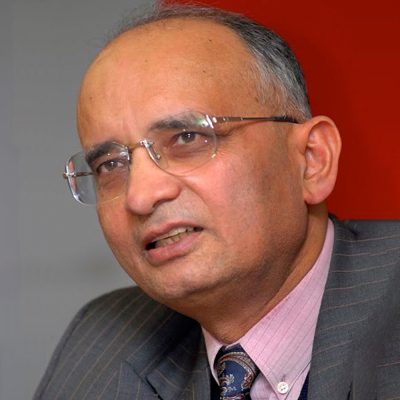
Ramesh Thakur
Prof. Ramesh Thakur PhD is emeritus professor in the Crawford School of Public Policy, The Australian National University, a former United Nations Assistant Secretary-General, and a Brownstone Institute Senior Scholar. Born in India and educated in India and Canada, he has held fulltime academic appointments in Fiji, New Zealand, Canada, and Australia and been a consultant to the Australian, New Zealand and Norwegian governments on international security issues. He has served on the international advisory boards of policy-oriented research institutes in Africa, Asia, Europe, and North America. He is a founder-member of Australians for Science and Freedom. His books include Global Governance and the UN (Indiana University Press), The Oxford Handbook of Modern Diplomacy (Oxford University Press), and The United Nations, Peace and Security (Cambridge University Press). He has published opinion articles in Asahi Shimbun, Asian Wall Street Journal, Australian, Australian Financial Review, die tageszeitung, Financial Times, Globe and Mail, Guardian, Hindu, Hindustan Times, Indian Express, International Herald Tribune, Japan Times, Newsweek, San Francisco Chronicle, Süddeutsche Zeitung, Times of India, and Washington Post.
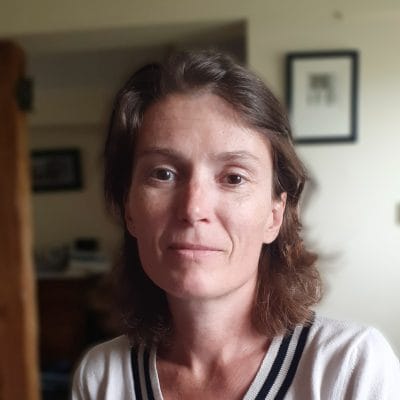
Elisabeth Paul
Prof. Elisabeth Paul holds a PhD in Management Sciences from the University of Liège (2006), with a thesis on the application of incentive theory to the improvement of public resource management in developing countries. She combines an academic and field career, with about a hundred technical support, evaluation and research missions to her credit, mainly in West Africa. She is currently Associate Professor at the School of Public Health of the Université Libre de Bruxelles (ULB), and the Director of the Research Center on “Health Policies and Systems – International Health”. She teaches various courses related to health policies (planning and evaluation), health financing and health systems (performance) analysis. She is also an independent consultant, and a former member of the Technical Review Panel of the Global Fund and of the Independent Review Committee of Gavi, the Vaccine Alliance. Her areas of expertise are global health systems and policies, development aid effectiveness, performance-based financing, international aid and public finance management.
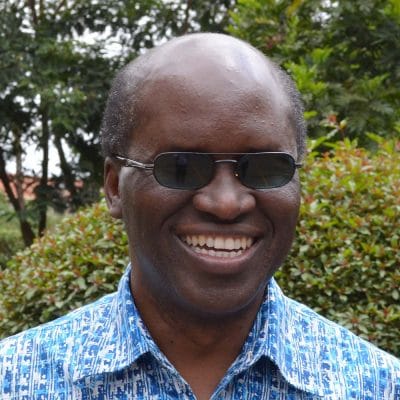
Reginald Oduor
Prof. Reginald M.J. Oduor is Associate Professor of Philosophy at the University of Nairobi, with thirty-five years of university teaching experience. He is a member of the Pan-African Epidemic and Pandemic Working Group. He has written feature articles on COVID-19 vaccine mandates, the growing centralisation and corporatisation of medical care, the draft WHO Pandemic Agreement, and amendments to the WHO’s International Health Regulations. He has also spoken in several webinars and press conferences on the emerging global public health architecture, with an emphasis on the need to uphold medical ethics and public health ethics. He is the first person with total visual disability to be appointed to a substantive teaching position in a public university in Kenya. He is also Co-Founder and Chair of the Nairobi-based Society of Professionals with Visual Disabilities (SOPVID),

Garrett Brown
Professor Garrett Wallace Brown is Chair of Global Health Policy at the University of Leeds. He is Co-Lead of the Global Health Research Unit and WHO collaborator on evidence and analytics for health emergencies. His research focuses on global health governance, health financing, health system strengthening, health equity and estimating the costs and funding feasibility of pandemic preparedness and response. He has over 25 years of research and policy experience, has published over 100 articles in global public health, and has worked with NGOs, governments in Africa, the UK Department of Health and Social Care, the UK Foreign Commonwealth and Development Office, the UK Cabinet Office, World Health Organization, G7 and G20.
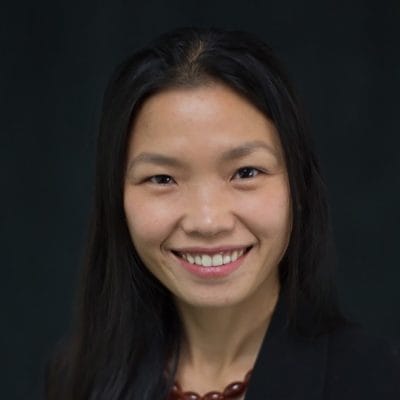
Thi Thuy Van Dinh
Dr. Thi Thuy Van Dinh moved from Viet Nam to study law in France, obtaining a PhD in law at the University of Limoges. Completing the United Nations National Competitive Examination in Legal Affairs, she joined the UN Secretariat to support the implementation of anti-corruption and human rights treaties in the United Nations Office on Drugs and Crime and the Office of the High Commissioner for Human Rights. Subsequently, at Intellectual Ventures Global Good Fund (USA), she managed multilateral organization partnerships and led environmental health technology development efforts for low-resource settings. She currently advises on procedural and policy matters related to United Nations entities in general and the World Health Organization in particular.
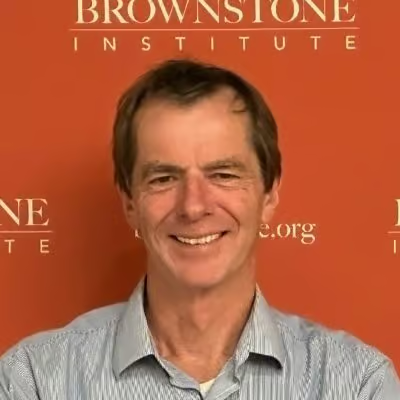
David Bell
Dr. David Bell is a clinical and public health physician with a PhD in population health and background in internal medicine, modelling and epidemiology of infectious disease. He has worked in global health and biotech for the past 25 years. Previously, he was Director of the Global Health Technologies at Intellectual Ventures Global Good Fund in the USA, Programme Head for Malaria and Acute Febrile Disease at FIND in Geneva, and was a Medical Officer and Scientist in infectious diseases at the World Health Organization. He currently consults in biotech and international public health co-leads the REPPPARE project on the evidence base behind the pandemic agenda at the University of Leeds, and is a senior scholar of the Brownstone Institute.

Wellington Oyibo
Prof. Wellington Oyibo is a Tropical Diseases Specialist, Professor and consultant Medical Parasitologist at the College of Medicine, University of Lagos, Idi-Araba, Lagos, Nigeria. With over two and a half decades of experience working in the space of tropical diseases and over 120 papers published in peer review journals, Wellington continues to contribute to tropical diseases research and scholarship. He is Director of the Centre for Transdisciplinary Research in Malaria and Neglected Tropical Diseases (CENTRAL-NTDs) and a Bioethics Fellow of the NIH-sponsored South Africa Research Ethics Initiative (SARETI).

Roger Bate
Roger Bate researches international health and development policy, with a special interest in medicines and nicotine products. He has a PhD in economics from Cambridge University and is currently a fellow at both the International Center for Law and Economics and the Brownstone Institute. His writings have appeared in, among others, the New York Times, Lancet, Journal of Health Economics and the British Medical Journal. He has been an advisor to the South African Government. Dr Bate conducted extensive research in India and numerous African countries on the public health consequences of the counterfeit and substandard medicine trade. He has published over two dozen peer reviewed papers on the problem, especially with respect to antimalarial medicines. He is the author or editor of 14 books and over 1,000 journal and newspaper articles. His broader interests include aid policy in the developing world, evaluating the performance and effectiveness of both US Government agencies (especially FDA and USAID) and global agencies (especially World Bank and WHO).
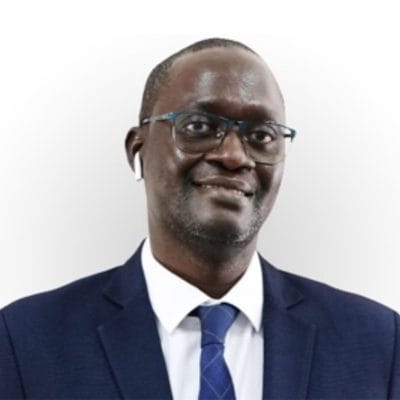
Youssoupha Ndiaye
Dr Youssoupha Ndiaye studied in Cheikh Anta Diop University, Dakar – UCAD (MD), University of Leeds (MPH) and achieved a PhD with UCAD – LSHTM co – supervision. For the past 25 years, he has worked within the Senegal health system, rising to Director for Planning, Research and Statistics and coordinating strategic partnerships. He has worked internationally in Government-to-Government direct financing and delivery strategies. Dr Ndiaye piloted and published diverse operational research, on health policy, malaria, HIV, reproductive, mental and Global health. He is a public health strategist, highly committed in health system strengthening, who has successfully led committees for national plans and reforms in Senegal.
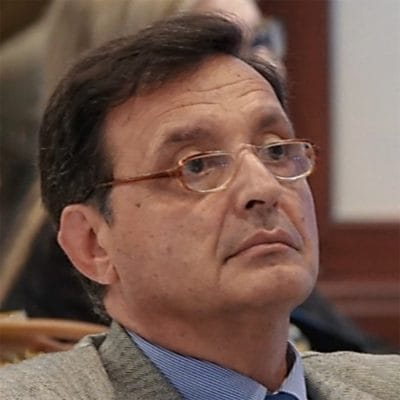
Hector Carvallo
Héctor Eduardo Carvallo was born in Buenos Aires, Argentina, in 1957. He graduated from de Buenos Aires School of Medicine in 1983, and reached the degree of Adjunct Professor of Internal Medicine in the same School, in 2006. Dr. Carvallo has dedicated his professional life to teaching, assisting and developing humanitarian projects, and has written widely on internal medicine, endocrinology and antibiotics. He has participated as invited speaker in multiple international forums , and has received the City Keys from Sidney (NE) and Seneca Falls (NY). He has also been awarded with a Proclamation from the New York Senate at Albany (NY).

Harriet Green
Harriet Green holds an MA with Distinction in Political Theory and a PhD. Her research in Global Distributive Justice and Health focused on unpacking the United Nations’ Sustainable Development Goal 3.8 of Universal Health Coverage
(UHC), assessing what UHC ought to deliver as s driver of global health development. Harriet has worked with the World Health Organization as a policy consultant and reviewer, culminating in a report which critically evaluated the existing Action Review processes. She has published on global development and health.
Timelines:
Phase 1: By early 2026: Initial technical and political reports reviewing the basis for appropriate international public health cooperation and an international agency, assessing WHO in its current form against this standard, and outlining recommendations for reform or replacement.
Phase 2: By mid 2026: Detailed assessment of WHO reform potential, an appropriate structure for a new agency based on broader inputs and feedback.
The Right to Health Sovereignty
[This report of the International Health Reform Project is more than a year in preparation. The full policy report and technical reports are embedded below this foreword and executive summary. The policy report is also available from Amazon in physical and digital forms. The IHRP is sponsored by Brownstone Institute, which had no involvement in forming contents and conclusions.]