When Abraham Lincoln was shot, America saw more than just the loss of a President. Something quieter happened that night, but it was just as important. People saw the kind of doctor that society once truly respected.
Doctor Charles Augustus Leale was just 23 years of age when he walked into Ford’s Theatre on April 14, 1865. He had finished medical school only weeks before and was assigned to the theater because the President would be there.1 By the end of that night, his name was forever linked to one of America’s most tragic events.
As soon as the gunshots rang out, panic took over the theater. People screamed, soldiers rushed in, and confusion filled the room. In the middle of it all, Leale climbed into Lincoln’s box and faced a scene that most doctors would remember forever.2
Years later, he described the moment with remarkable simplicity: “As I looked at the President, he appeared to be dead.”3 He then added, “As the President did not respond, I thought about the other form of death, apnoea, and I assumed my preferred position to revive by artificial respiration.”1,3,4
Those initial sentences stand out. Simple, honest, and very human. They do not sound planned or practiced. They sound like a young doctor facing a disaster, trying to make sense of what he saw as it happened. Leale did not freeze. He immediately acted. He quickly checked Lincoln’s head wound, cleared a blood clot to ease the pressure, opened the airway with his fingers, and tried artificial respiration with the methods he knew.1,3,4 Historians still debate whether he performed an early form of cardiac massage1,5,6, but that seems less important now. What matters most is that he acted right away to help. He acted as a real doctor.
The Doctor as a Moral Figure
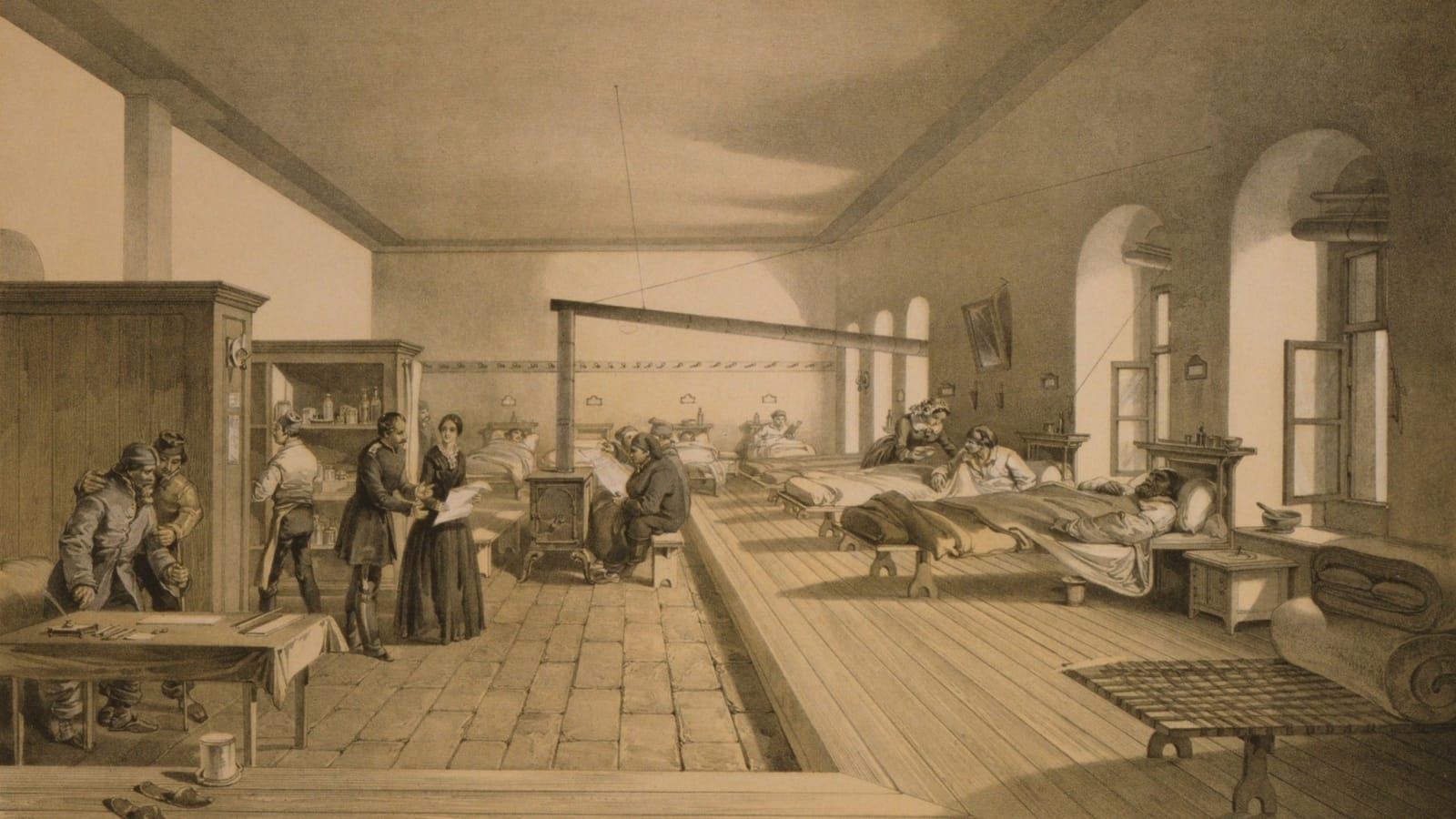
There was a time when doctors, like Charles Augustus Leale, held a special place in society. People didn’t just see them as skilled professionals. They saw them as moral leaders. Communities trusted doctors not because they were always right, but because patients felt doctors truly cared about them, not just the system. Leale had no protocol to follow that evening. No committee advised him. No administrator stood nearby explaining liability concerns. No electronic medical record demanded documentation. There was no legal department, no compliance office, no billing specialist, and no corporate structure surrounding him. There was simply a physician, a dying patient, and a sense of duty. Medicine today feels very different.
Today’s healthcare is full of amazing technology. We can use machines to support organs, read genomes, use artificial intelligence for diagnosis, and keep people alive in ways we couldn’t imagine years ago. Intensive care units now look like engineering labs. But even with all this progress, many patients say healthcare feels impersonal and cold.
People often leave medical encounters feeling processed rather than cared for. We shouldn’t pretend that medicine in the 1800s was perfect. Doctors in Leale’s time didn’t have antibiotics, ventilators, modern anesthesia, or many of the treatments we take for granted now. Death rates were very high. Still, medicine back then often felt much more personal, and that quality now seems at risk. Yet, the doctor belonged to the patient. Now, many doctors feel like they belong to large systems instead of their own practices.
When Medicine Became an Industry
This change didn’t happen all at once. Over many years, medicine slowly turned from a calling into an industry. Hospitals became big businesses. Doctors became employees. Patients became consumers. Even the way we talk about healing started to sound like business talk.
Doctors now hear words like throughput, optimization, efficiency, productivity targets, and market share more often than words like presence, reflection, or bedside intuition. Even the words we use for doctors have changed. More and more, doctors are called “providers,” a term so bland that it could just as easily describe a cable or internet company. When that happened, something important was lost. A doctor isn’t just someone who provides a service. In the past, doctors were expected to show judgment, courage, and responsibility when people were at their most vulnerable.
Many young doctors started their careers wanting to heal people, but instead found themselves stuck in paperwork and bureaucracy. Much of their day is now spent on electronic records, insurance forms, documentation, compliance training, coding, and meeting institutional goals. The electronic medical record, which was supposed to help with care, often feels more like a billing tool than a medical one. Older doctors (like myself) often say quietly to each other that medicine just doesn’t feel like medicine anymore.
The emotional toll has been huge. Burnout among doctors is now almost normal, which is troubling on its own.7 More and more, doctors say they feel emotionally drained, disconnected, and even morally injured.8 Many feel they aren’t practicing medicine the way they were taught. Some feel stuck in systems where efficiency is valued more than wisdom, and paperwork matters more than connecting with patients.
This doesn’t mean today’s doctors care less. Many care a lot, maybe even too much. The real problem is that modern healthcare systems make it harder to practice real, human medicine.
Covid-19 and the Fracture of Trust
As I have mentioned in other papers in Brownstone Journal, the Covid-19 era intensified many of these tensions dramatically. Regardless of political perspective, the Covid-19 pandemic made these problems much worse. No matter your politics, the pandemic revealed some tough truths about medicine and public health. Many doctors found that big institutions didn’t handle disagreement or uncertainty well. Those who questioned the main story or suggested different ideas sometimes ended up isolated, censored, or criticized. During the pandemic, however, many institutions projected certainty even when data remained incomplete or rapidly evolving. Recommendations shifted repeatedly while public messaging often insisted confidence had never wavered.
Trust suffered as a result.
The harm went beyond politics. Many patients started to wonder if doctors still thought for themselves or if they were just following big systems. Even asking that question marked a big change in our culture.
Charles Leale probably wouldn’t understand this world. At 23, standing next to a dying President, he trusted his own judgment. He didn’t wait for permission or check any policies. He relied on his knowledge, his observations, and his courage.
Modern medicine often celebrates new ideas but quietly discourages doctors from thinking for themselves. Protocols are important. Evidence-based medicine matters. Standardization can help care. But medicine has always needed something harder to measure: the ability to think for yourself when things get uncertain or chaotic. If doctors lose that, they risk becoming just technicians instead of true healers. And patients want simply true healers that listen.
What patients want most is actually simple. They want honesty. They want their doctor to be present. They want to know that the person across from them still has the freedom and humanity to stand up for them as people, not just as names in a system.
That was once assumed. Now it feels uncertain.
Medicine has also lost something important on the intellectual side. Doctors used to play a bigger role in society. They wrote essays, debated ethics, talked about philosophy, and joined public discussions about right and wrong. They were expected to think beyond checklists and routines. Now, medical training focuses more on technical skills, standardization, and performance, leaving little space for reflection or independent thought. The profession became narrower.
Leale stood for an older kind of doctor, one based not just on skill but on personal responsibility. After Lincoln died, he is said to have kept his blood-stained shirt cuffs for the rest of his life.1,9 That detail feels very human. It shows that medicine once let doctors carry their emotional memories openly, instead of hiding them under layers of professionalism.
Today, many doctors cope by keeping some emotional distance. Seeing so much suffering can be too much otherwise. But if doctors become completely detached, that brings its own problems. If they stop feeling altogether, medicine loses something essential.
What Still Remains
Still, even with all these challenges, there are lots of great doctors. You can find them in tired intensive care units, doctors who sit with grieving families long after their shifts are over. You see them in rural doctors who handle huge workloads because there’s no one else. You see them in emergency doctors who keep going despite crowded rooms, tough situations, and exhaustion. And you see them in older doctors who remember what medicine was like before it was run by administrators and numbers. These doctors still have the same spirit as Dr. Charles Augustus Leale. The real tragedy isn’t that these doctors are gone. It’s that today’s systems make it harder for them to keep going.
Another problem facing us is that artificial intelligence (AI) will probably make these questions even more important. AI might greatly improve diagnosis, workflow, predictions, and cut down on paperwork. It could become one of medicine’s best tools. But technology alone can’t keep the human side of medicine alive. Patients don’t just want information from doctors. They want judgment, honesty, calm in scary times, and a real human presence when things are uncertain. No machine can fully replicate that. The real risk isn’t that AI gets smarter. It’s that doctors slowly lose their human touch.
The Lesson of Charles Augustus Leale
Charles Augustus Leale couldn’t save Abraham Lincoln, although his interventions appeared to restore weak cardiac activity and irregular breathing for several hours.1,3,4 No doctor in 1865 could have changed what happened. But we remember him because he showed the qualities people once expected from doctors. He went toward suffering. He stayed calm in chaos. He acted even when things were uncertain. Most of all, he stayed with his patient until the end.
Medicine needs that spirit again. This isn’t about nostalgia or myths, or turning away from science and technology. Medicine needs progress, AI, new treatments, and innovation. But none of these can take the place of moral courage or a human presence.
Maybe the biggest lesson from Leale’s story is that medicine was never just about technical skill. It was meant to include responsibility, sacrifice, judgment, and deep human connection. Those qualities used to define the profession. If we lose those qualities, no amount of technology will be enough to save what medicine was meant to be.
References
- Sternbach GL, Varon J, Fromm RE Jr. Charles Augustus Leale and the resuscitation of Abraham Lincoln. Resuscitation. 2000;45(1):3-5.
- Brooks SM. Our Murdered Presidents: The Medical Story. New York: Frederick Fell Inc; 1966.
- Leale CA. Lincoln’s Last Hours. 1909. Publication of an address presented to the Military Order of the Loyal Legion of the United States.
- Montgomery JW. Resuscitation of President Lincoln. JAMA. 1961;176:160-162.
- Pearson JW. Historical and Experimental Approaches to Modern Resuscitation. Springfield, IL: Charles C Thomas; 1965.
- Kouwenhoven WB, Jude JR, Knickerbocker GG. Closed-chest cardiac massage. JAMA. 1960;173:1064-1067.
- Center C, Davis M, Detre T, et al. Confronting depression and suicide in physicians: a consensus statement. JAMA. 2003;289(23):3161-3166.
- Dean W, Talbot S, Dean A. Reframing clinician distress: moral injury not burnout. Fed Pract. 2019;36(9):400-402.
- Shutes MH. Lincoln and the Doctors: A Medical Narrative of the Life of Abraham Lincoln. New York: Pioneer Press; 1933.
Join the Conversation
Published under a Creative Commons Attribution 4.0 International License
For reprints, please set the canonical link back to the original Brownstone Institute Article and Author.