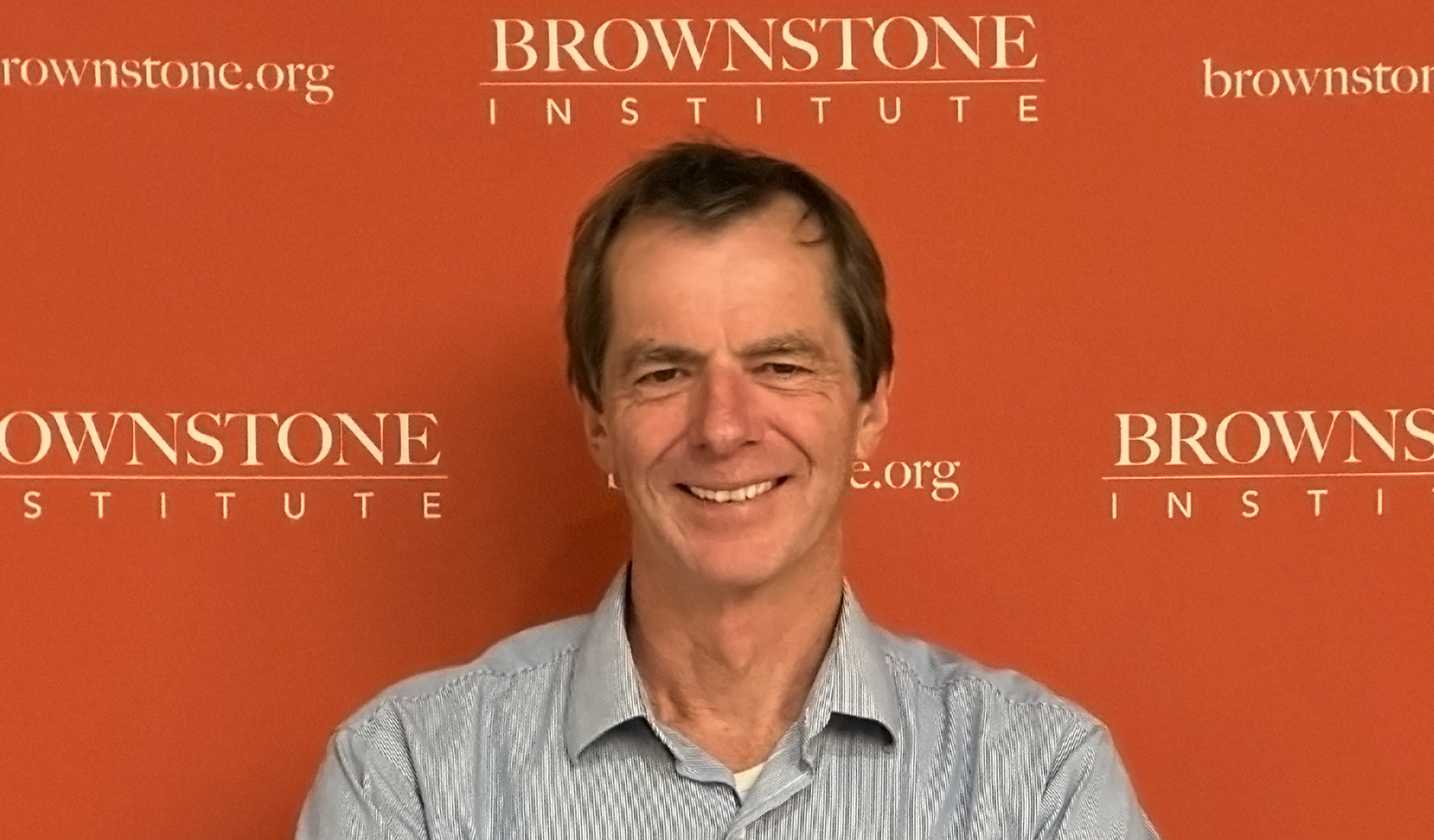
The following piece is the English translation text of a talk delivered by Brownstone Fellow Thomas Harrington, on December 20, 2025 at the “Seconda Festa Della Scienza a Servizio Dell’Uomo” (Second Festival of Science in the Service of Man) held in Venice, Italy. In his address, Harrington explains that Brownstone was founded as a direct response to the totalitarian management of the Covid-19 crisis imposed by the Government and its private sector partners. He then outlines the numerous projects the organization has launched and sustained over the last five years.
Good morning everyone. It is a true honor to be here, among so many people who have worked so hard and with such dedication to expose the truth about the Covid Operation and to rebuild the foundations of a culture of human dignity in Italy.
One of the main objectives of the propaganda that bombards us daily is to present Covid as a strictly medical phenomenon that was so dangerous that ordinary citizens needed to obey the edicts of an unelected class of supposed medical experts with no questions asked.
And it is sad to admit that the majority of Western citizens, and probably an even larger percentage of the so-called intellectual class in our countries, surrendered to this enormous operation of emotional, moral, and intellectual blackmail with little or no resistance.
And when, in the early months of the crisis, when a number of the medical experts and other public figures with their rational capacities still intact dared to oppose this organized campaign of nonsense that went against many of the agreed precepts of immunology and public health up to February 2020, they were attacked by gangs of cyber-thugs who, as we were able to verify later, were working in concert with the United States government and, from there, with the military and intelligence services of all European countries to tightly control our economy of ideas.
It was in this absurd and intimidating context that Jeffrey Tucker, an economist, and Lucio “Lou” Eastman, an IT professional and his colleague at the think tank where he worked at the time—the American Institute for Economic Research (AIER)—decided not only to raise their voices, but to organize a high-level challenge to the growing wave of medical totalitarianism.
In early October 2020, they invited three internationally renowned experts in public health—Jay Bhattacharya of Stanford, Martin Kulldorff of Harvard, and Sunetra Gupta of Oxford—to visit the AIER campus in the small town of Great Barrington, in western Massachusetts. The initial plan was to invite journalists to engage in dialogue with these experts who were questioning the logic of the virus containment policies then being adopted by almost all Western governments. But the intellectual atmosphere at the time was so pervasively stifling that no journalist deigned to take them up on their offer. So, making a virtue of necessity, the three academics drafted and signed what would become known as the Great Barrington Declaration on the afternoon of October 4, 2020.
There was absolutely nothing radical about the document. It was simply a reaffirmation of the fundamental principles of public health in place prior to the emergence of the new virus at the beginning of that year. It acknowledged the enormous long-term costs of lockdowns, especially on the lives of the most economically vulnerable. It also identified the widely varying negative effects of the virus on the different age cohorts of the society.
The document therefore advocated, on the one hand, for a policy of special protection for those known to be most vulnerable to the effects of the virus and, on the other, a policy of relative freedom for citizens in a position to survive the virus without serious problems, a stance that they believed would have the added benefit of catalyzing the development of herd immunity within the population.
That same evening of October 4, Lou Eastman created a website with the text of the Declaration in several languages and a section where visitors could sign to indicate their agreement with the approach to the Covid-19 problem described in the document.
In the first month after its publication, more than 660,000 people, including Nobel Prize winner Michael Levitt and numerous other renowned physicians, scientists, and intellectuals, affirmed their adherence to the principles articulated in the text.
Needless to say, the masters of the Covid-19 narrative were not at all pleased with the sudden and surprising success of this Statement of Principles, championed by Jeffrey Tucker, Lou Eastman, and respected academics from Stanford, Harvard, and Oxford.
Thanks to the December 2021 release of previously classified emails under a FOIA request, we know that just four days after the publication of the Great Barrington Declaration, Anthony Fauci spoke with Francis Collins, director of the National Institutes of Health (NIH), about the need to launch “a devastating takedown” against the document written by what he termed “the three fringe epidemiologists,” who had met a few days earlier in Massachusetts.
And so it was. Within days, several hostile articles were published in major news outlets and scientific journals. But perhaps even more importantly, nearly all major social media platforms changed their algorithms to make the text of the Declaration, or any posts supporting its general principles, less visible.
What could have been the start of a major rebellion against the anti-democratic and inhumane measures implemented in the name of the virus was thwarted by an authoritarian coalition of senior government officials and Silicon Valley tycoons.
In the following months, AIER’s website, managed for content by Jeffrey Tucker and on the technical level by Lou Eastman, became a major platform for publishing heterodox ideas on the Covid crisis. As a result, it experienced a huge increase in daily traffic, giving the organization, with its close ties to the financial investment sector, unprecedented visibility.
But then, in April 2021, Tucker, the man who had raised AIER’s profile like no other in its history, suddenly found himself no longer listed among the organization’s employees. In the summer of that year, he founded Brownstone Institute. And shortly thereafter, Lou Eastman left AIER to join him in the new project.
What Jeffrey understood from the outset of Brownstone’s trajectory was that Covid-19 was not just a medical crisis, but a multifaceted attack on the very foundations of our culture and, consequently, on our social customs, institutions, and traditions of governance.
And this is why he adopted a highly interdisciplinary approach to the phenomenon from the beginning, engaging with a wide range of thinking minds. Naturally, his interlocutors included renowned professionals in the medical field: people like Jay Bhattacharya, Martin Kulldorff, Robert Malone, and Meryl Nass, among many others. But he also forged relationships with countless economists, journalists, artists, activists, and even scholars of the history of culture and ideas, like me.
This emphasis on a plurality of perspectives also extended to the realm of political ideologies. He understood that when your car is parked on the side of the road, it’s absurd to waste time arguing about what kind of gasoline would optimize its performance. What matters in moments like these is having people who can explain, on the one hand, how the car got into this sorry state and, on the other, with the imagination and know-how needed to get it running again.
To my knowledge, a person’s prior ideological stance has never been a factor in Brownstone’s decision to accept them as a contributor on one of the organization’s many projects. The sole criterion was, and remains, that their ideas help us better understand what we are experiencing as thinkers and as citizens in this time of crisis.
At the heart of all our activities lies the profound awareness that there are moments in history when, as William Butler Yeats said, “everything falls apart and the center cannot hold;” that is, there are moments when important ideas, essential for any future renewal of culture and society, are in danger of dying under the pressure of the moment’s destructive manias.
For Tucker, the first step was to create a space where those who disagreed with the prevailing social orthodoxies could express their ideas in an atmosphere of calm and mutual respect, free from the coercive pressures that dominated much of the media landscape in the second half of 2021. This is the origin of the website now called Brownstone Journal, which, within weeks of its launch, became an essential hub of resistance to Covid-19 policies in the West. It has published at least one article, study, or essay of high intellectual quality every day for more than four years. The list of its contributors is a veritable record of the key figures in Covid-19 resistance movements around the world.
Brownstone’s second major project was the creation of a fellowship program for scientists, humanists, and journalists of recognized excellence who had been dismissed from their jobs for opposing the prevailing discourses of the time. The idea for the project, as Jeffrey never ceases to point out, dates back to the 1930s, when countries like Switzerland, Canada, Mexico, and the United States offered institutional refuge and a small stipend to intellectuals forced to flee countries like Germany, Austria, Italy, and Spain during those turbulent years.
Currently, 12 people enjoy this extraordinary gift, which has significantly increased the quality of our intellectual output and the weight of our presence in the most important debates of our time.
In the final decades of the existence of the Soviet bloc, Václav Benda, a Catholic intellectual and collaborator with the Czechoslovak dissident group Charter 77, suggested in a now famous essay (“The Parallel Polis”) that when a political regime enters an advanced state of decline, it is often counterproductive to attempt to reform it from within. He argued that the energy usually devoted to such reformist dialogues would be better used to create “parallel structures” of culture, whose vitality and wisdom would challenge the worn out and dishonest ideas and institutions of the ruling establishment. He also believed that such efforts, focused on the sincere articulation of hidden or repressed truths, have the added benefit of “combating futility and despair” within dissident circles.
While Brownstone has never abandoned the practice of engaging in productive relationships with traditional power structures, it has focused primarily on creating parallel structures like those advocated by the Czechoslovak dissident.
It is obviously important to publish high-level intellectual articles that tens of thousands of people read daily. But Tucker understood from the outset that, if the goal is to achieve a lasting transformation of existing cultural institutions, it is also necessary to publish books. In the last four years, Brownstone has, remarkably, published 21 volumes on a wide variety of topics. And there are several more in the pipeline.
We now know that many of the health policies that prevail in our lives come from international health organizations that work closely with key figures in the globalist oligarch class. And, as we have also observed, their tactics are as brutal as they are unimaginative. They work from the TINA premise, fully confident in their ability to bombard us with alarmist messages that leave us no room to rationally reflect upon the “protective” measures proposed by organizations like the WHO and its many allies.
Aware of this, Brownstone founded the REPPARE research group in collaboration with the University of Leeds (UK) in the summer of 2023. REPPAREis an acronym for Reassessment of the Pandemic Preparedness and Response Agenda. It is led by Professor Garret Brown and Dr. David Bell, two professionals with extensive experience in international health organizations.
All calculations about possible future events, such as pandemics, are based on countless assumptions about the presence, nature, and intensity of the factors that will determine their would-be emergence. And if we have learned anything in recent years, it is that the authorities of major public health institutions, consciously or unconsciously influenced by the fantasies of control harbored by those controlling the immense fortunes that fund much of their activity, tend to greatly overestimate the level of biological threats we face. Why? Because they know that the more serious the perceived threat, the greater the sum of money available to study and combat it.
The main function of the REPPARE group is to rigorously analyze the financial and epidemiological assumptions that underpin their predictions of frequent medical disasters, so that the public can have a basis for responding to the constant apocalyptic predictions disseminated by the spokespeople of the globalist medical-media complex.
Vaclav Benda was on to something when, in “The Parallel Polis,” he spoke of the need to combat feelings of “futility and despair” among dissident groups in society. When people are isolated, doubts about the validity of their cause and the sacrifices necessary to continue fighting against injustice spread.
Brownstone has long understood the importance of bringing together people interested in challenging the dead hand of the system in relaxed social settings, not only to share ideas, but also to lament defeats and celebrate victories.
It was in this spirit that our first supper club was born four years ago. The format is simple. We meet once a month at the same restaurant with people from all walks of life to eat, drink, and listen to a talk by a leading expert or activist from one of the many intertwined branches of our movement against the progressive dehumanization of our cultures.
The first supper club was founded in West Hartford, Connecticut, near Tucker’s home. We currently have similar clubs in Boston, Bloomington, Indiana, Manhattan, Chicago, Austin, Texas, and Bandera, Texas, and we are working to establish more in other cities. There are plans to add several more during the coming year. And each year, we also host a National Gala—a sort of large-scale supper club—in a different US city.
At Brownstone, we recognize that we face an adversary whose power surpasses the capacity of any single nation to combat it. Therefore, we seek to cultivate relationships with citizens of other countries who share our critical perspective. But we also understand that any reimplementation of the Brownstone model elsewhere cannot, and should not, be a mere replica of the Brownstone model in the United States. It must respond to the specific realities of the country where it is established.
We like to think we have remained true to this vision with the founding of Brownstone Spain, the first of our European partners. In its eight months of existence, it has established itself as an institutional space for Spanish-language dissent from the authoritarianism of mainstream Covid culture and an important platform for expressing critical opinions on globalist attacks on human dignity. We hope to establish similar relationships in other countries in Europe and around the world in the near future.
Perhaps as a Brownstone Fellow, I am positively biased when it comes to judging the quality of the organization’s achievements over the past few years. But I believe that Brownstone, with only four paid staff members, has every reason to be proud of the work done to date. That said, we also understand that we are engaged in a long struggle against a brutal and multifaceted enemy. But we are strengthened by the knowledge that 17,000 individual donors have placed their trust in us and that we cannot let them down.
In short, Brownstone is an organization dedicated to the unfiltered observation of the reality that surrounds us. When the horrors of Covid-19 arrived, we, unlike many, did not ignore the carnage unfolding before our eyes. We took note and learned a great deal, always keeping alive our faith in the essential value of freedom and human dignity, and in the need to commit ourselves to preserving the ideals of beauty and life as a constant search for truth. Thank you.
Join the conversation:

Published under a Creative Commons Attribution 4.0 International License
For reprints, please set the canonical link back to the original Brownstone Institute Article and Author.