Introduction
In the past, medical judgment was underpinned by three fundamental pillars: honest observation, open debate, and the humility to acknowledge our limitations in knowledge. While these principles still thrive in the day-to-day interactions within clinics and ICU corridors, they have been increasingly overshadowed online by a chaotic environment that often prioritizes sensationalism over substance.
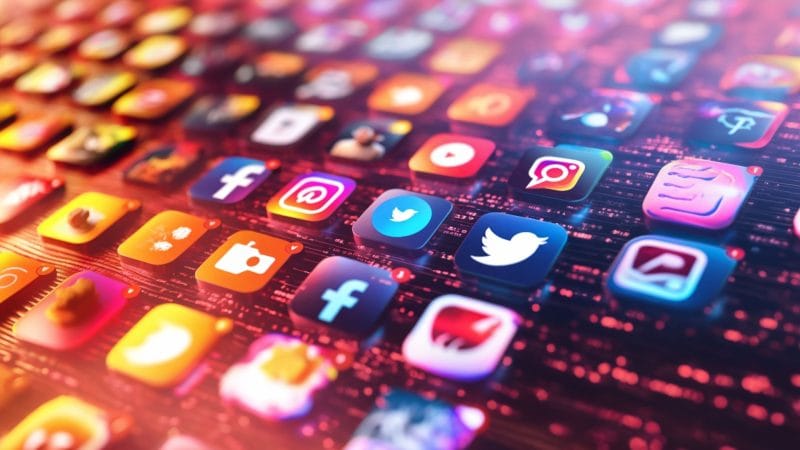
Social media has radically transformed not only the means of communication but also the very fabric of our daily lives. It has reshaped how we think, how we evaluate information, and whom we choose to trust. Instead of fostering informed dialogue, it has turned medical science into a contentious battleground where opinions clash and algorithms amplify the most extreme and polarizing voices, often sidelining more measured perspectives. Yet, amid the cacophony, there are invaluable elements that have emerged. Like medicine itself, social media encompasses a spectrum of experiences: the good, the bad, and the ugly.
The Good: Knowledge Finally Reached Everyone
James Madison eloquently asserted that a free society must arm itself with the power that knowledge provides. Social media has, in many ways, fulfilled this imperative, democratizing information in unprecedented ways.
Patients with rare diseases, who once felt isolated in their suffering, can now connect with one another through forums and support groups. They share personal experiences, collaborate on finding solutions, and gain insights faster than many traditional healthcare institutions can publish. On a global scale, physicians are able to consult with one another, sharing clinical patterns and treatment responses in real time, facilitating discussions that transcend geographical boundaries—something no medical journal could match in terms of speed.
During public health crises, the speed of information sharing on social media became even more critical. Frontline doctors were able to alert their colleagues around the world, share early observations about disease patterns, and identify trends long before official guidelines could catch up. This rapid exchange of information became a lifeline for both patients and clinicians, providing critical support and empowering individuals in ways that were previously inconceivable. This aspect of social media, fostering connection and knowledge sharing, is something we must strive to uphold and protect.
The Bad: Expertise Collapsed Under the Weight of Noise
George Washington recognized that truth prevails only when individuals are willing to work diligently to uncover it. Unfortunately, this principle has been undermined in the social media landscape, which now rewards speed, outrage, and unfounded certainty. These attributes are fundamentally incompatible with the rigorous, evidence-based approaches that underpin the practice of medicine.
In an era where every voice can be amplified, the lines separating informed medical professionals from those devoid of scientific understanding have blurred significantly. Individuals lacking formal training can present themselves as experts, and the public often struggles to make informed distinctions. Confidence can resemble knowledge, and performance can be mistaken for credibility.
This phenomenon has created a chilling effect, even on qualified clinicians who may hesitate to express their viewpoints openly. They do so not because they lack evidence or expertise, but because they fear retribution from a vocal online mob. A single misinterpreted statement can lead to harassment, damage to professional reputations, or even formal complaints. In a climate where dissenting voices are often silenced, many choose to remain silent—believing it safer than risking honesty. Such dynamics are detrimental to the field of medicine, where healthy scientific discourse and a willingness to engage in constructive disagreement are essential for progress.
The Ugly: Censorship in the Name of “Safety”
Benjamin Franklin warned that those who surrender liberty for the illusion of safety ultimately end up with neither. This warning has notable resonance in recent years as we have witnessed the alarming realities of censorship enacted by both government agencies and social media platforms.
Physicians who raised valid concerns or questioned prevailing narratives often found themselves silenced. Posts that documented authentic clinical observations were frequently dismissed as “misinformation,” leading to a chilling effect on open discourse. Entire discussions were deleted or hidden, not because they were false, but rather because they challenged established narratives that were favored by those in power.
This environment led to the suppression of adverse event reports and the erasure or ridicule of early treatment strategies that warranted serious consideration. Consequently, physicians lost the platforms they once had to share their expertise, while patients lost trust in the medical establishment. Moreover, public health’s credibility was severely compromised—not due to the presence of dissent but because dissent was systematically silenced.
Thomas Jefferson succinctly articulated the value of free expression, declaring, “I am for freedom of the press and against all violations of the Constitution to silence by force the complaints or criticisms of the people.” While he did not live to see the rise of Silicon Valley, he would have recognized the dangers inherent in its unchecked power to stifle vital conversations.
Where Do We Go from Here?
While we cannot rewind time to rectify the past five years, we can learn invaluable lessons from them.
First, it is imperative that doctors be granted the freedom to express their opinions openly once more. Honest discussion is not a threat—it is, in fact, the very foundation upon which medicine is built. Moreover, patients should feel emboldened to question everything, including the algorithms that influence what information they are presented with, ensuring that a healthy scrutiny of sources remains a cornerstone of patient autonomy.
The importance of restoring a culture of scientific debate cannot be overstated; it should be encouraged rather than stifled. Social media platforms must cease their pretense of being arbiters of truth, especially in a field as multifaceted and intricate as medicine.
Real communities must be rebuilt offline, where relationships are developed through face-to-face interactions and judgment is shaped by genuine understanding, rather than reactionary responses to sensationalized content. The growth of medical judgment relies on an environment where curiosity and courage are encouraged to flourish.
Conclusions
Social media has served as a reflection of both the best and worst aspects of our society. While it has granted individuals unprecedented access to information, a sense of community, and the power to advocate for themselves, it has also inundated the landscape with noise, confusion, hostility, and, at times, outright censorship.The good that emerges from social media is profoundly meaningful. The bad outcomes are predictable given the environment. The ugly reality of censorship and suppression, however, is never acceptable.
As John Adams wisely reminded us, “Liberty must at all hazards be supported.” This includes the liberty to think critically, to question established norms, to engage in debate, and to practice medicine guided by empirical evidence rather than algorithmic determinism. It is essential that we reclaim these liberties to foster a healthier and more transparent discourse in the future.
Join the conversation:

Published under a Creative Commons Attribution 4.0 International License
For reprints, please set the canonical link back to the original Brownstone Institute Article and Author.