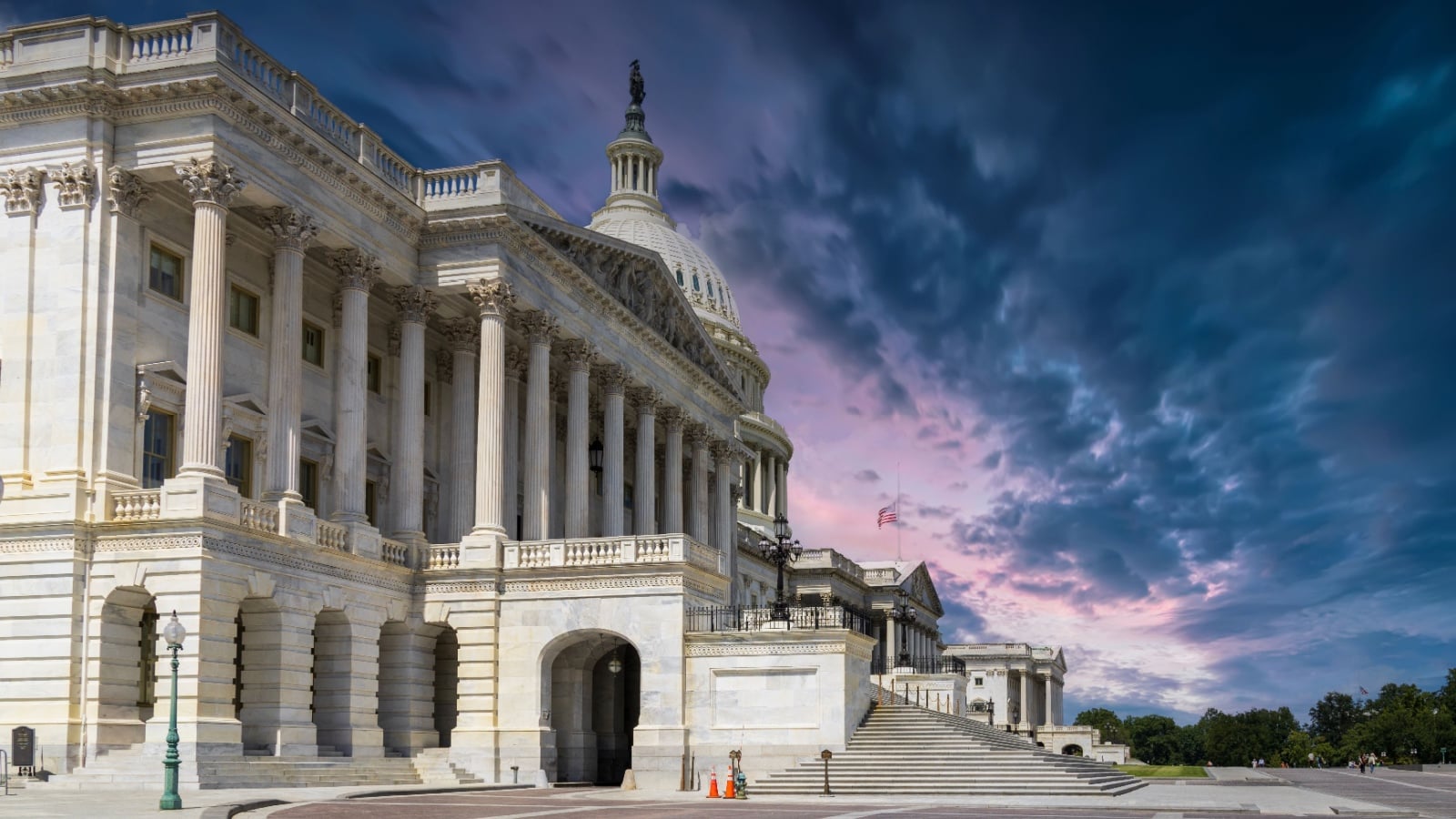

It wasn’t supposed to be this way. The United States was the land of the free. Limited government. Checks and balances. Separation of powers. The Bill of Rights. But America has instead become a managed society. Its government dominates the lives of its people. How did it go wrong? Lots of bad steps helped to transform the American republic into a managerial state. Here are eleven of the moments that sent the ship off course.
Residual Powers: The “Necessary and Proper Clause”, 1788
The first American constitution, the Articles of Confederation, didn’t last long. Written in 1777 but not fully ratified until 1781, the Articles created a weak federal government. It had a legislature but no executive or judicial branch. It lacked the power to enforce laws or raise money to maintain a military. Under it, the individual States ran the show. Under Article 2, the federal government had only those powers “expressly delegated” to it. In 1787, the Constitutional Congress scrapped the Articles to start again.
But opinions split. Federalists such as Alexander Hamilton wanted a stronger central government. Thomas Jefferson warned that centralized power represented a threat to the liberty of the people and the autonomy of the States.
The second constitution, the one that stuck, was ratified in 1788. Section 8 of its first Article enumerated the powers of the federal government. “The Congress shall have the power to …” But was the list exhaustive? Did the federal government have only those powers expressly delegated, as in the Articles of Confederation? Or did the new constitution give the federal government open-ended, residual powers? Clause 18 of Section 8 contained the most important clue. It authorized Congress to make all laws “necessary and proper” to executing its mandate.
“Necessary and proper” could have meant essential to fulfilling its responsibilities in those areas explicitly listed. But according to Hamilton, the clause gave Congress the authority to pass laws that it regarded to be in the national interest. When Hamilton proposed the creation of a national bank to deal with Revolutionary War debt, a power not listed in Article 1, President George Washington eventually agreed.
The Tenth Amendment, passed in 1791, could have put the genie back in the bottle. Powers “not delegated to the United States by the Constitution,” it reads, “nor prohibited by it to the States, are reserved to the States respectively, or to the people.” That could have meant the federal government had no residual or implied powers. But the section omits the key word: expressly. Article 2 of the Articles of Confederation said the federal government had only those powers expressly delegated. The Tenth Amendment does not use that word. The “necessary and proper” clause delegates powers to the federal government that are not express but implied. That clause is the federal government’s blank check. Had the Tenth Amendment said “expressly” delegated, it might have altered the course of American government.
Untouchable Civil Servants: Pendleton Act, 1883
Almost a hundred years later, in 1881, President James A. Garfield was assassinated by one of his own campaign workers. An angry attorney from Illinois named Charles J. Guiteau shot him in the stomach. Jeffrey Tucker tells the story:
[Guiteau] was furious because he believed, due to his work for the [Garfield] campaign, that Garfield would give him a job in the new administration. But none was forthcoming. It was revenge. Garfield died of the wounds months later. It was a shocking thing. Congress immediately got to work figuring out how to prevent the next assassination. They had the theory that they needed to end the system of patronage in government so that way people wouldn’t get mad and shoot the president. Not a very good theory but this is how politics works. The result was the Pendleton Act that created a permanent civil service. The new president, Chester Arthur signed the bill in 1883. It was done: the administrative state was born.
Under the Pendleton Civil Service Reform Act, certain federal civil servants would no longer serve at the pleasure of the president. The Act initially applied to only about 10 per cent of the positions in the federal government, but its coverage grew rapidly. Today the president cannot appoint or dismiss most federal government employees. But the Pendleton Act and its successors did not end cronyism in the federal service. Instead, it shifted appointment powers from the president to the heads of departments and agencies.
In a republic, the power belongs to the people, if not directly, then at least through their elected representatives. The Pendleton Act legislated the opposite idea: government employees are not subject to the approval of the people’s president. If the president does not have the power to appoint and dismiss, how do the people? The answer is that they do not.
Medical Hegemony: The Flexner Report, 1910
It might seem odd to include a report about medical schools in this list. But in 1910, a report on medical education helped to not just transform but capture the medical system in North America. ”Medical Education in the United States and Canada” was written in 1910 by Abraham Flexner. The Carnegie Foundation commissioned it. The American Medical Association (AMA) supported it. John D. Rockefeller funded it. Flexner’s ostensible mandate was to enquire into the quality of medical education. His report savaged medical institutions that were not based on allopathic science and pharmaceutical drugs. It attacked their legitimacy, reputation, and funding. Many were forced to close. Rockefeller arranged millions of dollars in grants to medical schools, research facilities, and hospitals that embraced the report’s recommendations.
Allopathic medical treatment came to be regarded as the only legitimate kind of medical care. Alternative approaches to healthcare, such as naturopathy, homeopathy, and osteopathy, were marginalized. The medical profession became a cartel. Competition for the pharmaceutical industry was stamped out. The Flexner Report helped to create a top-down, standardized system of healthcare in North America. Institutional authority, not patient autonomy or informed consent, was its dominant feature. Governments and professional bodies enforce that system to this day. More than a century after the Flexner Report, Covid-19 policies would reflect its principles and confirm its lasting influence.
Professional Expert Class: Woodrow Wilson and the Federal Reserve, 1913
The Pendleton Act weakened political control over rank-and-file federal employees. Woodrow Wilson, sometimes called the first progressive president, took things a step further. Long before he became the President in 1913, Wilson published an essay called “The Study of Administration.” In it, he asserted that in a complex society, government administration should be regarded as a professional discipline. Public officials are an expert class in pursuit of the common good. They should be allowed to operate above the political fray.
When he came to office, Wilson put this theory into practice. Congress had already established the Interstate Commerce Commission (ICC) and Board of General Appraisers, whose heads could not be removed except for cause. Through legislation and executive orders, Wilson created more federal agencies with the power to act independently. Among them were the Federal Reserve and the Federal Trade Commission. The Federal Reserve, created in 1913, wasn’t just a government bank, but a policy and regulatory institution. With extensive powers including the ability to set interest rates, regulate banks, and act as lender of last resort, the Federal Reserve acquired the mandate to manage the economy.
In 1935, in Humprey’s Executor v United States, the Supreme Court confirmed that commissioners of independent agencies could be dismissed only for cause, removing them from direct presidential control. That precedent stood until June 29, 2026, when the Court overturned Humphrey to allow President Donald Trump to fire Commissioner Rebecca Kelly Slaughter from the FTC without cause. The majority opinion found that the FTC exercises executive power. Therefore, said the judgment, its commissioners are subject to removal at the pleasure of the President, in accordance with the separation of powers established in the Constitution.
Funding the Managerial State: Income Taxes and the 16th Amendment, 1913
Before 1913, only death was inevitable. The federal government had levied income taxes before, during the Civil War. But the Supreme Court, in its 1895 decision in Pollock v Farmers’ Loan & Trust, insisted that federal income taxes had to be “apportioned among the states,” as the First Article of the Constitution states.
That meant that taxes collected from a state with five per cent of America’s population were limited to five per cent of the total tax revenue. That prevented the federal government from taxing American citizens on their individual wealth. The 16th Amendment, proposed in 1909 and ratified in 1913, authorized Congress to tax income without apportionment. Congress wasted no time in reinstating a federal tax on incomes over $3,000. The progressive federal income tax system was born.
Delegation: JW Hampton v United States, 1928
The US Constitution describes a strict separation of powers. In Westminster systems such as in the United Kingdom and Canada, the same people control the legislature and the government. In the United States, the legislative and executive branches are distinct. Congress makes laws, while the president runs the government to carry them out. For a while, courts gave this idea constitutional status. In 1892, in Field v Clark, the Supreme Court stated that Congress cannot delegate legislative power to the President. This nondelegation doctrine “is a principle universally recognized as vital to the integrity and maintenance of the system of government ordained by the Constitution.”
But it wouldn’t last. The Tariff Act of 1922 authorized the president to adjust tariff rates to equalize production costs between domestic and foreign goods. In 1928, in JW Hampton v United States, the Supreme Court decided that the statute was constitutional. Statutes could delegate rule-making powers, the court said, if they included an “intelligible principle” to guide government action. That was the beginning of the end for the nondelegation doctrine. It has not been used since 1935 to strike down federal delegation of law-making authority. Delegation of the power to make rules is the lifeblood of the administrative state.
Nanny State: FDR’s New Deal, Early 1930s
Franklin Delano Roosevelt’s solution to the Great Depression was the “New Deal.” Government would protect the economic well-being of its people. In exchange, it would decide what was best. That deal turned America’s burgeoning administrative machinery into a welfare state.
Under FDR, America’s longest serving president, the federal government did what it had never done before. It stimulated job creation, backstopped bank deposits, established welfare programs such as Social Security, and directed economic activity. Before the New Deal, even in the face of the growing discretionary powers of government bureaucracies, citizens largely fended for themselves. The New Deal changed the role of government. To this day, people expect governments to solve social problems and protect them from economic calamity.
Funny Money: Ending the Gold Standard
The gold standard protected the value of money. When fiat currency is tied to a finite physical asset, governments cannot print currency at will. Every dollar issued must be backed by the physical asset — gold — and be convertible by citizens and foreign governments. But the gold standard and the administrative state are incompatible. Wilson suspended the gold standard during the First World War to fund military expenses by printing money. FDR killed it domestically in 1933 by prohibiting citizens from owning most forms of gold, ending convertibility and devaluing the dollar. Richard Nixon ended international convertibility in 1971. When dollars are not pegged to the value of gold, governments can create new money out of thin air, producing inflation and diminishing the value of their compounding debts.
Regulating Private Conduct: The Civil Rights Act, 1964
Americans have a constitutional right to equal protection of the law, guaranteed in the Fifth and Fourteenth Amendments. Equal protection of the law means, in part, that laws and governments cannot discriminate between Americans by race, colour, sex or other personal characteristics.
But the Constitution limits governments, not the people. The Civil Rights Act of 1964, on the other hand, regulates the behavior of private citizens and companies. The Civil Rights Act was not the first federal statute to regulate private conduct by means of administrative tribunals. But the Civil Rights Act significantly expanded the use of federal bodies to enforce claims against private actors. It helped to legitimize the idea that governments should oversee citizen behavior and attitudes.
Human rights were conceived to protect citizens from state power. They prohibited arbitrary arrest, detention, and torture. But the Civil Rights Act and other modern human rights legislation compel private businesses and persons to toe the government’s vision of good behavior. They compel citizens to embrace select causes and identities. They outlaw personal preferences. Operate a bakery and consider gay marriage to be sacrilegious? You must bake the wedding cake, said the Colorado Anti-Discrimination Act and its Civil Rights Commission.
In 2018, in Masterpiece Cakeshop v Colorado Civil Rights Commission, the Supreme Court ruled in favor of the baker, but only because the Commission had shown open hostility to the baker’s religious beliefs, not because the civil rights law did not and could not require the baker to comply.
Deference: Chevron v Natural Resources Defense Council, 1984
Under the Constitution, executive agencies have no powers except what Congress grants them. This principle kept federal administrative agencies in check. Congress passed statutes that told them what they could do. Courts could review agency action to determine whether they were acting within those boundaries. Where those statutes were ambiguous or uncertain, courts had the power to interpret the limits of agency authority. Bureaucracies were fenced in.
But in 1984, the US Supreme Court changed that. The Environmental Protection Agency (EPA) had created a rule not explicitly authorized in its enabling statute. In Chevron v Natural Resources Defense Council, the Court held that the EPA could decide the limit of its own authority. If an agency’s interpretation of its own statute was reasonable, said the decision, courts should defer to the agency’s take. “Chevron deference” transferred power from Congress to the administrative state. Unelected officials obtained judicial benediction to decide the boundaries of their own powers. Agencies pushed those boundaries, asserting authority that statutes did not grant. Federal agencies became laws unto themselves. In 2024, in Loper Bright Enterprises v Raimondo, the Supreme Court overturned the Chevron decision, returning the authority to interpret ambiguous enabling statutes to the courts. Time will tell whether and to what extent the decision will curb the power of federal agencies.
The Managerial State’s Pinnacle Achievement, So Far: Covid-19
The government response to Covid-19 was a policy train wreck. One senseless diktat followed another. Close your business. Keep your kids home from school. Stay out of the park. Don’t gather in church. Wear a mask to go into the store. Take a vaccine to keep your job. These edicts eviscerated civil liberties. They destroyed businesses, cancelled jobs and education, tore families apart, and devastated people’s health. Society unraveled. And yet, the administrative state excelled beyond its wildest dreams. It succeeded in subordinating all other interests – personal, political, commercial, institutional – to its priorities and directives. The Covid regime has been its pinnacle achievement, at least so far.
The United States Constitution was revolutionary. “A republic,” Benjamin Franklin is reported to have said, “if you can keep it.” They couldn’t. The seeds of the nation’s downfall are in the document itself. The Constitution does not prescribe an administrative state, but nor does it prevent one. Instead of a republic governed by the rule of law, America is now planned, directed, and supervised. Broad discretion in the hands of a technocratic managerial class has become the foundation of American government.
Join the Conversation
Published under a Creative Commons Attribution 4.0 International License
For reprints, please set the canonical link back to the original Brownstone Institute Article and Author.