During Lent in 2022, Michael Hurley published a shorter version of the following essay in American Thinker, lamenting the betrayal of the faithful during the Covid pandemic. After four years, the silence of the bishops continues.
Today is Ash Wednesday, the beginning of the season of Lent for Catholics around the world. On this day, priests smear ashes on millions of foreheads while uttering some version of the words, “Remember, man, thou art dust, and to dust thou shalt return.” Perhaps this year the ritual should be reversed, with the faithful lining up to administer ashes to priests and bishops until their white surplices are covered with an unmistakable reminder of their own mortality.
Everywhere today there are hopeful signs that the political revolution traveling under the guise of Covid-19 may be faltering, but the shockwaves it sent through the Church are still reverberating and slowly widening, two years after the fact. The opening salvos of this revolution still echo in these five words:
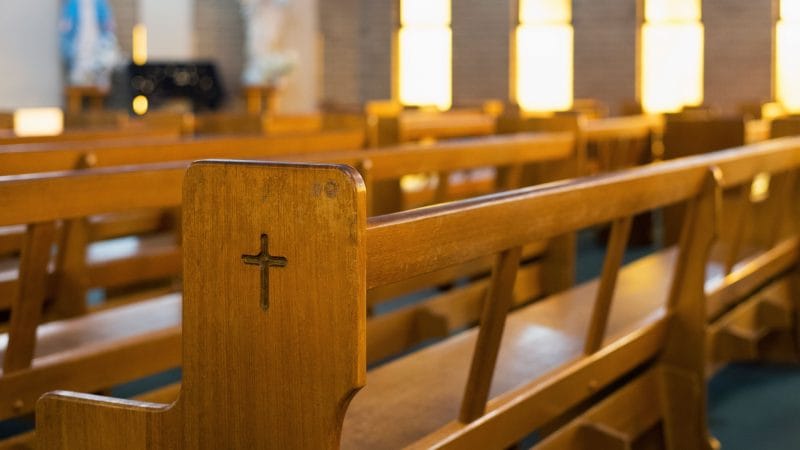
The bishops closed the churches.
Let that sentence wash over you, slowly, and you may begin to grasp its enduring significance. Never before in human history, through centuries of war and famine and disease, has there been a worldwide closure of the Church that Christ founded to conquer death over—wait for it—the fear of death.
To understand the scope of the damage that has been done to the Church, let’s begin with a thought experiment. Assume you are given the power to save the soul of one person from an eternity in Hell, but to do so, you must make martyrs and saints of every man, woman, and child now living on the face of the earth. How would you choose? If you could be assured that every life lost would rise to glory in Heaven, would you calculate the value of saving one person from Hell to exceed the value of all the days and years of life lost to the billions whose earthly lives would be cut short? Would billions and billions of days of life on earth, and all the joy and wonder and happiness they would surely contain, be worth one soul lost to an eternity in Hell?
To some, this will seem a preposterous question, because none of us can fathom eternity and many of us no longer believe in Hell. But the Church does—or at least it did until around March 2020. It was then that the Church made the wrong decision: that prolonging our lives by a few days or years (a goal that lockdowns spectacularly failed to accomplish) was worth the souls that would be lost and the long-term damage to the faith that would result from denying millions of people the sacraments as they watched their shepherds flee in a time of widespread fear.
The idea that the bishops had “no choice” but to close the churches because the government “made them” do so is pretty weak sauce. The Roman Empire banned the practice of Christianity upon pain of death for the first four centuries of the Church’s history. All but one of the twelve apostles—the original bishops—were martyred for their stubborn resistance to Jewish and Roman demands that they “close the churches.”
Had our bishops decided to bring communion to the chronically ill and frail elderly but invite the overwhelming majority of parishioners for whom Covid posed scant mortal danger to celebrate mass publicly, does anyone seriously believe that the same governments that kept garden centers and liquor stores open and allowed BLM protests would have resisted a united front of bishops with 1.4 billion of the world’s Catholics behind them? Instead, frightened bishops in America and Europe offered not a fig leaf of resistance and, in the UK, even quietly urged the government to “compel” them to close their doors.
Christ is “the good shepherd.” (John 10:11) Every bishop, standing in persona Christi, carries a shepherd’s crozier as a symbol of his duty to his flock. In the Gospel of John, we learn the difference between a good shepherd and a bad one: “He who is a hireling and not a shepherd, whose own the sheep are not, sees the wolf coming and leaves the sheep and flees; and the wolf snatches them and scatters them.” (John 10:12) Could there be a more apt description of the behavior of the bishops and the resulting damage to the Church when these hirelings saw Covid coming?
Incredibly, the subversion of the eternal for the temporal continues to this day. The Vatican and some dioceses in Canada are excluding unvaccinated worshipers from mass, keeping the “unclean” outside the gates in hopes of adding a few more days to the lives of the privileged caste within.
There is a reason why St. Paul admonished early Christians not to “forsak[e] the assembling of ourselves together, as the manner of some is” (Heb. 10:25) at a time in Church history when heeding Paul’s call posed a danger far greater than a week of flu-like symptoms for most healthy people under 80. Christ promised that “where two or three are gathered in my name, there I am in the midst of them.” (Matt. 18:20) The fellowship among the faithful is fellowship with Christ. To ban that fellowship is to banish Christ from our midst.
I was in Nashville, last year, when it came time to go to confession, right before Easter. The Catholic church in a little town just outside the city looked like some sort of bazaar celebrating a festival called “Covid.” There were signs everywhere talking about Covid, telling us to stay away from each other and shaming us to hide our faces. Covid was the first, barely discernible word out of the lector’s mask-covered mouth at the start of mass. On the parish website, announcements about all that they were doing to save people from Covid obscured every clue that this might also be a place having to do with saving souls.
First up in the litany of sins when I made my confession was my anger and despair over the Church’s response to the pandemic. The young priest who heard my confession (and who was clearly unpracticed in diocesan politics) responded with a frankness that took me aback: “I’m sorry we betrayed you,” he said. It was a confession within a confession, and a beautiful thing to hear, but it occurred to me that it needed to be spoken to the entire congregation.
I rather doubt that many prelates would appreciate a young priest telling his flock that their bishop “betrayed” them, as my confessor told me. Yet that kind of public confession in every parish by every priest and bishop, followed by a vow never again to bar the doors of the Church, is exactly what we need to renew our faith in this season of penance.
Join the conversation:

Published under a Creative Commons Attribution 4.0 International License
For reprints, please set the canonical link back to the original Brownstone Institute Article and Author.