On October 14, the Catholic Church observes the anniversary of the martyrdom of Pope Callistus I in A.D. 223 . The Collect for the Mass in his honor prays the following:
O God, who raised up Pope Saint Callistus the First to serve the Church and attend devoutly to Christ’s faithful departed, strengthen us, we pray, by his witness to the faith, so that, rescued from the slavery of corruption, we may merit an incorruptible inheritance.
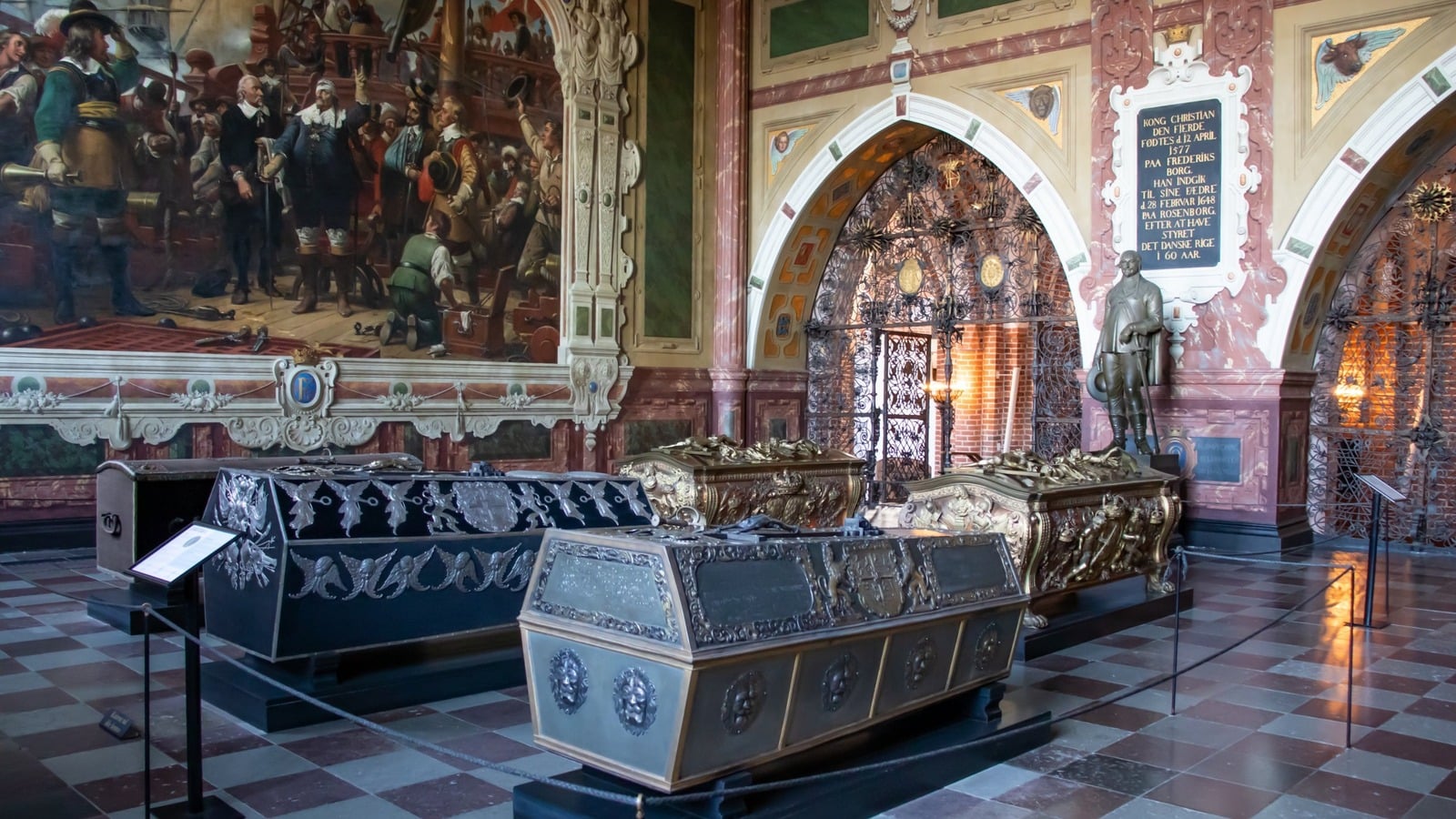
This prayer is an allusion to the fact that, while deacon, Callistus was put in charge of the first cemetery owned by the Church by Pope Zephyrinus. You can still visit the Catacombs of Callistus today, a massive place that holds the bodies of many popes and martyrs in addition to thousands of ordinary Christians.
Two distinct thoughts occurred to me while offering Mass for his feast this year. First, I thought of how November is rapidly approaching.
As I wrote in one of my early pieces for Brownstone:
The month of November begins starkly with a remembrance of those who have gone ahead of us in death. On November 1st we celebrate all of those who are in Heaven by celebrating All Saints. On November 2nd, we pray for those who are being purified in Purgatory as we commemorate All Souls. Every Mass on All Souls Day is a Requiem (i.e. a funeral Mass). Visiting a cemetery is urged, even with the grant of an indulgence for making such a visit from November 1-8. An older priest once recalled that the funeral pall (used to cover a casket or, in the absence of a casket, the catafalque) at his parish growing had the words “Hodie mihi, cras tibi” (“Me today, you tomorrow”) embossed on it. The beginning of November then was a powerful reminder of the arrival of a season of “illness and death.”
We begin November by remembering the martyrs and confessors who departed this life victorious, and then our thoughts immediately turn to making reparation for Christians who left this world in faith, hope, and charity, but with an imperfect sanctity.
This dual act of remembrance is central to Catholic piety. We remember our heroes and our non-heroes alike, albeit differently. I note with sadness the rapid erosion of the habitus of remembering from our culture completely. We dismiss the idea of heroes in the past at all.
Funerals go unattended and cemeteries go unvisited, if there is even proper burial at all. Lockdowns, effectively making the natural process of grieving illegal, hastened this erosion. Requiem Masses that should have a full Church now have maybe a few dozen, others have only immediate family and a few pious friends in attendance.
This change in practice should be seen as a grave symptom of the loss of civilization itself.
My second thought on the feast of St. Callistus is related to the first. As part of our civilizational collapse and our rejection of acts of remembrance and reparation in toto, we have enabled our malefactors in government and media to completely move on from the damage they inflicted on countless people in the name of “public health” beginning in 2020.
This is why I find Jeffrey Tucker’s hours of time spent reading entries from the CDC’s V-Safe files on the Covid shots so incredibly poignant and moving.
These were people who believed in the system that provided these shots. They thought that they were doing the right thing, first by getting them and second by reporting the horrifying outcomes of that decision. They imagined that the people in charge cared and that they would follow up.
Instead, like the prophets of Baal who opposed Elijah, they learned that there was “no one answering, no one listening” (1 Kings 18:29).
The heartbreak of listening to even a few of these entries inflicts psychological and spiritual pain. Jeffrey’s reading of these for hours resembles a harsh act of spiritual reparation for the evil that was done.
Importantly, it represents a defiance against the enforced forgetfulness sought by those who viewed these reports as merely expected collateral damage. Those who were supposed to care most may have averted their eyes, but even now we can scream these stories publicly. We can make sure these victims are remembered.
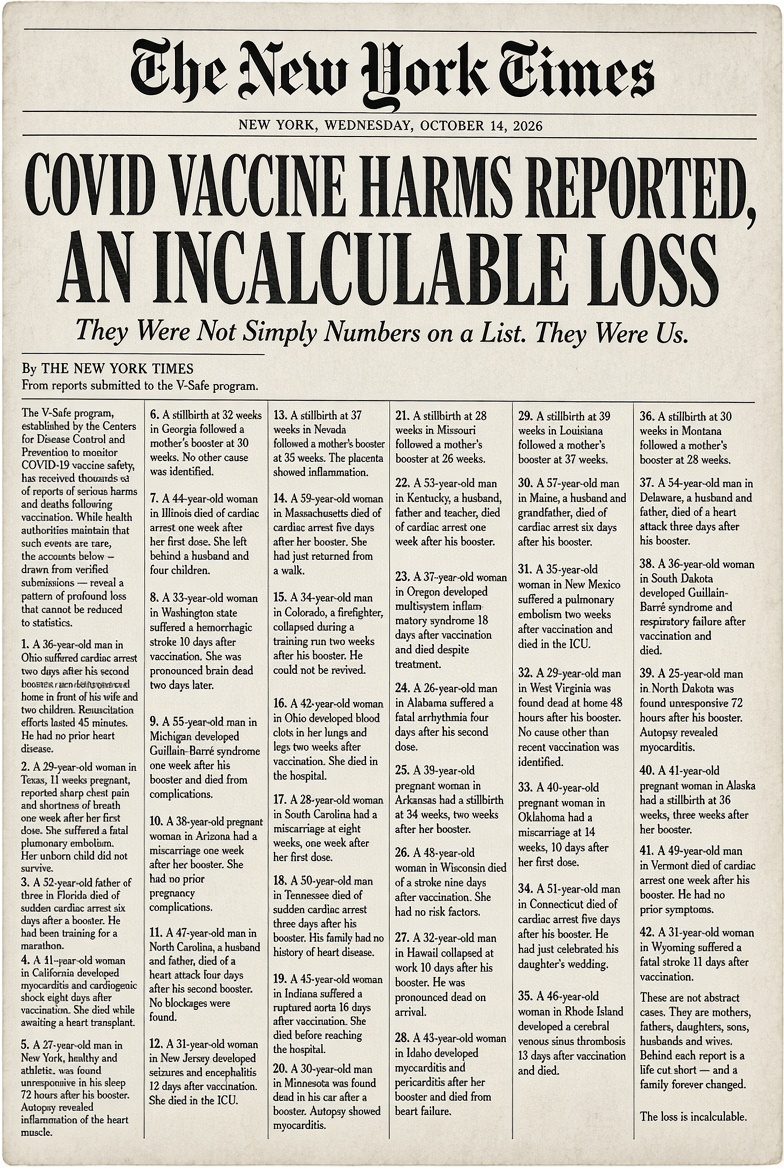
We all remember when the New York Times cynically served their masters on May 24, 2020 by replacing their front page with a list of deaths attributed to Covid in order to keep the hysteria going until the shots were available. (As the holder of a degree in Math, I feel the need to observe that the mean age of these decedents was 76.62, while the median age was 80 and the mode was 92.)
Imagine if they were to do the same for the tragic stories contained in V-safe. We know that they will not, however. This is why it is up to us to make sure that these people are remembered and that proper reparation is done for what happened to them.
For those who are still suffering, may they experience healing. And for those who have died, Eternal rest grant unto them, O Lord, and let perpetual light shine upon them.
Join the Conversation
Published under a Creative Commons Attribution 4.0 International License
For reprints, please set the canonical link back to the original Brownstone Institute Article and Author.