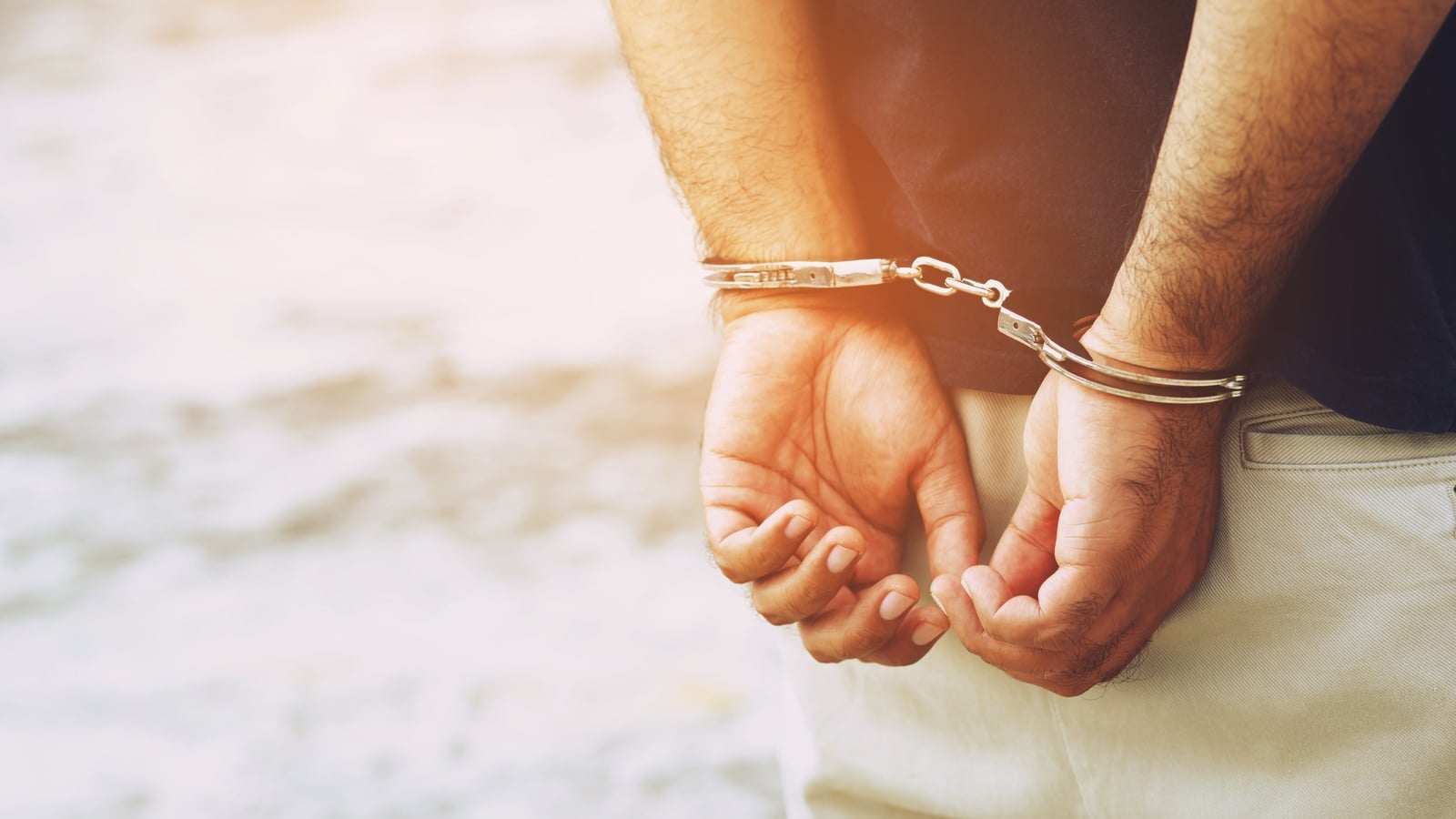

On October 13, 2023, 15-year-old Owen Poirier was on a school bus with four other students, two girls and two boys, all of whom engaged in what was described as “talking, taking photos and…harmless albeit chaotic play.” Several hours later, one of the girls accused Poirier of touching her crotch—a claim which the surveillance camera did not seem to corroborate. Without allowing Poirier to defend himself or call his parents, the school interviewed the boy and suspended him; some accounts say the authorities expelled him.
“I didn’t do this,” he told his parents. Facing a criminal investigation, however, the distraught Poirier committed suicide. According to one news report, “After Poirier’s death, the school’s superintendent wrote in an email that the educational institute ‘unequivocally’ did not find evidence of sexual assault, the Poirier family argued in court filings.”
Owen Poirier’s story is typical in several ways. The accuser, usually female, is automatically believed even without real evidence. A cursory ‘investigation’ provides little if any due process to the accused. The consequences to the accused are life shattering. His family is devastated and will not recover.
International Falsely Accused Day (IFAD) is an annual day of awareness that spotlights the devastating impact of false accusations on those accused, even if they are ultimately exonerated. People often lose their children, their jobs, their reputations, and can be driven to suicide. The desolation is especially absolute in accusations of child, sexual, or domestic abuse. And it hits men especially hard because they are usually the ones accused.
Our victim-obsessed society turns a blind eye toward this particular type of suffering, perhaps because the majority of victims are male. We want to believe the ‘victim,’ but the victim is often predefined as female. It takes Herculean efforts for the profound pain of those falsely accused to be acknowledged on the same level as the pain of sexually abused women.
Former teacher Lyn Crabtree launched IFAD—then called National False Accusation Day—in the UK in 2020 after her life and her husband’s were destroyed by allegations that later proved unfounded. They were dragged out of bed in the early hours by a police raid and arrested repeatedly thereafter; their reputations and careers were gutted. No official record indicates that the police or the press ever issued an apology or retraction when the Crabtrees were exonerated. What remains public are the accusations.
September 9th was chosen as International Falsely Accused Day as a way to honor former schoolteacher and BBC broadcaster Simon Warr, who made headlines in 2012 after being accused of indecent sexual behavior toward three former male students; the 9th is his birthday. The charges were so flimsy and contradictory that the jury in Warr’s trial returned a unanimous non-guilty verdict after a few minutes of consideration.
By this time, however, Warr had spent two years “on police bail;” that is, Warr was released from custody but he remained under active police investigation, with his behavior restricted. Once vindicated, he became an ardent activist on behalf of other falsely accused. The title of one of his articles captures Warr’s message: “The falsely accused can never get their lives back. False accusers are handsomely compensated but their victims get nothing.” The compensation received by accusers includes attention, sympathy, revenge, and monetary reparations.
On September 8-9, 2023, IFAD went international. Global demonstrations occurred in the UK, the US, and 13 other nations. The event now encompasses more than 20 nations and a coalition of activist groups, including the Falsely Accused Network in the UK and the Domestic Abuse and Violence International Alliance based in the US. It has grown without government funding and with little media support—a true grassroots movement in response to an ignored global wrong.
In the past, academics, media, activists, politicians, and legal systems have dismissed false accusations as a non-problem; that is, they were considered to be so rare as to be unworthy of attention. The issue refuses to die, however. In 2023, a survey entitled “False Allegations of Abuse Are a Global Problem, Women Most Often the Accusers” was issued by the Coalition to End Domestic Violence. A survey of 8 nations found that the percentage of people polled who reported being victims of false accusations ranged from India at 19% to Poland at 4%, with the US in between at 10%.
Such data is difficult to quantify, of course, but such indications should also be difficult to ignore. A 2025 International False Accusation Survey conducted by YouGov asked over 5,000 men and women in Argentina, Australia, the UK, and the US if they have ever been falsely accused of abuse and found similarly high rates.
Given continuing attention to the issue, the response to false accusations has evolved. The original ‘insignificance’ dismissal remains at one extreme with acknowledgement of the problem along with a demand that false accusations not be prosecuted at the other. The feminist organization End Violence Against Women International published a paper entitled “Raped, Then Jailed: The Risks of Prosecution for Falsely Reporting Sexual Assault.”
It states, “In the US, prosecutors have an ethical responsibility to pursue charges only when (1) there is evidence to support the charges, and (2) prosecution is in the interest of the community they serve.” The paper goes on to ask about false accusers, “Is Prosecution Ever Appropriate?” The general drift of the answer is that it is not in the public interest to prosecute. By contrast, those who advocate for the victims of false accusations call for increased penalties.
It is important, however, not to let discussion revolve around details of legislation rather than fundamental issues such as the bias in favor of complainants, which has led to a broken justice system. The #MeToo and Always Believe the Woman movements have attempted to transform American justice to serve their ideological ends, with some success. And the issue of false accusations has been a focal point.
This makes sense. False accusations are a central aspect of Western civilization because, without them, Western jurisprudence as we know it—a defining institution of our society—would not exist. Western jurisprudence revolves around the fact that people lie (false accusation) and people are often mistaken (unfounded accusation). If accusers never lied or were never mistaken, then there would be no need for criminal trials beyond the function of sentencing, perhaps. If accusers never lied or were never mistaken, then every accusation would be an automatic guilty verdict for the accused.
As it is, people frequently lie and frequently are mistaken. A staggering number of safeguards against false accusations are required to achieve justice in criminal trials. These safeguards constitute the most defining characteristics of Western jurisprudence; it is no exaggeration to say that criminal justice is organized around the pervasiveness of false accusations. The safeguards against false accusations include:
- a presumption of innocence by which an accused is deemed not guilty, which logically translates into a presumption of doubt about the accuser;
- proof beyond a reasonable doubt—the highest legal standard of proof—which means no logical uncertainty is left (informally stated, 90-99% proof);
- testimony under oath, with the threat of perjury and imprisonment for lying so that witnesses do not take oaths lightly;
- the right of an accused to cross-examine witnesses to test the truth and reliability of testimony;
- the right to legal representation to ensure effective cross-examinations and the experienced weighing of evidence;
- the right of an accused to remain silent, which the judge instructs the jury not to view as an admission of guilt;
- the right to a public trial with a transcript so that lies or mistakes can be revealed by observers or by future evidence;
- a jury of the accused’s peers who are able to assess the credibility of witnesses and evidence.
False accusations that occur outside of a criminal court—in the media, for example—have no similar safeguards. Such accusations ruin lives. They show the importance of adopting a fair and balanced approach rather than the salacious one so often used. Lamentably, however, these sort of false accusations are judged by standards that are the inverse of fair court procedure. They include:
- a presumption of guilt by which an accused must prove his innocence, which can be impossible. Short of being filmed since birth, a man cannot prove he has never molested a woman;
- a standard of proof so low that an accusation becomes true by being spoken;
- no sworn testimony from an accuser, with no legal repercussions for lying;
- no right of an accused to cross-examination;
- no right to refute the accusation in a public forum;
- silence and denial are the equivalence of guilt;
- no right to a public defense. And whatever is broadcast by the media or other source is rarely retracted if proven to be incorrect;
- no ‘jury’ of the accuser’s peers but, instead, supporters of the accuser.
Traditional Western jurisprudence protects against false accusations without abandoning the search for truth; modern Western culture is victim-oriented and encourages false accusations, perhaps unintentionally. If “victim-oriented justice” is allowed to pervade the legal system, then traditional safeguards will fall away and become closer to those used in the media. This must not be allowed to happen. Defining aspects of justice, like due process, must not be replaced by “victim-centered” law in which the presumption of innocence is replaced with a presumption of guilt.
The best protective barrier is awareness. This is what International False Awareness Day provides: Awareness. And a sense of hope. Lies and mistakes in the application of justice harm men, women, and children who deserve to grow up in a just society. On September 9, celebrate the better future offered by International Falsely Accused Day.
Join the Conversation
Published under a Creative Commons Attribution 4.0 International License
For reprints, please set the canonical link back to the original Brownstone Institute Article and Author.