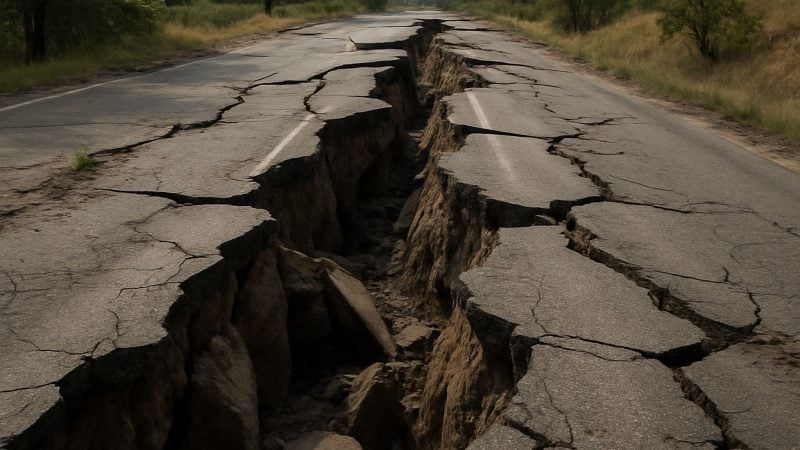
The recent earthquake in Venezuela brought back memories I have spent nearly 40 years trying not to relive. Watching images of collapsed buildings, frightened families searching desperately for loved ones, rescuers digging through mountains of broken concrete with little more than their hands, and physicians struggling to care for the injured under impossible conditions transported me to another place and another time.
Trauma has an extraordinary memory. It does not matter how many decades have passed or how many lives you have saved since then. Sometimes all it takes is another earthquake, another cloud of dust rising over a broken city, another exhausted physician covered in debris, and suddenly you are no longer watching the evening news. You are there again.
My heart aches for the people of Venezuela because I know, at least in some small measure, what they are living through. I remember the disbelief that follows the shaking, the strange silence that descends after the noise stops, the desperate hope that someone beneath the rubble is still alive, and the emotional exhaustion that follows days spent searching, treating, comforting, and grieving. Long after the television cameras disappear and the headlines move on to another story, survivors continue carrying that day within them. Every earthquake that follows becomes a reminder of the one that changed their lives forever.
Some moments divide life into two chapters. There is the person you were before, and there is the person you become afterward. Most of us never recognize those moments while we are living them. Only years later do we understand that the person who existed before a certain morning never truly returned. For me, that morning was September 19, 1985. It was the day I stopped being merely a young medical intern and began learning lessons that no classroom, no residency, and no textbook could ever teach. The last ordinary evening of my youth began with dinner.
On September 18 1985, three other people and I crossed the street from the Hospital General de Salubridad in Ciudad de México, to a modest Chinese restaurant that had become our refuge during internship. There were two fellow interns, my girlfriend Sara who, more than forty years later, is still my wife, and me. Ironically, we rarely went there for Chinese food. We went for what we affectionately called orejas de Elefante (“elephant ears”), enormous veal Milanese cutlets that extended well beyond the edges of the plate. They were inexpensive, delicious, and large enough to satisfy four perpetually hungry interns who spent far more time inside the hospital than anywhere else.
Like every generation of young physicians before us, we were convinced that nobody had ever worked as hard as we did. Internships have a remarkable way of making young doctors believe that they have discovered exhaustion for the first time in history. We complained about the endless hours, the overwhelming patient load, the lack of sleep, and the fact that we barely had enough time to sit down and eat before another patient needed us. We laughed because sometimes laughter was the only thing that kept us going. Looking back now, I smile at the innocence of those conversations. We believed we understood fatigue. We believed we understood responsibility. We believed we understood stress. We even believed we understood fear. We did not.
The following morning, at exactly 7:19 a.m., the earth decided to teach us otherwise. At seven o’clock I was sitting in a classroom located in the basement of the hospital. Even now, writing those words feels surreal. The basement. The very building that, within minutes, would simply cease to exist. It was another lecture, another ordinary morning in the life of a medical intern. Upstairs, patients were being examined. Nurses were changing shifts. Families were arriving to visit loved ones. The hospital pulsed with the familiar rhythm of medicine. None of us questioned whether the building around us would still be standing at the end of the day. Hospitals are places where lives begin, where lives are saved, and where physicians are trained. We instinctively believe they are among the safest places in any city.
Then the ground began to move. There was never any doubt in my mind about what was happening. I knew immediately it was an earthquake. Mexico City has always lived with the possibility of seismic activity, and the sensation was instantly recognizable. But recognizing an earthquake and understanding its magnitude are two very different things. The image that has remained with me for four decades was not the movement beneath my feet. It was the pizarrón (the large classroom blackboard) moving with a violence I had never imagined possible. At that moment instinct took over. I remember thinking only one thing: “Get the hell out of here.”
Our instructor told us to stay where we were. I have never blamed him. He was trying to do what he believed was right. But there are moments when instinct speaks more loudly than authority. Several of us looked at one another without saying a word. We simply ran. We ran toward the stairs because every instinct told us that remaining underground inside a violently shaking building was the wrong place to be. I cannot tell you whether that run lasted ten seconds or thirty.
Catastrophe changes your relationship with time. I remember only that every second felt precious. When we reached the outside, the violent shaking gradually subsided. What I remember next was not another sound but the complete absence of one. There are silences that remain with you forever, and this was one of them. One instant there had been crashing concrete, twisting steel, breaking glass, screaming voices, and the deafening roar of a city coming apart. The next there was an almost impossible stillness. Seconds later, an enormous cloud of dust engulfed everything around us.
Dust filled the air until it became difficult to breathe. It covered our clothes, our hair, our faces, and settled over the city like a gray blanket. I remember no smell. Only dust. Endless dust. It swallowed familiar landmarks and transformed places I knew intimately into something almost unrecognizable. As the cloud slowly began to settle, I turned toward the place where I had been sitting only moments earlier. The building was gone. Not damaged. Not leaning. Not partially collapsed. Gone.
Even today those words feel impossible to write because our minds simply refuse to accept what our eyes sometimes witness. Buildings are not supposed to disappear. Hospitals are not supposed to collapse into themselves. Yet there I stood staring at an empty space where, only minutes earlier, hundreds of physicians, nurses, students, patients, and families had begun what they expected would be another ordinary Thursday.
For years afterward I found myself asking a question that never had a satisfying answer: why was I spared when so many others were not? Physicians spend much of their lives believing that every question has an answer if we simply search hard enough. Experience eventually teaches us otherwise. Some questions remain unanswered, no matter how many decades pass. Over time I stopped asking why I survived and began asking a different question: what was I supposed to do with the life that had been spared? Looking back now, I suspect that much of my career has been an attempt to answer that single question.
Returning to the Ruins
When my thoughts finally became organized enough to make a decision, I got into my car.I did not drive home. I drove to find Sara.
It is difficult for younger generations to imagine a world without cell phones, text messages, social media, or emergency alerts. In 1985, there was only one way to know whether someone you loved had survived: you went looking for them. There was no other option.
Sara lived only about eight blocks from the hospital. I remember that drive almost as clearly as I remember the collapse itself. Streets I had traveled countless times suddenly looked unfamiliar. Buildings had been damaged. Windows had exploded onto sidewalks. Utility poles leaned precariously. Cars sat abandoned in the middle of intersections. People wandered aimlessly through the streets, many covered with the same gray dust that now covered me. Some were crying openly. Others simply stared into space, unable to process how an ordinary Thursday morning had become one of the darkest days in Mexico City’s history.
When Sara opened the door, she looked at me for several seconds without saying a word. Then she quietly said, “You’re completely covered in dust.” Until that moment I had not realized it. The dust from the collapsed hospital covered every part of me (my clothes, my hair, my face). Looking back now, I sometimes think that dust became much more than pulverized concrete. It marked the boundary between the young man I had been only an hour earlier and the physician I was about to become.
There was very little conversation. I simply told her to let her parents know that she was coming back to the hospital with me to help. We had no idea when we would return. It might be that evening. It might be days later. We simply didn’t know. Neither of us questioned the decision. Neither of us suggested doing anything else. We got back into the car and drove toward the place from which everyone else was desperately trying to escape.
Over the years, people have occasionally described that decision as courageous. I have never thought of it that way. It did not feel heroic. It did not even feel particularly brave. It simply felt inevitable.
Long before either Sara or I had earned a diploma, medicine had already begun teaching us its most important lesson. When people are suffering, physicians, and often the people who love them, do not first calculate risk, convenience, or personal comfort. They move toward the suffering because that is where they are needed. Nothing, however, could have prepared us for what we found. Nothing in medical school prepares you to return to the ruins of the very hospital where you expected to spend another ordinary day. Nothing prepares you to hear voices calling from beneath broken concrete or to realize that classmates with whom you had shared dinner only hours earlier might now be trapped beneath the rubble. Textbooks teach anatomy, physiology, pathology, and pharmacology. They do not teach you how to search for friends buried beneath the building in which you were supposed to learn medicine.
The hospital had become almost unrecognizable. What had represented healing, education, and hope only a short time earlier had become an enormous mountain of shattered concrete and twisted steel. Everywhere I looked there were physicians, nurses, firefighters, soldiers, construction workers, medical students, neighbors, and complete strangers. Within minutes, titles had become meaningless. Nobody cared whether you were an intern, an attending physician, a surgeon, or someone who had never stepped inside a hospital before that day. Degrees suddenly mattered very little. There was only one question anyone asked: “Can you help?” If the answer was yes, you became part of the effort.
Days blurred into weeks. Morning and night lost much of their meaning. We searched for survivors. We carried the injured. We established makeshift treatment areas wherever we could. We performed CPR, sutured wounds, splinted fractures, carried stretchers, delivered supplies, comforted frightened families, and when there were no more survivors to rescue in one section, we began the heartbreaking responsibility of recovering those who had not survived so their families could finally know what had become of them. Medicine had suddenly returned to its most fundamental form. The technology had disappeared beneath the rubble.The hospital had disappeared.
What remained were knowledge, compassion, determination, and hands willing to help.
Sara was only 18. She was not a physician. She was not a nurse. She was simply a young woman who refused to leave while other people needed help. There were no classrooms that day. No instructors. No formal lessons. Someone placed a needle holder in her hand, demonstrated how to place sutures, and within minutes she was closing wounds because there simply was no one else available to do it. Patients could not wait until everyone had accumulated enough experience. Catastrophe compresses years of learning into a single afternoon.
Looking back now, I realize those weeks shaped both of our lives forever. Years later, that 18-year-old volunteer became my wife. But long before she became my wife, she had already taught me one of the greatest lessons in medicine. And that shows that compassion requires neither a diploma nor a title.
Less than twenty-four hours earlier I had been an exhausted intern complaining that medicine demanded too much from us. Now I found myself performing CPR, suturing wounds, carrying stretchers, pulling bodies from collapsed buildings, comforting families, and helping identify classmates and friends. Somewhere during those endless days medicine stopped feeling like a profession and became something much deeper. It became an obligation.
Disaster strips away everything that is unnecessary. Titles lose their importance. Hierarchies disappear. Protocols become secondary. Even specialties fade into the background. The only thing that remains is the patient in front of you and the simple question of whether there is anything (anything at all) you can do to help.
Some of the faces we eventually encountered belonged to people with whom we had shared dinner less than 24 hours earlier. Even after 40 years, that sentence is almost impossible for me to write.
The previous evening we had laughed together over our enormous orejas de elefante. We complained about long hours, joked about difficult patients, and wondered when life might finally become easier. The following day I was helping identify some of those same friends after they had been pulled from beneath the collapsed hospital. There is no textbook that prepares you for that. There is no lecture explaining how to recognize the face of someone with whom you had been making weekend plans only hours earlier. There is no residency rotation devoted to teaching young physicians how to continue caring for others after losing people they loved.
Yet we continued. Not because we were fearless. Not because we were extraordinary. We continued because there were still voices calling from beneath the rubble. We continued because somewhere another family was desperately hoping that someone they loved would still be found alive. We continued because stopping simply was not an option.
People occasionally ask me when I truly became a physician. The easy answer would be to point to my graduation from medical school or the completion of my residency. Neither answer would be entirely truthful. If I search my memory honestly, I became a doctor in the ruins of that hospital. Not because I suddenly knew more medicine. Not because I had acquired extraordinary technical skills overnight. But because that was the day I finally understood what medicine really is. Medicine is not defined by buildings. Medicine is not defined by diplomas. Medicine is not defined by titles, technology, or protocols. Medicine, at its heart, is one human being choosing to help another with whatever knowledge, skill, and compassion they possess. Everything else is secondary.
What the Earth Taught Me
The lessons I learned beneath the rubble of the Hospital General de Salubridad did not remain in Mexico City. They followed me. Four years later, while I was completing my residency at Stanford University, the Loma Prieta earthquake struck Northern California. For everyone around me it was another major earthquake. For me it was something entirely different. The movement of the ground instantly transported me back to September 1985.
I was no longer simply a resident physician in California. Emotionally, I was once again standing before a hospital that no longer existed. Trauma has an extraordinary memory. It stores experiences somewhere deeper than ordinary recollection, waiting patiently for something as simple as the earth moving beneath your feet. That day I realized something important: surviving a catastrophe does not necessarily mean leaving it behind. Part of it quietly accompanies you throughout the rest of your life.
Years passed. I completed my training. Built a practice. Raised a family. Taught medical students and residents. Published papers and textbooks. Eventually I found myself caring for critically ill patients in one of the busiest intensive care units in the United States. Then came Covid-19.
People occasionally ask me whether the pandemic was more difficult than the earthquake. I have never known how to answer that question because they challenged different parts of the human spirit. The earthquake lasted less than two minutes. Its consequences lasted weeks. Covid lasted years. One buried people beneath concrete. The other buried them beneath uncertainty, isolation, fear, and, at times, politics.
Yet beneath those obvious differences, I recognized something remarkably familiar. Both catastrophes stripped medicine down to its essence. Young physicians suddenly found themselves making decisions no textbook had prepared them to make. Nurses worked beyond exhaustion. Respiratory therapists, emergency physicians, intensivists, and countless others quietly accepted responsibilities they had never imagined carrying. Protocols evolved. Scientific understanding changed. Resources became scarce. Certainty became a luxury. And yet patients still needed physicians. That never changed.
During both disasters I witnessed extraordinary courage. Not the kind celebrated in movies or on television. The quiet kind. The kind that arrives for another 12-hour shift after sleeping only a few hours. The kind that holds the hand of a dying patient when family members cannot be present. The kind that continues making difficult decisions despite knowing they will later be criticized by people who were never in the room.
Over the years I have come to believe that medicine attracts a particular kind of person. Most physicians will never describe themselves as courageous because courage is rarely what we feel in the moment. More often we feel uncertainty, fatigue, frustration, and occasionally fear. Yet we continue walking into emergency departments, operating rooms, intensive care units, and disaster zones because another human being needs us. Courage, I have learned, is not the absence of fear. It is deciding that another person’s suffering matters more than your own discomfort. That lesson has remained remarkably consistent throughout my entire career.
Catastrophes change their appearance. Sometimes they arrive with collapsing buildings. Sometimes they arrive as hurricanes, floods, or wildfires. Sometimes they arrive carrying a virus we have never seen before. Nature continually reminds us that absolute control has always been an illusion. What matters is not the form catastrophe takes. What matters is how we choose to respond.
Perhaps that is why I have become increasingly uncomfortable with the way fear is presented in our modern world. Please do not misunderstand me. Earthquakes deserve respect. Pandemics deserve respect. Floods, hurricanes, wildfires, and every other natural disaster deserve our full attention and careful preparation. Every life lost matters. Every grieving family deserves our compassion.
My concern has never been that we discuss disasters. My concern is that we too often discuss them without perspective. We live in an age in which every event must immediately become unprecedented. Every storm becomes historic. Every outbreak becomes civilization-threatening. Every earthquake becomes proof that the planet itself is somehow becoming uniquely unstable.
Part of that perception is understandable. Information now travels around the globe in seconds. We witness tragedies today that, only a generation ago, would have remained local stories. Our awareness has expanded dramatically. Perspective has not always expanded with it. Fear has become remarkably profitable, especially during Covid. It captures attention. It generates ratings. It fills news cycles.
But those of us who have stood inside genuine catastrophe understand something different. Fear requires no marketing department. Reality is persuasive enough.
After surviving a collapsed hospital, searching for classmates beneath broken concrete, performing CPR on friends with whom I had shared dinner the previous evening, and watching an 18-year-old girl become part of a medical team simply because wounded strangers needed another pair of hands, I have learned that real fear rarely announces itself with dramatic music or flashing headlines. It arrives quietly. It strips away every illusion of control. Then it asks one very simple question. What are you going to do now?
On September 19, 1985, my answer was to drive back toward a collapsed hospital. Sara’s answer, at only 18n years of age, was to pick up a needle holder and learn to suture because another human being could not wait.
During the Covid-19 pandemic, I watched thousands of physicians, nurses, respiratory therapists, paramedics, and countless others answer that same question every single day. The catastrophe changed. The answer did not.
Looking back over four decades, I have come to realize that the defining moments of my career were never really about earthquakes or pandemics. They were about people. They were about ordinary men and women discovering extraordinary reserves of compassion, resilience, and courage when circumstances demanded it. Catastrophe does not define us. Our response to catastrophe does.
Buildings may collapse. Viruses will emerge. Scientific understanding will continue to evolve, as it always should. Nature will continue reminding us that we are not fully in control. Yet every disaster I have witnessed has also reminded me of something profoundly hopeful. There will always be physicians. There will always be nurses. There will always be first responders. There will always be volunteers. There will always be neighbors and complete strangers willing to walk toward suffering while others are understandably running away.
That quiet willingness to serve has always inspired me far more than the catastrophe itself. When I watched the recent images from Venezuela, I did not see statistics. I did not see headlines. I saw faces. I saw young physicians who, perhaps without realizing it, were beginning the same journey that began for me on September 19, 1985. I hope they never forget what they learn there. I know I never have.
Forty years ago I watched a hospital disappear. What emerged from its ruins was not simply the physician I would become. It was the understanding that fear is inevitable, courage is a choice, and the greatest privilege in medicine has never been avoiding catastrophe. It has always been walking toward it.
Dedication
This essay is dedicated to the classmates, colleagues, nurses, patients, and friends who never walked out of the Hospital General de Salubridad on September 19, 1985. They remain part of every patient I have cared for and every young physician I have had the privilege of teaching. They are remembered.
Join the Conversation
Published under a Creative Commons Attribution 4.0 International License
For reprints, please set the canonical link back to the original Brownstone Institute Article and Author.