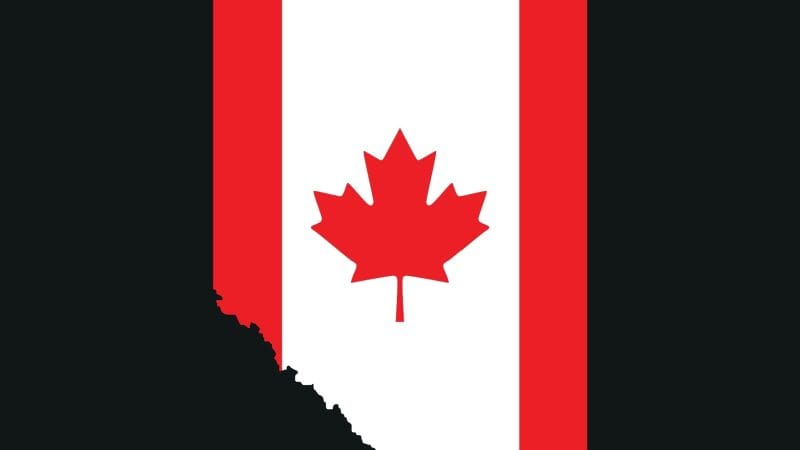

Last week, Alberta Premier Danielle Smith announced a referendum for October 19. It will ask Albertans a slate of policy and constitutional questions. Independence, she said the next day, will be added to the ballot if the requisite number of signatures is met in the petition drive, which is likely. Albertans will get their chance to say if they want to leave Canada. But Canadian federalists can relax. The Alberta premier is one of them. The referendum is the fix to defeat Alberta independence. It will undermine the separatist cause and split the independence vote.
Smith’s referendum will ask whether the province should exercise more control over immigration, social programs, and voter identification. And whether Alberta should pursue constitutional amendments. Give provinces the power to appoint judges to superior courts? Abolish the unelected Senate? Grant provinces the right to opt out of federal programs in areas of provincial jurisdiction without losing federal funding? Give provincial laws priority over federal ones when they conflict?
These referendum questions lead nowhere. Alberta already has constitutional authority over the policy questions. It could exercise more control in these areas tomorrow if it wanted. There is no realistic prospect of amending the Canadian constitution on controversial matters. Smith and her advisors must know that.
Smith has repeatedly said that her mandate is a sovereign Alberta inside a united Canada. But many of her fellow Albertans are fed up. They perceive that their province has long received a raw deal in Confederation. They tire of Ottawa throwing obstacles in the way of their primary industries. They resent having their wealth taxed and sent elsewhere around the country. A growing number of Albertans are determined to leave Canada. Recent polls peg it at about one in three.
But even among restless Albertans, there’s a moderate middle. They are unhappy with the status quo but have not yet resolved to ditch the country. Smith’s referendum will give them a third way. Choose constitutional and policy reforms to create a fairer deal.
It’s a chimera, of course. In 2021, 62 percent of Albertans voted in favor of removing equalization from the constitution. “Equalization” means that the federal government will collect more taxes from wealthy provinces and spend it on poorer ones. Alberta is Canada’s wealthiest province per capita, and the main source of equalization funds. Its equalization referendum produced no change. The rest of the country ignored it. Alberta will not get more constitutional powers, whatever the voters say about Smith’s referendum questions. No constitutional amendments are coming. But many voters will not realize that when they mark their ballots.
Smith’s referendum will undermine the prospect for independence in another way too. An independence referendum requires a “clear question.” That’s what the Supreme Court of Canada said in its 1998 reference case about Quebec. It makes sense. Voters should understand, beyond a shadow of doubt, what they are voting on and what is at stake. But the Court did not say exactly what a “clear question” consists of.
The proposed independence question is clear. “Do you agree that the province of Alberta should cease to be a part of Canada to become an independent state?” But a clear question becomes muddy when combined with other questions. If voters support independence but also other constitutional changes, what do they mean? Which should be pursued first? Which is the last resort? What if voters support independence but also support Alberta having the right to opt out of federal programs while retaining federal funding? Both of those things cannot happen. One requires that Alberta be a province, and the other requires that it not be. Any referendum result that requires interpretation is not clear.
The federal Clarity Act legislatures the requirement for a clear question, but it does not give specific criteria either. Nor does it specifically refer to the matter of multiple questions on the ballot. But it does say a question that “envisages other possibilities in addition to the secession of the province” is not clear. And that the House of Commons can consider “any other matters or circumstances it considers to be relevant.” If I was the Canadian government, I would argue that multiple questions create confusion. The Alberta government could ask one clear question. Instead, the Smith referendum will allow Ottawa to reject the legitimacy of the vote.
Some separatists say that Alberta doesn’t need Ottawa to approve its departure. Recognition by the United States and other countries would be enough. But even the United States will not recognize Alberta as independent unless Alberta declares itself to be. The Alberta government, having angled to defeat separation, is not likely to do that, even if voters approve the independence question on the ballot.
Many separatist Albertans insist that Smith is secretly one of them. Or at least that she will not stand in the way. But she could easily have held a referendum on independence at any time. She chose the other questions for the Oct 19 referendum. She could easily have chosen the independence question instead. She preferred to make her own citizens jump through hoops of petitions and signatures to get it on the ballot.
Once the referendum is held, the independence cause will be done for the foreseeable future. Some Alberta separatists might try to see a silver lining. After the country declines to give Alberta a better deal, they might say that the cause will be all the stronger. But by then the US will have elected a new president. Support from the Trump administration, real or imagined, has been a source of hope. And in any event, future demographics in Alberta may no longer offer the same opportunity.
Smith’s referendum, and her promise to include the independence question on the ballot, might appear to open the door for Alberta’s departure from Canada. Instead, it is more likely to slam the door shut. On Alberta’s present path, the Canadian constitutional status quo will continue.
Join the conversation:

Published under a Creative Commons Attribution 4.0 International License
For reprints, please set the canonical link back to the original Brownstone Institute Article and Author.