Recent studies reveal a striking statistic: over the last decade, approximately 30% of primary care physicians have either retired or switched to non-clinical roles, leaving a notable gap in patient care. Something subtle has been happening in American medicine, and it’s easy to miss if you’re not looking for it. There have been no emergency declarations, no ribbon-cutting ceremonies, no breaking news alerts. No one has announced it officially. But if you pay attention—if you walk into clinics that once buzzed with conversation, if you notice how long it takes now to get an appointment, if you see how often a familiar nameplate disappears from a door—you begin to feel it.
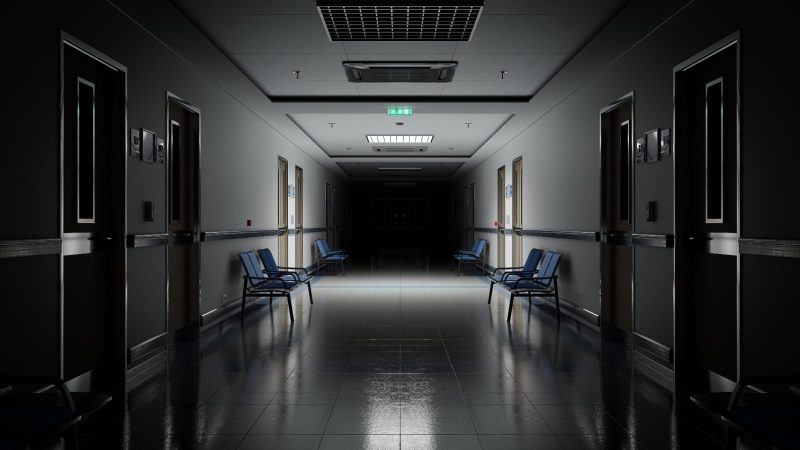
The waiting rooms are quieter. Not calmer. Not healthier. Just quieter in a method that feels wrong. The type of quiet that doesn’t signal relief, but absence. In one waiting room, a single flapping magazine page, picked up by a draft, was the only sound in an air thick with anticipation—a sensory cue that underscored the void left by dwindling doctor visits.
This isn’t because people have stopped getting sick. Quite the opposite. Chronic disease has become a defining feature of modern life. Emergency departments are overflowing. Hospital beds turn over at a relentless pace. The acuity is higher, the complexity deeper, the margins thinner. And yet, in office after office—primary care clinics, specialty practices, community hospitals—something fundamental is missing.
In the midst of this absence, consider the story of Claire, a patient who had been under the attentive care of Dr. Smith for over a decade. Claire’s health journey was one he understood deeply, knowing her medical history, family concerns, and even anticipating her questions before she voiced them. When Dr. Smith quietly left his practice, Claire found herself navigating a system where each new doctor barely skimmed her files, struggling to understand her complexities in short appointments. This disruption left her feeling unanchored, her continuity of care severed.
The doctors are not leaving in protest or anger. There are no picket lines. No manifestos. They are leaving the way exhausted people leave anything that has stopped making sense to them. Quietly. Without ceremony. One retirement notice at a time. One closed practice. One final day seeing patients, followed by a decision not to return. Sometimes the only sign is a piece of paper taped to a glass door: Practice closed. Thank you for your trust.
Civilizations don’t usually collapse in dramatic fashion. They don’t fall all at once. They erode. Slowly. Quietly. Function by function. And often, the earliest warnings aren’t explosions or shortages, but absences—things that used to be there, reliably, and suddenly aren’t.
When insects vanished from windshields, people noticed long before scientists quantified it. Such silence itself seemed unsettling. It seemed like a signal, even before anyone could explain what it meant. Medicine is experiencing its own version of that silence now.
For generations, the physician occupied a unique place in the social structure. Doctors were not merely service providers. They were witnesses. They saw people at their most vulnerable and followed them over years, sometimes decades. They remembered histories that didn’t fit neatly into charts. They understood families, patterns, tendencies, and fears. They were often the only professionals who saw the full arc of a human life—from birth to decline—up close and without abstraction.
That role did not disappear because it lost value; it was simply replaced. It disappeared because it became unsustainable.
Over time, medicine was reorganized around efficiency, standardization, and scale. Each change made sense in isolation. Each was defensible. But together, they produced a system that no longer trusted the very people it depended on. Physicians were gradually transformed from professionals exercising judgment into operators executing protocols. From healers to compliance managers. From thinkers into box-checkers.
The electronic medical record didn’t just digitize documentation. It reordered priorities. It shifted attention away from the patient and toward the screen. It made billing, auditing, and liability the dominant forces shaping clinical encounters. What was most important was no longer what happened in the room, but what could be proven later.
Doctors feel this acutely, even if they struggle to put it into words. They feel it when they realize they are listening with one ear while typing with both hands. When eye contact becomes a luxury. When the narrative of a patient’s life must be compressed into templated fields that were never designed to hold it. When they know what needs to be done, but hesitate—not because it’s wrong, but because it might not be defensible to someone who will never meet the patient.
We call this burnout, but that word is far too small. Burnout suggests fatigue. What many physicians experience instead is something closer to betrayal. A slow, cumulative moral injury that comes from being forced—again and again—to act in ways that conflict with one’s own professional judgment. From being told, implicitly and explicitly, that judgment is a liability. That variability is a flaw. That discretion is dangerous.
Doctors were never fragile. They tolerated long hours, emotional strain, and impossible decisions. That was always part of the work. What they cannot tolerate indefinitely is practicing a profession that no longer resembles the one for which they trained. A profession where meaning is replaced by metrics, and responsibility is paired with diminishing authority. So they leave. Not all at once. One by one.
Some retire far earlier than they ever planned to. Some drift into non-clinical roles, telling themselves it’s temporary. Some cut back hours until the practice collapses under its own inefficiency. Others disappear into administration, consulting, industry—anywhere that allows them to use their knowledge without violating their conscience daily. However, amidst this trend, there are practices that have found a way to thrive by restructuring to prioritize patient relationships over strict efficiency metrics.
These practices have shown that by integrating team-based care, utilizing support staff more effectively, and allowing physicians to maintain their role as central decision-makers, it is possible to strike a balance that honors both the art and science of medicine. This glimpse of resilience offers hope and illustrates that change, while challenging, can also lead to rejuvenation.
What replaces them is not medicine as it once was, but a thinner version of it.
Coverage instead of care. Access instead of continuity. Algorithms instead of judgment. Systems are designed to ensure that someone responds, even if no one truly knows the patient anymore. Imagine a follow-up appointment that is scheduled but never occurs. A patient, having undergone a critical test, waits expectantly for results, only for them to be forgotten in the digital shuffle. Calls are made, and messages are passed through automated systems, yet the comfort of a familiar voice or face is absent. This is the stark difference between being cared for and merely being attended to.
This is not a criticism of non-physician clinicians. Many are dedicated, skilled, and overwhelmed by responsibilities they never sought. Their unique strengths, such as providing comprehensive care management and their ability to connect with patients on a personal level, are invaluable. The problem is structural. It is the belief that expertise can be diluted indefinitely without consequence. That human decision is interchangeable. That medicine can be modularized, as software can. It cannot.
Medicine is interpretive by nature. It requires synthesis, memory, intuition, and experience—qualities that accumulate over time and through relationships. When those relationships disappear, medicine loses its depth. It becomes technically expert but emotionally hollow.
Patients feel this, even if they can’t articulate it. They notice when no one remembers them. When every visit starts from zero. When care feels transactional instead of personal. They sense when medicine is happening to them rather than with them. And with that loss comes something more dangerous than inconvenience: the erosion of trust. Recent surveys suggest that patient trust in healthcare providers has declined significantly, with one study indicating that only 34% of Americans have confidence in the medical advice they receive. This erosion of trust serves as a quiet infrastructure of its own within healthcare. Without it, compliance falters, fear grows, and uncertainty metastasizes. When patients don’t trust the people caring for them, they look elsewhere—for certainty, for reassurance, for answers that feel human.
That vacuum does not stay empty for long. It gets filled by influencers, headlines, social media stories, and institutional messaging that lacks nuance. In the absence of trusted physicians, people latch onto certainty wherever they can find it.
The irony is that this is happening precisely when medicine is needed most. Populations are aging. Chronic illness is becoming the standard rather than the exception. Patients are more complex, more medicated, more vulnerable. Yet instead of strengthening the human core of healthcare, we have optimized it out of existence. As a step toward addressing this, restoring longitudinal primary-care payment could bridge this gap. This policy would encourage a return to relationship-based care, allowing physicians to follow their patients over time. By incentivizing continuity, it could help reestablish trust and improve patient outcomes, shifting the focus back to understanding and treating the whole person rather than just isolated symptoms.
We speak endlessly about access, but rarely about depth. About speed, but not continuity. About innovation, but not wisdom. A system can offer unlimited appointments and still fail if no one remains who knows the patient well enough to guide them.
Physicians once served as interpreters—of risk, of science, of uncertainty. They helped translate complexity into something patients could live with. As that role disappears, medicine becomes louder but less grounded. More confident, but less trustworthy.
The quietness of the waiting rooms is not accidental. It is the predictable outcome of decades of decisions that favored efficiency over meaning, control over judgment, and scale over sustainability. None of this required malice. It required only arrogance—the belief that systems could replace people without losing anything essential.
But something essential has been lost. What if no clinician knew your personal history? Imagine a future where each of us enters a healthcare system as strangers, unknown and undiscovered. How would it affect our treatment, our trust, our lives? This anonymity risks disengaging us not just from our health providers, but from our own health journeys. It should urge us to think deeply about the paths we’re on and inspire us to take action before this dystopian vision becomes a reality.
If we keep on this path, the signs will multiply. More closed doors. More transient care. More medicine delivered without a relationship. More patients who feel unseen, unheard, and unanchored. By the time the absence becomes obvious to everyone, rebuilding may no longer be possible.
Civilizations don’t fall when the lights go out suddenly. They fall when indispensable roles fade quietly into the background—until one day, people look around and realize that no one is left who remembers how things used to work.
The waiting rooms are quiet now. That should worry us far more than it does. Yet, in the face of this silence, there is hope—an opportunity for action. By reaching out to local representatives, supporting community clinics, or even engaging in conversations about the value of personal healthcare, individuals can contribute to turning the tide. Each small step represents not just a chance to maintain what’s left but to rebuild what’s been lost. Let us transform concern into collective agency, ensuring that the quiet once again becomes a space filled with understanding and care.
Join the Conversation
Published under a Creative Commons Attribution 4.0 International License
For reprints, please set the canonical link back to the original Brownstone Institute Article and Author.