
The second Trump administration arrived in the wake of the brutal Covid experience, with the hope of gutting the deep state. A public demand for dramatic reform of oppressive government agencies – and the industries that influence them – was on the docket.
Reform efforts, however, have been met with frustration. The entire machinery is set up to resist the influence of a politically hostile takeover. For example, Moderna, the company tasked with the development of mRNA shots for Covid, has been given the green light to further develop the technology for a flu shot, among other grave disappointments.
The operations of the FDA have been pulled in two different directions. On the one hand, the efforts are directed toward better efficacy and safety testing, obviously in light of the disastrous experiment with mRNA shots rolled out to inoculate the population. The resulting injury and death is a scandal for the ages. On the other hand, pharmaceutical companies hoped for speedier approvals and less red tape, consistent with Republican demands for decades.
It’s the same with food. The HHS has prioritized healthier real food instead of decades of subsidies for highly processed, nutrient-barren junk food designed to use up surplus grains that have been subsidized since the early 1970s. Americans meanwhile assume – thanks to the FDA and the Department of Agriculture – that anything for sale for people or animals has surely passed some kind of safety and health standards, which is far from true.
A worthy thought experiment: how would drug approvals and food safety be managed in the absence of such government agencies? The thesis: the free and competitive marketplace would likely be far more strict and exacting than these government agencies. Private solutions would emerge as the standard bearers of approvals, in a way similar to how the private Underwriters Laboratory (founded 1894) codifies the safety of appliances, the Better Business Bureau (founded 1912) polices fraud in business, and actuaries in many sectors assess and price risk.
Anyone in a free market can sell anything. Doing so profitably over the long term and earning consumer trust is an entirely different matter. Markets have their own way of regulating safety, efficacy, and quality, often in ways that are more strict than government agencies have traditionally permissioned.
Let’s look at the history.
Vaccines and drugs were the first two consumer products in American history to be regulated by government agencies. The Biologics Control Act of 1902 regulated the production and sale of biological products, specifically vaccines, serums, antitoxins, and similar items. It required annual licensing of manufacturers, facility inspections, supervision by a scientist, and proper labeling (including expiration dates).
This Congressional action came directly in response to the wave of vaccine injuries and death in 1901. A diphtheria antitoxin in St. Louis killed 13 children, while a contaminated smallpox vaccine in Camden, New Jersey, killed 9 more. Crucially, these tragedies gained public attention through media amplification whereas most vaccine injury remains a private and unpublicized matter. The public was outraged in part because it confirmed widespread suspicion of these products born of long experience.
The industry was clearly in deep trouble. It lobbied for the 1902 law to shore up confidence in a manner consistent with its efforts before and since.
As historian Terry S. Coleman points out, “the 1902 Act was an initiative of the large biologics manufacturers,” with the help of the American Medical Association and led by Parke-Davis, which was acquired in 1970 by Warner-Lambert and again by Pfizer In 2000. “It is impossible to disentangle the desire for strict regulations to boost public confidence in biologics,” he writes, “from the desire for such regulations to eliminate competitors.”
Thus did the creation of the agency formed by the Congressional action (the Hygienic Laboratory, part of the Public Health and Marine Hospital Service, under the Treasury Department, and later to become the National Institutes of Health) served to create a private cartel of drug and vaccine manufacturers, crowding out private solutions and disabling the normal market-based rule of caveat emptor or buyer beware.
This is exactly what the biggest players in the industry intended. It was a brilliant strategy. Pretend to be deeply vexed by a government crackdown while pulling the strings behind the scenes of a new agency that the public trusts more than the industry. This was not only the birth of a new path toward public management of this one industry; it was the origin of the regulatory state itself insofar as it intervenes directly in the consumer marketplace.
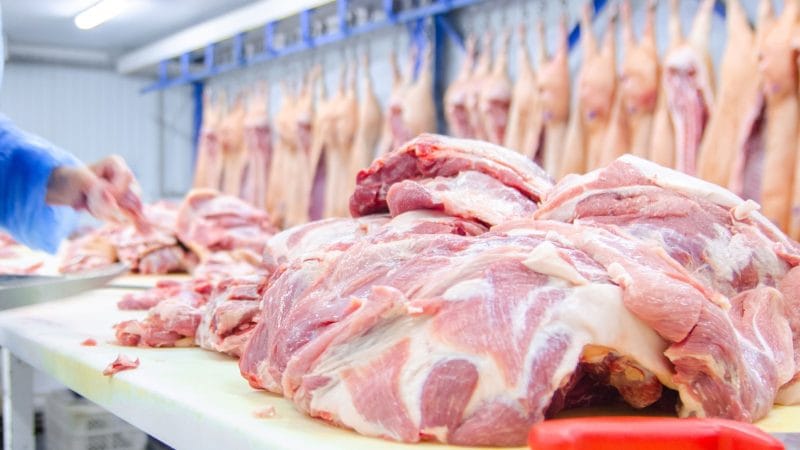
Four years later, the meatpacking industry was in big trouble from the popular book The Jungle by Upton Sinclair (1906). The expose caused a collapse in the sales of the processing and canning industry as the public reverted back to trusting only local food and onsite processing from farmers. A powerful industry needed to do something.
The meatpacking industry took a cue from the vaccine industry and pushed for regulation. The result was the Pure Food and Drug Act of 1906. It targeted adulterated or misbranded foods and drugs in interstate commerce. All evidence suggests that meatpacking became less safe as a result. The industry faced higher compliance costs that squeezed out smaller competitors and less stringent safety standards, while gaining public confidence.
These two acts of Congress became the foundation of what became the Food and Drug Administration, which is tasked with investigating and approving products for their safety and effectiveness. Crucially, industry has been the controlling force from the beginning, the very reason the agency exists. The point was not to protect the public but to protect the largest firms within their respective industries.
The route by which this happened is rather circuitous. The industries went to government and pleaded to be regulated, thus shoring up market position in two directions: increasing costs for upstart firms and disabling public incredulity toward the safety and efficacy of their products.
Today, people talk about industry capture of agencies but this is probably not the right term. The agencies were formed out of the pleas of industry. This is not just true for food and drugs but also for banking, transportation, industry structure, and communications technology, as Gabriel Kolko has demonstrated in his sweeping study of the Progressive Era.
It’s true that these historical facts are hardly understood at all, even by economic historians. This is why we need the entire history of the modern regulatory state rewritten and reconceptualized without romantic delusions about good government actors seeking the well-being of the public.
This historical and present reality poses a serious dilemma for reformers like Robert F. Kennedy, Jr., who have pledged to eliminate the corrupt relationship between industry and government and rid the agencies of conflicts of interest. The agencies themselves were founded in conflicts of interest. An attempt to gut them would turn them into something they have never been.
Now to the original question: what would regulate these industries if the FDA were not around at all? In electronics and business quality, we find the answer. These two industries face strict control emerging organically from consumer demand alone.
Institutions like Underwriters Laboratory and the Better Business Bureau are titans in these sectors with no assistance from government. User ratings emerging in the digital era have a vast impact on sales success, as any Amazon seller can tell you. And in industries like sports, household construction, and driving skill, private insurers exercise a dominant influence through financial carrots and sticks, as directed by actuaries assessing risks.
The very existence of the FDA has crowded out such elaborate and complex systems in the case of food and drugs, which is precisely why their safety and efficacy is the subject of such huge public controversy.
In fact, if you look at the Covid shots alone, consider that no company operating within a market framework could ever have gotten away with such widespread distribution of such ineffective, unsafe, and largely unnecessary products, which were mislabeled as vaccines from the beginning. Not only would a private rating agency decline to approve them, the imposition of normal liability standards would have made insuring the manufacturers and distributors completely unaffordable.
The vaccine industry even from its inception has relied on disabling market forces via a range of interventions: zero-priced distribution, wartime inoculation of soldiers, legalized and court-imposed mandates, exclusions of refuseniks from education and professional life, subsidies, patent sharing with agencies, liability indemnifications, and finally invoking emergency needs to bypass normal standards of safety.
Given all of this, we have no idea what the status of these products would be in a normal market environment. Maybe the industry would not even be financially viable, which is precisely why the industry has built such a powerful lobbying machine. Indeed this was the industry claim when it won its liability shield in 1986: it said it would otherwise face complete bankruptcy.
It’s the same with food. What began with the meatpackers has extended to every other food source. The New Deal imposed a central-planning apparatus to keep prices high via output controls and even mandates to plow up crops to take them off the market. Wartime price controls and rationing redirected production energies away from whole foods toward industrialized substitutes. And the huge push of the 1970s for maximum output started the trend away from local and small farmers toward land consolidation and overproduction of grains. This is also the period when mass use of chemical herbicides and fertilizers came into common use.
All the while, the public was blindsided because government agencies continually assured us that all was well. These products are safe and nutritious. Absent such impositions, regulations, subsidies, and indemnifications, the sectors of food and drugs generally would operate very differently.
Today there are many efforts on the part of nonprofits working to educate the public on many topics related to individual and public health. They work at cross purposes with these agencies that have worked to foist onto the markets what the market would have otherwise been inclined to either filter out, deprecate, or reject entirely.
Could we do without the FDA? We would likely be far better off.
For more on the ways that government intervention reduces market-based incredulity while subsidizing fraud, ill health, dangerous products, and lies, see my interview with Stephan Kinsella.
Join the conversation:

Published under a Creative Commons Attribution 4.0 International License
For reprints, please set the canonical link back to the original Brownstone Institute Article and Author.