


The Covid-19 pandemic exposed deep failures in global health governance. That much is now widely acknowledged, even by institutions that initially resisted self-examination. For example, the recent Lancet Commission on Covid-19 substituted advocacy for analysis, evaded institutional accountability, and ultimately clarified little about why global pandemic governance failed.
What remains unsettled—and largely undiscussed in public—is what those failures imply for the future of international health cooperation, and especially for the role of the World Health Organization.
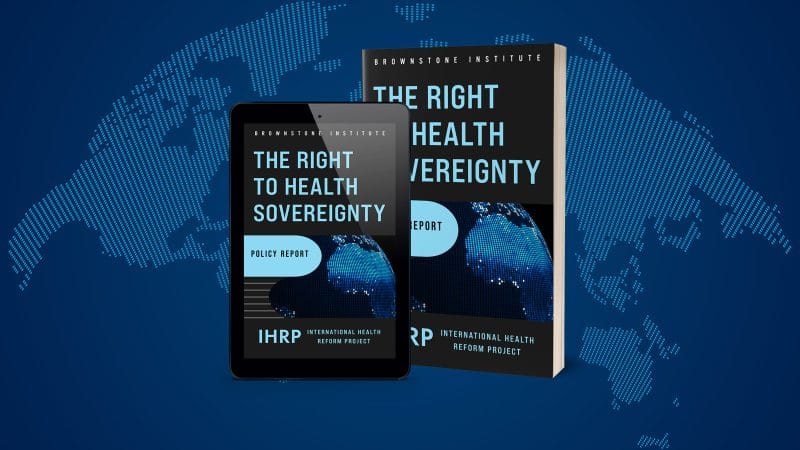
The International Health Reform Project (IHRP) was convened to confront that question directly. The IHRP is an independent international group, though its work is closely linked to Brownstone through the participation of three of its Fellows who wrote this article, two of whom served as co-chairs.
Its work is unusually detailed, wide-ranging, and blunt. It does not argue that the pandemic was inevitable, nor that failure was merely the product of bad luck or limited information. Instead, it documents how institutional incentives, governance structures, and political pressures shaped decisions in ways that repeatedly undermined transparency, proportionality, and scientific rigor.
The Panel’s findings matter well beyond debates about the past. They arrive at a moment when the United States has withdrawn from the WHO, when the Organization is seeking expanded authority through amended International Health Regulations and a new pandemic agreement, and when governments around the world are quietly reassessing whether the current model of global health governance is fit for purpose.
The question now is not simply whether the WHO failed, but what should follow from that failure—especially for the United States and its allies.
I. What the IHRP Found: Failure Was Structural, Not Accidental
The IHRP report reaches a clear conclusion: the problems revealed during Covid-19 were not isolated mistakes, but the predictable outcome of institutional design choices made over decades.
Several findings are central.
First, the WHO failed in its core pandemic function. The Organization was created to detect, assess, and coordinate responses to transnational infectious disease threats. Yet during the early stages of Covid-19 it was slow to challenge incomplete or misleading information, reluctant to escalate warnings in the face of political pressure, and inconsistent in its guidance once the emergency was declared. These failures had real consequences, shaping national responses during the narrow window when early action mattered most.
Second, politicization was not an aberration but a recurring constraint. The Panel documents how deference to powerful member states, especially where transparency was most critical, distorted risk communication and delayed independent investigation. This was not simply a failure of leadership, but a consequence of governance rules that place political consensus above timely error correction.
Third, the Organization entered the pandemic already institutionally overstretched. Over time, the WHO’s mandate expanded far beyond communicable disease control into a wide array of social, behavioral, and environmental domains, often with limited connection to pandemic preparedness. The result was an organization attempting to function simultaneously as a technical agency, a development actor, a norm-setting body, and a political convenor—without the clarity or discipline required for crisis response.
Fourth, post-pandemic reforms did not address these underlying weaknesses. Instead of a rigorous institutional autopsy, the response to failure was to seek expanded authority: broader emergency powers, new compliance expectations for states, and additional permanent structures. The Panel is explicit that expanding scope without correcting governance failures risks entrenching the very dynamics that contributed to poor performance in the first place.
Taken together, the IHRP’s conclusion is stark: global health governance failed not because the task was impossible, but because the system lacked the incentives and safeguards needed to prioritize evidence, transparency, and accountability under pressure.
II. Withdrawal Was Not Reckless, but It Was Incomplete
Against this backdrop, the United States’ decision to withdraw from the WHO should not be understood as a rejection of global health cooperation. It was a response—long delayed—to an institution that failed its most important test and then sought to expand its authority without a credible reckoning.
Withdrawal restored policy autonomy and signaled that continued participation could not be taken for granted in the absence of reform. But withdrawal alone does not constitute a strategy.
The United States remains the world’s largest funder of global health efforts and the most capable actor in disease surveillance, biomedical research, and emergency response. Pandemics, by definition, do not respect borders. Leaving the WHO does not eliminate US interests in global outbreak detection, technical standards, or information sharing. It merely changes the terms on which those interests must now be pursued.
The risk is not disengagement, but strategic drift. Without a clear articulation of what comes next—what functions still matter, where cooperation is indispensable, and under what conditions institutional engagement should resume—withdrawal can harden into absence. And absence does not create neutrality; it simply cedes influence over emerging norms to others.
This is where the IHRP report becomes especially important. It provides a baseline diagnosis that future US administrations—of either party—will have to confront. Even if the current administration favors bilateral approaches, a future Democratic administration is likely to seek re-entry into the WHO. The critical question is whether that re-entry would be unconditional, or whether it would be used as leverage to demand meaningful reform.
Avoiding that question now almost guarantees repeating past mistakes later.
III. Bilateralism: Necessary, Insufficient, and Risky without Accountability
The instinct to move away from multilateralism and toward bilateral engagement is understandable. Large international organizations tend to diffuse responsibility, reward consensus over performance, and struggle to correct error. By contrast, bilateral agreements promise clearer lines of accountability, greater flexibility, and closer alignment with national interests.
In global health, there is a strong case for bilateralism—up to a point.
Much of what the United States does best in global health already operates through bilateral or tightly managed channels: disease-specific programs, laboratory partnerships, technical assistance, and procurement support. These approaches allow Washington to focus resources, set conditions, and measure outcomes more directly than is possible through sprawling multilateral bureaucracies.
But bilateralism is not a substitute for global coordination in all domains. Nor does it automatically solve the problems that undermined multilateral institutions in the first place.
There are three structural limits worth emphasizing.
First, information fragmentation is a real risk. Surveillance, early warning, and outbreak verification depend on rapid information sharing across borders. Bilateral agreements can secure access to data from partner countries, but they struggle to replicate the breadth and redundancy of global monitoring systems. In early outbreak phases, the difference between raw signals and verified interpretation is often decisive.
Second, paper compliance is not accountability. Shifting responsibility to national governments does not guarantee performance, especially where institutions are weak. Experience in pharmaceutical regulation, disease surveillance, and procurement shows that formal ownership can mask persistent failures unless paired with independent verification and real consequences for non-compliance. Bilateralism that lacks these safeguards risks reproducing the same accountability deficits that plagued multilateral systems—only in more fragmented form.
Third, standards still matter. Travel advisories, emergency declarations, laboratory norms, and vaccine reference standards shape global behavior whether or not the United States participates in setting them. Absence does not prevent norms from emerging; it simply means they are shaped by others, often through political compromise rather than evidence-based criteria.
The lesson is not that bilateralism is wrong, but that it is incomplete. A strategy built entirely on bilateral engagement risks solving yesterday’s frustrations while creating tomorrow’s vulnerabilities.
This is why withdrawal from the WHO should be understood not as an end state, but as leverage—and leverage only works if it is paired with clear conditions and a credible pathway forward.
IV. The Re-Entry Question: Conditions, Not Sentiment
The most consequential question raised by the IHRP report is one that many policymakers prefer to avoid: under what conditions, if any, should the United States rejoin the World Health Organization?
Politics makes this uncomfortable. The current administration’s skepticism of multilateral institutions is well known. But political cycles change. A future Democratic administration is highly likely to seek re-entry, particularly if withdrawal is framed as destabilizing or isolating. The danger is not re-entry per se, but unconditional re-entry—a return driven by symbolism rather than reform.
The IHRP report makes clear that such a return would lock in failure.
Any future re-entry would therefore need to be governed by explicit conditions, not goodwill. If re-engagement is to serve US interests and global health more broadly, it must be conditional, verifiable, and durable across administrations. At a minimum, several principles should apply.
First, mandate discipline. The WHO’s assessed budget and core activities should be tightly focused on communicable disease surveillance, outbreak response, and technical coordination. Expansive agendas that dilute attention and resources undermine crisis performance and blur accountability.
Second, governance reform. Emergency declarations and guidance must be subject to clearer evidentiary thresholds, transparent reasoning, and post-crisis review. The absence of a serious institutional autopsy after Covid should not be repeated. Error must be acknowledged, documented, and corrected.
Third, political insulation where it matters most. While complete depoliticization is unrealistic, there must be safeguards against the suppression or delay of critical information due to member-state pressure. Failure to share outbreak data, restrict access, or cooperate with investigations must carry explicit consequences.
Fourth, financial accountability. Reliance on earmarked voluntary contributions has distorted priorities and empowered donors at the expense of core functions. Any expansion of assessed funding should be contingent on governance reform, not a substitute for it.
Fifth, inclusion and transparency. Excluding capable jurisdictions from technical participation for political reasons weakens surveillance and undermines trust. Participation rules should be governed by public-health competence, not diplomatic pressure.
None of these conditions is radical. All are consistent with the WHO’s original purpose. Yet history suggests they will not be adopted without sustained external pressure.
That pressure is most effective when re-entry is treated not as a moral imperative, but as a negotiation. Withdrawal, in this sense, is not abandonment. It is the creation of leverage that future administrations can either squander—or use intelligently.
The IHRP report provides the evidentiary basis for making that choice explicit rather than sentimental.
V. How Much Change Is Actually Realistic?
A fair question is whether meaningful reform of a UN agency is even plausible. History offers few examples of wholesale institutional transformation. Large multilateral bodies are structurally conservative: authority is diffuse, incentives favor continuity, and failure rarely carries direct consequences for leadership or staff.
That said, change is not impossible—but it is usually partial, externally driven, and pragmatic rather than visionary. When UN agencies have altered course, it has almost always followed sustained pressure from member states or major funders, typically after reputational damage or financial constraint made inaction costly.
The pattern is consistent. UNESCO modified internal governance and oversight practices only after repeated withdrawals and funding suspensions by major donors in the 1980s and again in the late 2010s. These episodes did not reinvent the organization, but they did produce tighter budget controls, stronger internal evaluation, and some narrowing of discretionary programming—sufficient to permit re-engagement without endorsing business as usual.
Similarly, the International Labour Organization has periodically adjusted supervisory and reporting mechanisms in response to sustained member-state pressure. Governments did not eliminate the ILO’s normative ambitions, but they succeeded in constraining how aggressively those ambitions were pursued, particularly when continued participation was made conditional on procedural restraint and clearer evidentiary standards.
In global health, the Global Fund to Fight AIDS, Tuberculosis and Malaria provides a clearer example of accountability-driven reform. Following corruption scandals and donor backlash in the 2000s, the Global Fund introduced independent inspection mechanisms, performance-based financing, and the willingness to suspend or terminate grants. These changes were imposed from outside and focused on operations rather than ideology, but they materially altered incentives and behavior.
Even within the WHO system, limited change has occurred under pressure. Budget freezes, earmarking constraints, leadership turnover, and donor coordination have periodically forced retrenchment, program consolidation, and greater transparency—though almost never proactively and never without external leverage.
The lesson from these cases is not that UN agencies reform themselves willingly, but that they respond to incentives when those incentives are clear, coordinated, and sustained. Reform tends to narrow discretion rather than redefine mission; it hardens procedures rather than transforms culture. That may sound modest, but in practice it can meaningfully change institutional behavior.
The realistic best-case scenario for WHO reform therefore lies in constraint, not reinvention: clearer limits on mandate creep; tighter evidentiary thresholds for emergency declarations; greater transparency about uncertainty and error; and credible financial or reputational consequences when standards are ignored.
The alternative is not reform, but managed distance. Full isolation would sacrifice access to information, standards, and coordination that no country can efficiently replace on its own—and would eliminate what leverage remains to influence global norms that will emerge regardless of US participation.
The practical choice, then, is not between reform and isolation, but between conditional engagement and unconditional return. History suggests the former can yield incremental but real change. The latter almost guarantees stasis.
VI. Why Change Is More Likely Beyond Washington and Geneva
(The 193-Nation Reality)
Debates about reforming the World Health Organization are often framed as a dispute between Washington and Geneva, or between major donors and an entrenched international bureaucracy. That framing is misleading—and strategically limiting.
The WHO is governed by 193 member states operating on a one-country-one-vote basis. While large donors exert influence through funding, authority ultimately rests with a diverse group of governments, many of which experienced Covid-19 very differently from the United States and Western Europe.
This matters for two reasons.
First, dissatisfaction with WHO performance is not confined to the Anglosphere. Governments in Latin America, Eastern Europe, Africa, and parts of Asia have raised concerns—sometimes publicly, often privately—about opaque emergency decision-making, inconsistent guidance, and the expansion of WHO authority without corresponding accountability. For many of these states, Covid-19 highlighted the costs of centralized declarations and uniform prescriptions that were poorly adapted to local conditions.
Second, these countries are politically decisive. Reform will not be driven by rhetorical pressure from Washington alone, particularly after US withdrawal. It will depend on coalitions of states that want a WHO that is narrower, more technical, and more disciplined—an organization focused on surveillance, information-sharing, and outbreak response rather than one that aspires to govern national health policy.
This is where the work of an independent international panel matters. Findings that are not tied to any one government or political agenda allow officials to engage with the substance of reform without appearing to align with external pressure. For many countries, especially middle-income democracies, that distinction is crucial.
Reform momentum is therefore more likely to emerge gradually, through alignment among states that see institutional discipline as stabilizing rather than disruptive. The future of global health governance will not be decided by a single capital or crisis, but by whether a broad set of governments concludes that the current trajectory is unsustainable.
VII. How Change Might Actually Occur: Plausible Scenarios, Hard Constraints
None of the pathways discussed below should be understood as likely to produce rapid or comprehensive reform. History suggests that change at the World Health Organization will not emerge organically from internal review or technocratic learning. If it occurs at all, it will be driven by external political pressure. Several scenarios are commonly invoked; all face serious constraints.
1. A coordinated revolt by African or Global South states
In theory, lower- and middle-income countries have the numbers to force reform. Many have legitimate grievances over virus-sharing rules, vaccine access, travel restrictions, and the asymmetries revealed during Covid-19. In practice, this is the least likely pathway. These states are deeply heterogeneous, often dependent on earmarked funding, and divided by regional and geopolitical alignments. While dissatisfaction is real, it is rarely coordinated and easily neutralized through side payments, programmatic concessions, or appeals to solidarity. A broad-based revolt against existing governance arrangements is therefore extremely unlikely.
2. A US-led reform push following domestic consolidation
A more plausible—though still uncertain—scenario is a US-led effort once domestic political priorities have stabilized. After an initial period focused on bilateral health agreements and domestic capacity building, a future push could involve explicitly conditioning re-engagement with the WHO on specific reforms. This would require sustained executive attention, coordination with allies, and a willingness to tolerate short-term diplomatic friction. Figures such as Robert F. Kennedy, Jr. and President Trump have articulated many of the relevant critiques. Dangling re-entry as leverage is politically conceivable, but historically the United States has struggled to maintain such conditionality over time. This pathway is possible, but fragile.
3. A European center-right backlash
Another frequently cited possibility is pressure from within Europe, particularly from center-right governments in countries such as Italy, Hungary, and Slovakia. These governments have expressed concerns about sovereignty, proportionality, and institutional overreach. A coordinated European push would carry symbolic weight, given Europe’s historic role as a pillar of WHO legitimacy. However, the likelihood that the Organization would meaningfully respond is low. European dissent has so far been fragmented, and EU institutional dynamics tend to prioritize unity and process over confrontation. A revolt may occur; sustained institutional listening is less likely.
4. Financial constraint and reputational erosion
The most historically consistent driver of change in UN agencies is not revolt, but constraint. Budget pressure, donor fatigue, and reputational damage can force retrenchment even when formal governance remains unchanged. Staffing reductions, program consolidation, and procedural tightening often follow financial shocks. This pathway produces limited but tangible effects—narrower mandates, slower expansion, and greater caution in asserting authority. It is unglamorous, but it is also the most plausible mechanism for incremental change.
5. Incremental coalition building around specific functions
Finally, reform may occur not through wholesale change, but through quiet coalition building around discrete functions: surveillance standards, emergency thresholds, post-crisis review mechanisms, or transparency norms. Groups of states may increasingly bypass contested structures while informally converging on higher standards elsewhere. Over time, this can hollow out problematic practices without requiring formal confrontation. This is slow, indirect, and incomplete—but historically more effective than headline-grabbing reform campaigns.
What This Implies
None of these scenarios points toward dramatic institutional transformation. The most realistic outcomes are constraint rather than conversion, narrowing rather than reinvention, and leverage rather than deference. Isolation is unlikely to produce reform, but unconditional return would almost certainly foreclose it.
The practical task for governments—especially the United States—is therefore to recognize which pathways are plausible, preserve leverage where it exists, and avoid mistaking symbolism for strategy. Change, if it comes, will be incremental, contested, and driven from the outside—or it will not come at all.
Conclusion: Reform or Repetition
The failures revealed by Covid-19 were not the result of chance or ignorance. They followed from institutional incentives that rewarded consensus over candor, expansion over focus, and authority without accountability. Unless those incentives change, the next global health emergency will reproduce many of the same errors—regardless of how much authority or funding is added in the interim.
The work of the International Health Review Panel makes one point inescapable: global health governance does not need more ambition; it needs more discipline. Surveillance, information sharing, and outbreak response remain essential international functions. But they only work when evidence is privileged over politics and when institutions are structured to correct error rather than obscure it.
For the United States, the challenge is not whether to engage internationally, but how. Withdrawal should not lead to indifference, nor should re-engagement be automatic. Any future participation in global health institutions must be grounded in clear expectations, measurable standards, and a willingness to insist on reform rather than defer to process.
The choice ahead is therefore straightforward. Governments can treat the pandemic as an anomaly and return to familiar habits—or they can use the hard lessons of Covid-19 to demand institutions that are narrower, more transparent, and genuinely accountable. The path chosen will determine whether the next crisis is managed with greater clarity—or merely with greater authority and the same underlying failures.
Join the conversation:

Published under a Creative Commons Attribution 4.0 International License
For reprints, please set the canonical link back to the original Brownstone Institute Article and Author.