
A Room Full of Questions
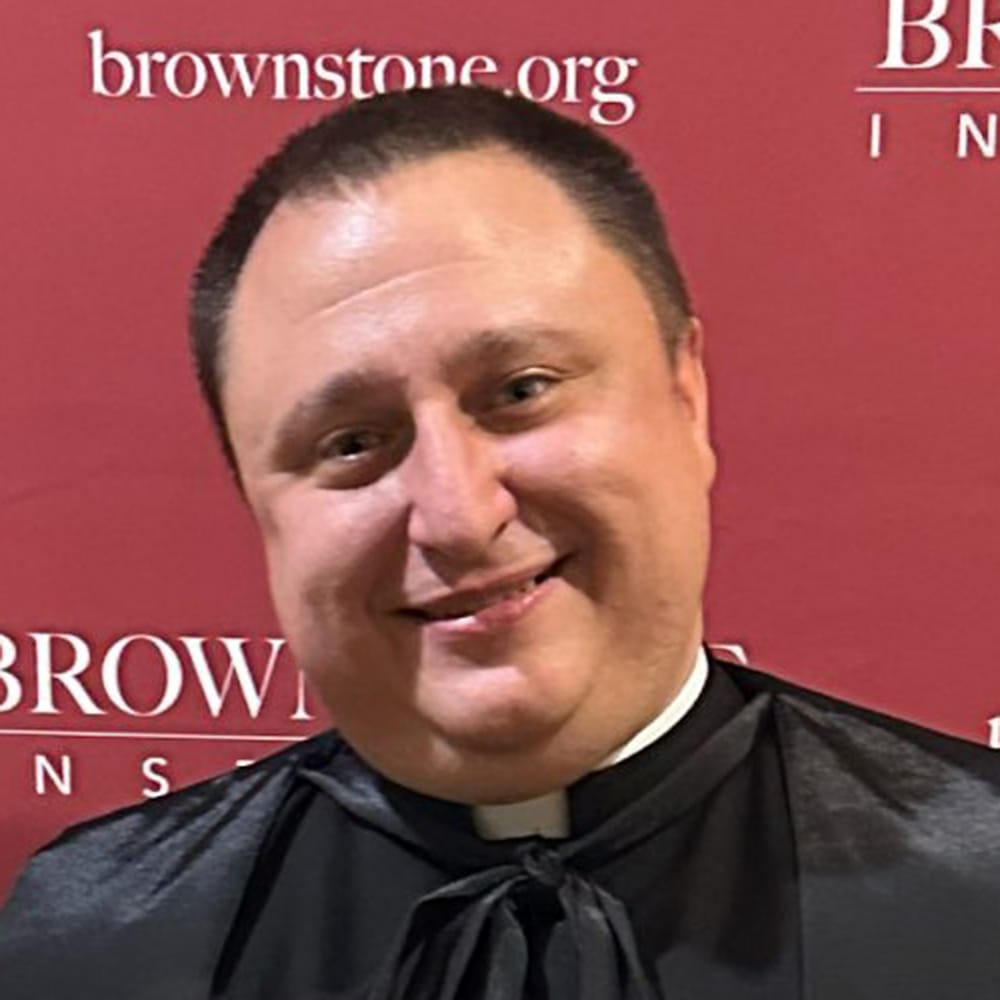
A few days ago, I spent time with a remarkable group of people from many professions and backgrounds, the Brownstone Fellows and Scholars. Some were physicians, others were scientists, economists, historians, attorneys, writers, and scholars. They often disagreed, sometimes strongly. But as I listened, I noticed something rare these days: people felt comfortable asking questions without needing immediate answers.
That moment stayed with me after the gathering. On my flight home, I thought about why the atmosphere felt so refreshing. It was not because everyone was brilliant, though many were, or because they all agreed. In fact, it was the opposite. What stood out was their willingness to explore uncertainty without feeling threatened. No one rushed to settle debates, simplify complex topics, or force every discussion to a final answer.
This experience reminded me of a lesson I have learned many times in medicine. The most important questions often do not have easy answers. As I get older, I am less impressed by certainty and more by curiosity. Certainty can feel safe, but curiosity is what helps us grow. It keeps us learning, questioning, and most of all, humble.
Today, people often confuse certainty with wisdom. Confidence is rewarded in public discussions, on television, and on social media. The person who sounds most sure is often seen as the expert. But in my experience, confidence and wisdom do not always go together. Some of the wisest people I know are quick to admit what they do not know.
Medicine’s Long Lesson in Humility
I have spent much of my adult life working in intensive care units. Critical care teaches lessons that no textbook can fully explain. At first, every physician thinks knowledge is the key to success. We study, memorize facts, and learn protocols. Knowledge is important, but medicine eventually teaches us something else: knowledge alone is not enough.
The ICU is a tough teacher. It shows us that people are more complex than any model or algorithm. Some patients arrive very sick and recover when we least expect it. Others seem stable but get worse. Every experienced ICU doctor has stories that stay with them for years, cases that seemed simple but were not, diagnoses that changed with new information, treatments that failed, and recoveries that seemed impossible.
When I started my career, I thought experience would eventually remove uncertainty. I believed that with enough years, I could predict outcomes more accurately. In some ways, this is true. Experience does improve judgment and helps us spot warning signs. But it also brings something else: humility.
The more years I spent in medicine, the more I saw how much we still do not know. Experience did not erase uncertainty; it showed me how often it remains. Good doctors learn to make decisions even when they do not have all the facts. They act with confidence but admit they might not see the whole picture. This balance is one of the most important and least recognized parts of medicine.
I often tell medical students that medicine is not about certainty, but about probability. We look at evidence, weigh risks, and make the best choices we can with what we know. Patients sometimes think doctors are more certain than we really are. In truth, much of medicine is about working in the gray areas. The real challenge is not getting rid of uncertainty but learning to work with it.
Over time, I have grown wary of people who seem completely certain about complex topics. This does not mean they are always wrong, but life has taught me to be careful when someone acts as if a complicated issue is fully settled. Reality is rarely that simple, and people are not either.
The Privilege of Being Wrong
One of the most valuable lessons medicine teaches is something that sounds counterintuitive. I am specifically talking about learning that being wrong can be a privilege, even if it sounds surprising. Otherwise, a clinician is either fooling himself/herself or attempting to fool everyone else. We have all made diagnoses that later proved incorrect. We have all developed treatment plans that required revision. We have all encountered situations where reality contradicted our expectations.
The goal in medicine is not to avoid mistakes, because that is impossible. The real goal is to notice our mistakes quickly enough to help the patient. Medicine is about constantly updating what we know as new information comes in. We start with ideas, collect data, adjust our thinking, and revise our conclusions, over and over again.
Outside of medicine, however, being wrong is often treated as a personal failure. People hold on to their opinions even when evidence suggests they should reconsider. Public figures are criticized for changing their minds, and institutions may avoid admitting mistakes. Sometimes, organizations care more about looking credible than about finding the truth. Advancement requires it. Medical advancement requires it. Personal growth requires it. Every meaningful discovery begins with the possibility that our previous understanding was incomplete. The individuals who continue learning throughout their lives are often not those most committed to being right. They are those most willing to discover where they might be wrong.
The Modern Obsession with Certainty
Looking beyond medicine, it is clear that modern society is very attached to certainty. We seem less comfortable with uncertainty. People expect every issue to have a clear answer and every question to have a quick conclusion. Complex situations are often reduced to two sides.
This is understandable. Certainty feels good and reduces anxiety. It helps us organize a complicated world into manageable categories. But comfort and truth do not always go together. And my meeting this past weekend proved this to be the case.
Many of society’s biggest issues involve competing values, incomplete information, and tough tradeoffs. Public health, economics, education, ethics, technology, and government are all complex and do not have simple answers. Still, public discussions often act as if certainty is easy to find.
Social media has amplified this tendency. Indeed, social media makes this problem worse. Nuance is hard to find in places that reward speed and emotion. People who sound completely confident get more attention than those who admit uncertainty. Over time, this encourages conviction instead of careful thought policy. They influence how people think. They influence how institutions behave. They influence how conversations occur. Questions increasingly become viewed as challenges rather than opportunities. Disagreement becomes evidence of disloyalty rather than evidence of intellectual engagement. Maybe the biggest loss in this environment is curiosity.
Curiosity as a Virtue
Sometimes I think children understand science better than adults do. Anyone who has spent time around young children knows this. They ask endless questions: Why is the sky blue? Why do people get sick? Why do stars shine? Why do things fall? Their curiosity has no limits. They do not care about looking smart or asking the wrong question. They just want to understand.
As adults, in general, we start to care more about defending what we know than exploring what we do not. We learn which questions are safe to ask and which are not. We find out that curiosity can make people uncomfortable. Over time, many of us hold back, not because questions are forbidden, but because asking them can have consequences.
This is unfortunate, because curiosity has driven almost every important advance in human history. Scientific discoveries, medical breakthroughs, and philosophical insights all come from curiosity. It is not just an intellectual virtue—it is a deeply human one.
People who keep asking questions throughout life stay intellectually alive. They keep learning, adapting, and growing. Most importantly, they stay open to the idea that there is always more to learn. Brownstone scholars clearly keep asking questions.
Why Uncertainty Matters
The older I get, the more I see that uncertainty has an important role. It reminds us of our limits, keeps us humble, and encourages us to keep learning.
This does not mean we should avoid decisions. Doctors cannot delay treatment forever, and leaders cannot put off choices. Life requires action. But we can act with humility. We can make decisions while admitting uncertainty, hold beliefs while staying open to new information, and be confident without being stubborn.
The best intellectual environments are not the ones where everyone agrees. They are places where people can disagree without hostility, where questions are welcome, evidence is examined honestly, and curiosity is encouraged. These places are rare now, which makes them even more valuable.
Maybe that is why those recent conversations with this unique group of individuals stayed with me. What impressed me was not that people had all the answers—no one does—but that they kept asking questions. In a world focused on certainty, they stayed curious.
The Questions That Remain
Looking back on my career, my time as both doctor and, in some instances, even as a patient, and all the people I have met, I keep coming back to one idea. The future of science, medicine, education, and maybe even society depends more on our curiosity than our confidence. Expertise, experience, and knowledge all matter, but nothing can replace the willingness to ask hard questions.
Every important discovery starts with uncertainty. Every scientific breakthrough begins with doubt. Every time we learn, it is because we realize there is more to know. In a world that values quick answers and strong opinions, having the courage to stay uncertain may be one of our greatest virtues. Uncertainty is not always comfortable, but it is often where truth begins. Maybe the best gift we can give future generations is not a set of answers, but the freedom and courage to keep asking questions.
Join the Conversation
Published under a Creative Commons Attribution 4.0 International License
For reprints, please set the canonical link back to the original Brownstone Institute Article and Author.