
In the history of medicine, there have been two primary means of determining whether a substance has a medicinal application: theory and observation. The use of drugs in medicine has generally followed a pattern of trial and error, where a substance comes into use until it is determined to be harmful, at which point it is quietly removed from circulation, generally because something new has been discovered or invented to take its place.
In this era of controlled drug trials and regulatory bodies, there is a pretense of attempting to determine whether a drug works and is safe before it is given to patients. However, the definitions of “control,” “efficacy,” and “safety” are loose and malleable in practice, as evidenced by the difficulty of reproducibility, which requires that an experiment be repeated as described in a study and yield the same or statistically similar results. Often, it does not.
Why, then, do so many people continue to trust the curated results of such research? This stems from the perception, in the popular mind, that institutionalized contemporary medicine has a strong track record of empirical successes that justify continued faith in its structure and outcomes. This belief forms the emotional receptors for pro-materialist medical narratives, which condition the intellect to assume that whatever is printed or said in favor of that approach to disease is accurate and correct.
There are three main pillars upon which the defense of contemporary mechanistic medicine rests in the popular mind: vaccines, antibiotics, and anesthesia. These three combined, we are told, have so greatly extended the average lifespan that any deleterious effects of the medical system are outweighed by orders of magnitude. Medical error is acknowledged as real, and iatrogenic (physician-caused) injury and death as well, but these costs, while tragic, are considered minor negatives along the meteoric curve of positives.
Vaccines have been the subject of debate since their invention in the 19th century; a lengthy catalog of harm is well-documented and the disagreements revolve around both the extent of these injuries, and the ratio of costs to benefits. Antibiotics, too, have come under scrutiny because the profligate prescribing of them has resulted in treatment-resistant infections of increasing severity and fatality, particularly in environments such as hospitals and nursing homes. The indiscriminate use of antibiotics has been challenged both inside and outside the medical field.
Anesthesia for surgery remains the one unassailable, and undebated, triumph of modern medicine. When asked what it is that the current mainstream medical system is useful for and does well, people across the entire spectrum of medical modalities will acknowledge surgical intervention, much of which is only tolerable due to anesthesia. It has made possible the judicious application of surgery without killing people from shock.
This is unequivocally positive.
But it has also made surgery more palatable, increasing the readiness of physicians to recommend it and the willingness of patients to endure it; the injudicious use of surgery is rarely discussed. This creates secondary dangers that are often ignored or minimized.
The earliest anesthetics were alcohol and other herbal intoxicants, and, upon their introduction to Western Europe, opium and morphine. In the 19th century, ether and chloroform came into use, as well as cocaine and nitrous oxide gas. These substances reduce sensitivity to pain, but none of them reliably render a person unconscious for a fixed period of time. The word “anesthesia” itself has Greek roots meaning “without sensibility” or “without sensation;” the divorcing of the senses from the physiological experiences of the body removes essential feedback loops within both physical and psychic integration of impingements.
Addiction to morphine (“soldier’s joy”) became commonplace for infantrymen in 19th-century warfare because of its availability (and effectiveness) for managing the physical brutality of battlefield injuries, as well as its appeal for easing the persistent psychic traumas of those environments. It was not until the 20th century, however, that the direct precursors to today’s drugs were invented (Propofol, Etomidate, Ketamine, Sevoflurane, Desflurane, and Isoflurane are some of the most common medications for anesthesia now), with their powerful sedative effects and relative safety compared to their antecedents. It is hard to imagine that anyone underwent voluntary surgery 150 years ago, but in 2024, the American Society of Plastic Surgeons reported 1.6 million cosmetic procedures alone, such as breast implants and liposuction. Even these statistics are incomplete, but how many people would elect to have cosmetic procedures without anesthesia?
Neither surgery nor anesthesia are without risks, including risk of serious medical error (these risks appear to be statistically low, although good data is difficult to find). The procedure itself is not the only risk, however; perioperative issues are also of concern, including infection. Recent scandals and horror stories about illegal and unethical organ harvesting also highlight the incentives that exist within the hospital system to declare people legally dead in order to remove and sell their organs. Hospitals are paid tens of thousands of dollars for healthy organs for transplant, and there are no living patients to complain after organ removal. Then there is the extensive anecdotal record of people experiencing consciousness and pain during surgery while under anesthetics, as well as persistent, painful, sequelae following treatment. In my practice, I hear these stories regularly.
There is a specific, and narrow, application for surgery, which must then be followed by deeper, restorative treatment. In modern society, the perception that surgery is completely safe encourages people to remove organs and alter internal systems mechanically, without considering the larger issues that may be at play.
The anesthetics themselves, too, as drugs, have both primary and secondary effects; the after-effects of a drug can be undesirable opposites. In the case of anesthesia, furthermore, the suppression of the sensorium also removes the mechanisms by which the body’s own healing powers are stimulated to recover from the trauma of surgery.
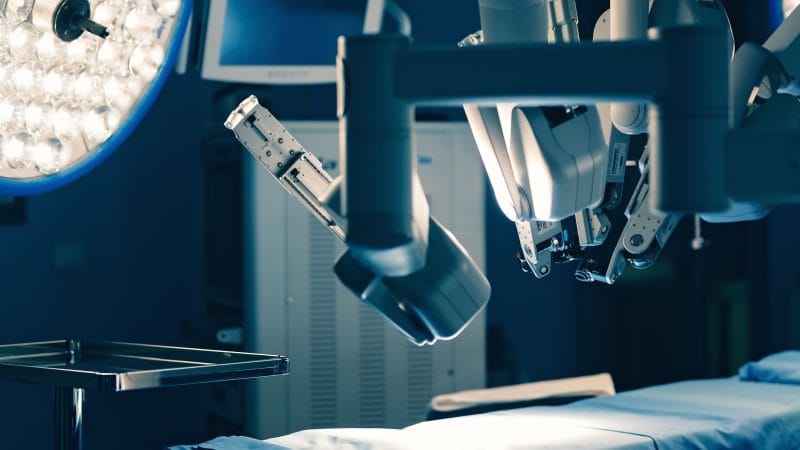
One of the oldest and best-known medical journals in the world, founded in 1823, is called The Lancet, referring to the physician’s knife, used primarily, originally, for the purposes of venesection to bleed patients. It is the tool of the surgeon for violating the flesh and laying bare the physiological contents of the human body. In a state of absolute vulnerability, unconscious and without a dedicated advocate present, tens of millions of people lie naked and helpless under bright lights and at the mercy of bright steel, wielded by virtual strangers.
Modern surgery is a marvel, and it would not be possible without modern anesthesia. But perhaps, as a society, we rush too readily to Chill – then Stupor – then the letting go –.
After great pain, a formal feeling comes –
The Nerves sit ceremonious, like Tombs –
The stiff Heart questions ‘was it He, that bore,’
And ‘Yesterday, or Centuries before’?
The Feet, mechanical, go round –
A Wooden way
Of Ground, or Air, or Ought –
Regardless grown,
A Quartz contentment, like a stone –
This is the Hour of Lead –
Remembered, if outlived,
As Freezing persons, recollect the Snow –
First – Chill – then Stupor – then the letting go –
-Emily Dickinson
References
https://www.nature.com/articles/533452a (paywalled)
American Society of Plastic Surgeons, 2024 ASPS Procedural Statistics Report (Arlington Heights, IL: American Society of Plastic Surgeons, 2025), https://www.plasticsurgery.org/news/statistics/2024.
Anesthesia Patient Safety Foundation, “Perioperative Patient Safety: An Ongoing Challenge,” APSF Newsletter 39, no. 3 (October 2024): 1–3, https://www.apsf.org/article/perioperative-patient-safety-an-ongoing-challenge/.
https://www.americanjournalofsurgery.com/article/S0002-9610(20)30261-0/abstract
https://www.hhs.gov/press-room/hrsa-to-reform-organ-transplant-system.html
Join the conversation:

Published under a Creative Commons Attribution 4.0 International License
For reprints, please set the canonical link back to the original Brownstone Institute Article and Author.