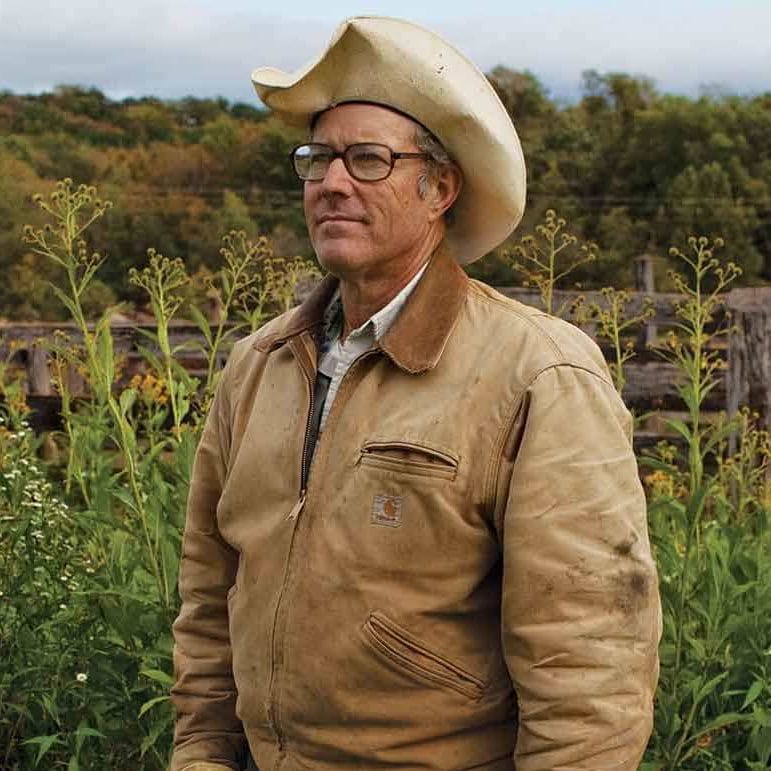
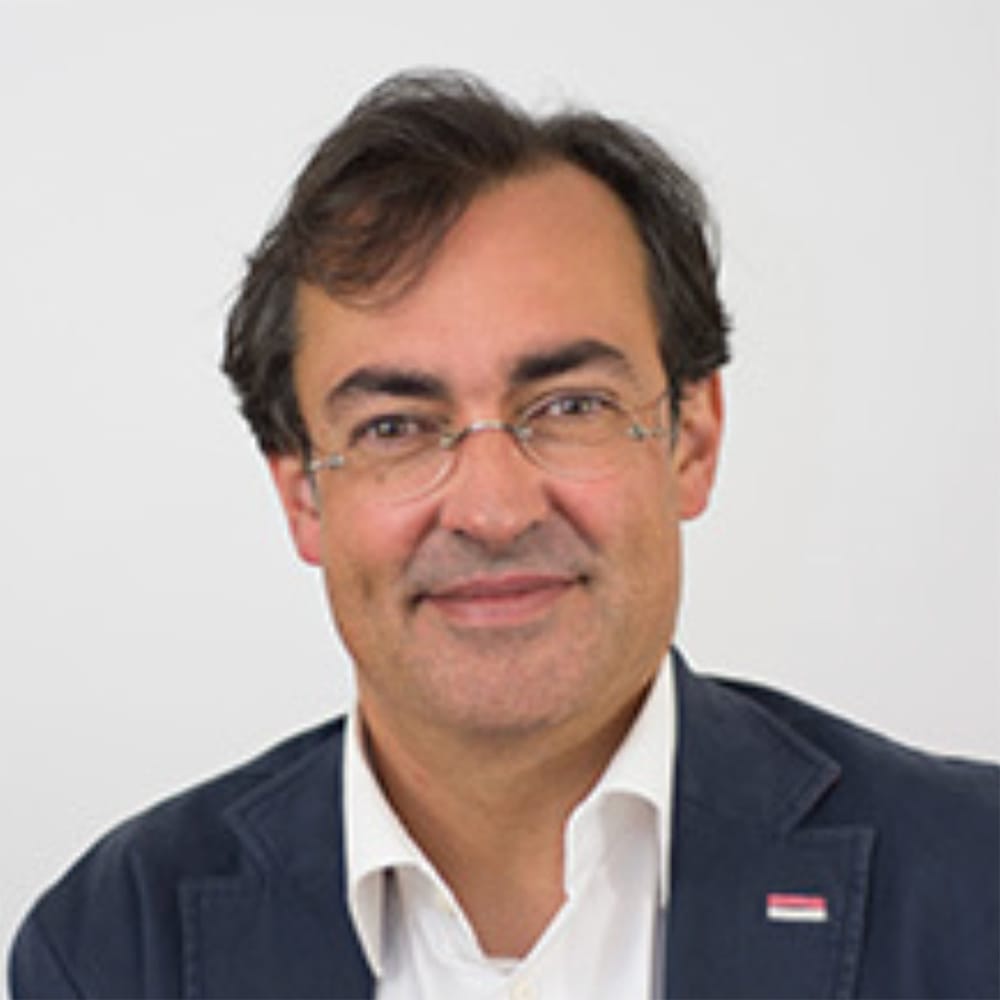
Wendell Berry died on August 31 at his farm in Port Royal, Kentucky. He was 92. For more than half a century he farmed with horses, wrote in pencil, adamantly refused to purchase a computer, and insisted that the health of a person cannot be separated from the health of a place. That faithfulness to a place is the part of his thought that the health freedom movement most needs now.
Health, Berry never tired of saying, comes from the same root as whole, heal, and holy. To be healthy is to be whole. Health as wholeness is not a decree from the medical apparatus. It is membership to a community: belonging to other people and to a particular piece of earth. “I believe that the community—in the fullest sense: a place and all its creatures—is the smallest unit of health,” he wrote, “and that to speak of the health of an isolated individual is a contradiction in terms.”
That sentence should hang over every discussion of medical liberty. The movement for health freedom has rightly fought for informed consent, against coercive public-health machinery, against the reduction of the body to a set of data to be mined by the Biosecurity State. Those fights are essential, but they are not sufficient.
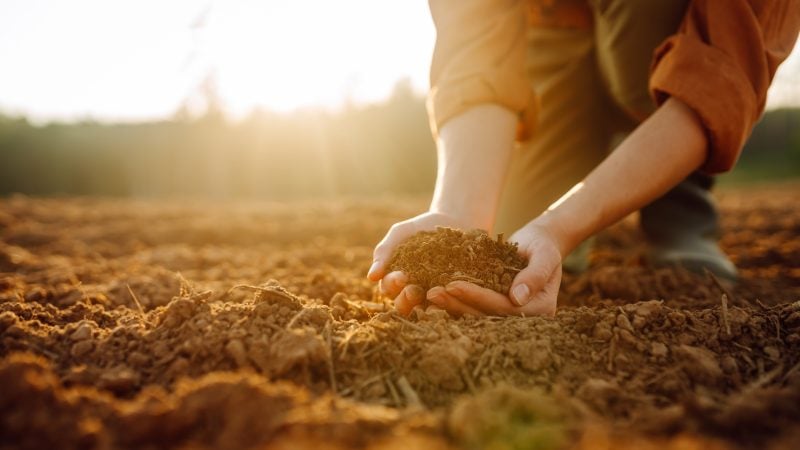
A person who has successfully kept the State out of his bloodstream can still be unwell if the soil from which comes the food that feeds him is dead, if the water he drinks is polluted, if his neighborhood is atomized, and if the food system that feeds him is a chain of distant, chemicalized abstractions. Autonomy without membership to the kind of community Berry wrote about all his life is not worthy of a fight.
Berry made the connection explicit in an essay entitled “The Body and the Earth,” collected in The Unsettling of America and later in The Art of the Commonplace. Our bodies, he wrote, “are moving particles of the earth, joined inextricably both to the soil and to the bodies of other living creatures.” It is therefore unsurprising that we treat our bodies as we treat the land.
When we treat land as an extractive resource, as something to be mined, specialized, chemically altered, and abandoned, we treat the body the same way: as a machine whose parts can be isolated, optimized, and replaced by specialists who have no interest in nutrition, agriculture, or the wholesomeness of mind and spirit. “It is therefore absurd,” he wrote, “to approach the subject of health piecemeal with a departmentalized band of specialists.” A doctor uninterested in the health of soil is as absurd, continued Berry, as a farmer uninterested in the health of people.
In this view, healing is not a procedure performed on an isolated organism. “Healing is impossible in loneliness; it is the opposite of loneliness. Conviviality is healing. To be healed we must come with all the other creatures to the feast of Creation.” The feast is local. It requires a place that is intimately known, cared for with affection, and kept whole enough to keep giving. Love of place is not a shmaltzy slogan. It is the condition of knowledge and of care. You cannot properly care for what you do not love, and you cannot love what you refuse to know in its particularity.
This is the lesson the health freedom movement must take from Berry without abandoning its core commitments. Medical freedom is a necessary defense against the Machine, but it is of little use if we don’t know where our food comes from, who grows it and how, what a neighborhood looks like when the soil is alive, or what care looks like when it is not outsourced to distant systems that treat both land and body as inputs.
Berry’s answer was never a set of slick policies. It was faithfulness to a place and to the kind of labor that the love of a place requires. Berry left his native Kentucky to study at Stanford and teach in New York City, but he returned to Henry County, farmed it, wrote about it, and refused the careerist mobility that treats every locality as interchangeable.
The parallel institutions many in the health freedom world already practice, such as home gardens, CSAs, raw milk producers, human-scale farming, and neighborhood mutual aid, are closer to his vision than any federal appointment. They become more than lifestyle choices when they are understood as acts of membership to a community that include more than simply the humans who populate a place. They are means of keeping a particular piece of earth and a particular circle of people whole.
I was lucky enough to interview Wendell Berry for a wonderful French magazine, since disappeared, called Limite. One of the questions I put to him was what advice he would give to a young man or woman tempted to live according to agrarian precepts but unsure where to start. His answer leaned on Gary Snyder and Berry considered it “the truest, most sensible advice” one can give to young people today.
“First, [Snyder] said, you have to stop somewhere.” I may be paraphrasing him slightly, but that is roughly what he told me. What I took him to mean is that before you can begin solving the problems of human inhabitation of the world, you have to establish a connection — one you intend to be permanent and practical — to a place and to neighbors. I would add only that I do not think you can solve the great problems of the world except by working to solve their local manifestations first.
To thank Berry for the interview, I had sent him a copy of one of my bedside books, a collection of essays by Georges Bernanos published in English translation as The Last Essays of Georges Bernanos. Berry did indeed love it, and it features prominently in his own last essay, “The Need to Be Whole,” as a reference point for the distinction between the Nation and the country. Love of the Nation leads to nationalism, while love of the concrete country is the province of patriotism.
Writing out of the wreckage of the Second World War, Bernanos watched the advent of what he called Machine civilization, itself the product of the nationalist “modern state.” France, he insisted, was “still a patrie, a homeland,” which was “quite a different thing from the economic and political organization which tends to be confused more and more with the modern state.”
Mirroring what Bernanos observed in postwar France, when the kind of Americans who enjoy Machine civilization invoke “the country,” wrote Berry, they mean it as a metaphor: they mean the government, the economy, the military, the transportation system, the more photogenic national parks and wilderness areas. They do not mean the actual country from which they get their food, clothing, shelter, fuel, and ore. Their own actual country has become, to them, a foreign and an alien land.
The biosecurity State, which is too content to hover over an unhealthy and servile population, precisely thrives on abstraction and fear of the country and of the bodies that populate it. Berry’s counter is concrete and affectionate. Love a place…even when everything conspires to make it unlovable. Work it. Eat from it. Keep its soil and its people in conversation. It is the ground on which any durable politics of health must be based to stand a chance of success.
Without it, freedom remains a placeless luxury, a negative liberty: the right to be left alone while the land, the food, and the community quietly fall apart. With it, health freedom becomes what the word health originally meant: an attempt to be whole.
Join the Conversation
Published under a Creative Commons Attribution 4.0 International License
For reprints, please set the canonical link back to the original Brownstone Institute Article and Author.