The ICU Before Sunrise
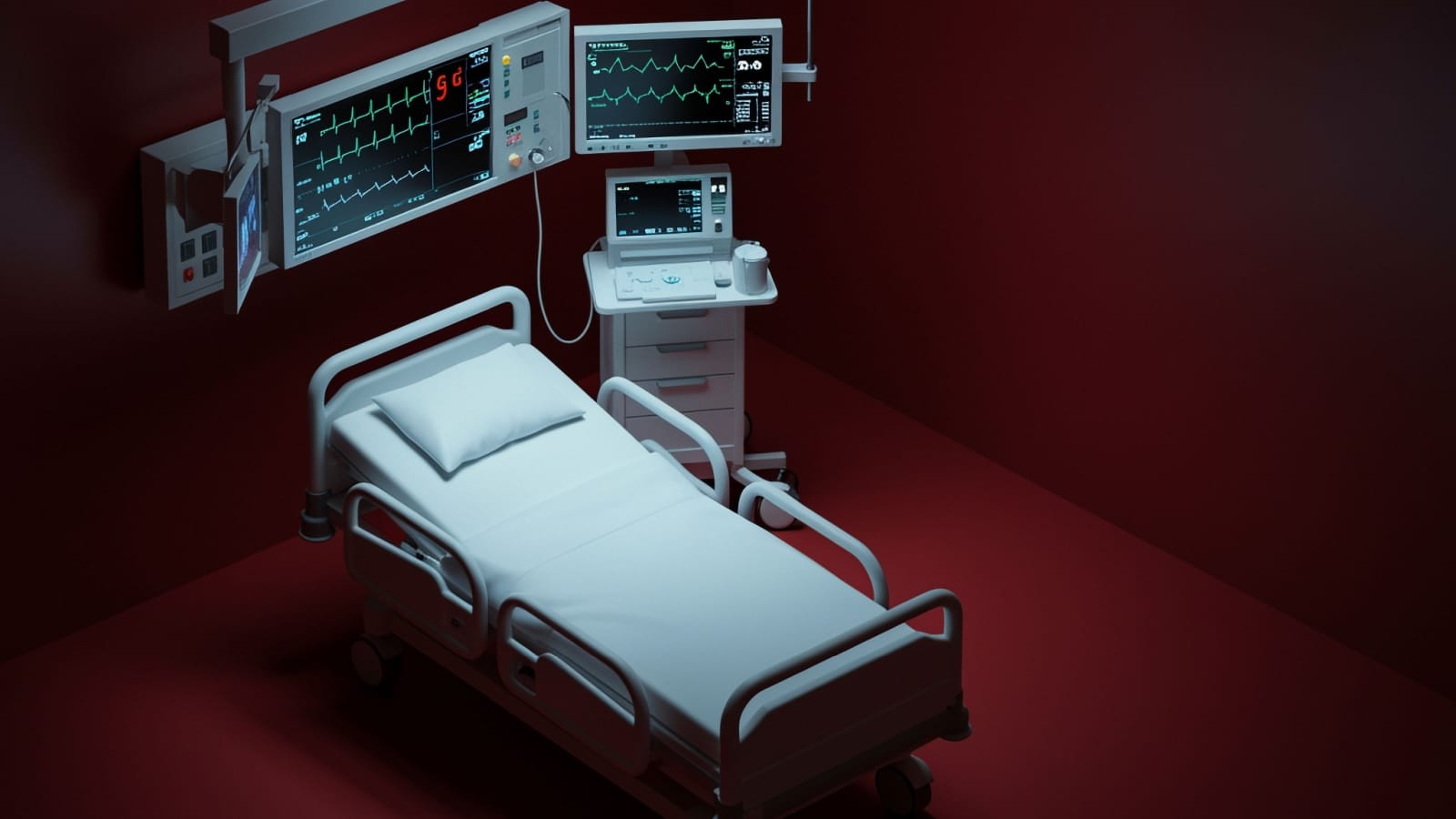
The intensive care unit (ICU) was crowded before sunrise, again. After 40 years in medicine, I am not sure what “full” even means anymore. Every ICU now feels just one patient away from disaster. Patients wait in emergency departments for beds that do not exist. Another transfer is already on the way because someone thinks our ICU still has space. Nurses are exhausted. Residents are exhausted. Families are scared. Doctors try to think clearly while phones ring, alarms sound, charts pile up, and somewhere, someone checks dashboards and occupancy numbers while real people struggle to breathe just a few feet away.
I remember one morning clearly because it still bothers me years later. An administrator came into the ICU and asked about the “game plan” for one of my patients since his insurance would run out at the end of the week. I remember feeling angry, not because I cared about getting paid, but because I realized how much institutional pressure had taken over medical decisions. The focus was no longer on whether the patient needed ICU care or if the family understood what was happening. Instead, the conversation was about the “insurance clock.” I stood there wondering when this became normal. When did hospitals stop feeling like hospitals and start feeling like big systems moving people through pathways, numbers, and coverage limits?
Nobody in the room seemed shocked because everybody already understood the environment we were functioning inside. That may actually be the part that bothers me the most and made me write this article. We adapted to it. We normalized it. Human beings can normalize almost anything if they live inside it long enough. Physicians are especially vulnerable to this because medicine trains doctors to absorb enormous pressure quietly. We keep going because patients still need us. We keep functioning because sick people keep arriving. We convince ourselves this is simply modern healthcare. But there are nights, usually very late at night after rounds are over and the ICU becomes quiet for a few minutes, where I sit there wondering when medicine started losing part of itself.
I remember another conversation from years ago that also made me feel sick. Someone explained, almost casually, that if we transferred a patient to a long-term acute care facility (LTAC) and they stayed the required 21 days, they could come back to the hospital, because “the insurance clock resets.” Hearing that phrase for the first time sounded less like medicine and more like someone describing a loophole in a business contract. Meanwhile, a real person was lying in that bed, connected to ventilators and feeding tubes. A family was somewhere, terrified about whether their loved one would survive. But the discussion was about clocks, timelines, insurance days, and logistics.
I still think about those conversations. Not because they shocked me completely. After enough years in modern healthcare, very little surprises doctors anymore. Maybe that is part of the problem. We get used to things that should still bother us.
When Hospitals Became Factories
I have now spent four decades practicing medicine. Four decades inside ICUs, emergency departments, trauma bays, hospital corridors, family meetings, codes, and nights where sleep never happened because too many people were too sick. I entered medicine because I genuinely cared about patients. Most physicians did. That is the part many people outside medicine still do not fully understand. Doctors do not sacrifice years of their lives, miss holidays, destroy their sleep schedules, and carry this kind of emotional burden because they dream about maximizing throughput metrics or documentation compliance. We entered medicine because we wanted to help people. It sounds simple saying that now, maybe even naïve, but it is true.
Somewhere along the line medicine changed. Hospitals changed. The language changed first because that is always how these transformations begin. Patients slowly became “throughput issues.” Beds became “capacity management.” Discharges became “flow optimization.” The ICU became “utilization.” Doctors became “providers.” Everything slowly started sounding less human and more operational. And eventually, hospitals stopped feeling like places centered around caring for human beings and started feeling like giant processing centers where movement itself became the priority.
Basically “Get them in,” “Get them out,” “Open the bed,” “Reduce the stay to maximize profit,” “Move the patient to an LTAC,” “Clear the ICU,” and so on.
Every hospital now has dashboards, graphs, throughput committees, operational targets, discharge metrics, and endless meetings about movement. Everything is about movement. Sometimes it feels like modern healthcare is one big revolving door. Patients come in one side, and everyone starts figuring out how quickly they can safely, or sometimes not so safely, move out the other side.
The strange thing is that many younger doctors probably think this is normal because it is the only medicine they have known. They inherited the system after it changed. Endless clicking. Mandatory modules. Documentation requirements. Throughput meetings. Insurance battles. Constant electronic interruptions. For them, this already feels like medicine. But it was not always like this. Hospitals once felt slower in some ways, not inefficient, just more human. Doctors had time to think, to sit with families, and to focus on the patient without constant operational pressure.
Now everything feels rushed. Even death feels rushed sometimes. I hate to write that, but it is true. Families barely have time to process terrible news before talks begin about placement options, transfer plans, insurance limits, or discharge plans. Sometimes, the machinery around medicine completely overwhelms its humanity. And honestly, I think physicians feel this loss more deeply than many people realize.
The Patient Somewhere in the Middle
Doctors complain about administrators because they frustrate everyone. Doctors complain about electronic medical records because they take up so much time. But beneath all these complaints, something deeper is happening in medicine. Many doctors quietly feel that the profession they gave their lives to is slowly disappearing, even as everyone calls it progress. Maybe I sound old saying that. Maybe I sound frustrated. The truth is that I am frustrated. Very frustrated. Because we did not enter medicine to become highly educated employees inside giant healthcare corporations. We entered medicine to care for human beings during the worst moments of their lives. That was supposed to remain the center of everything: the patient, the suffering human being in the bed. Not the dashboard. Not the metric. Not the throughput target. Not the insurance clock.
Somewhere along the way that became too easy to forget. The part that bothers me most is not that hospitals need money to survive. Of course they do. Ventilators are expensive. ICU nurses are expensive. Keeping hospitals open costs enormous amounts of money. I understand all of that. What bothers me is watching the patient slowly become secondary inside conversations where everybody claims to be acting in the patient’s best interest. All of this happens while the administrator thinks about occupancy, the insurance company thinks about authorization, the hospital thinks about length of stay, the case manager thinks about placement, and the physician tries to think about the patient while absorbing pressure from every direction simultaneously.
That is not how medicine was supposed to feel. I have had families look at me and ask what I would do if the patient were my own father or mother. That question cuts through all the institutional language immediately. They are not asking about metrics or throughput or utilization review. They are asking for honesty. Judgment. Humanity. They are asking for a doctor. And at that moment all the dashboards in the world suddenly feel ridiculous.
Doctors Became Servants to the Machine
The electronic medical record sped up much of this change more than people realize. Hospitals promoted the electronic medical record (EMR) as a big step forward. We were told it would improve communication, reduce mistakes, streamline work, and let doctors spend more time with patients. Now, that almost sounds like a joke. The EMR did not free doctors. It buried them.
Doctors now spend huge parts of their lives working with electronic systems, mostly designed by people who have probably never spent a night in an ICU. We click boxes, answer alerts, fill out required forms, meet compliance rules, and write notes that are more for billing, auditors, administrators, insurance companies, and lawyers than for patient care. You stop writing notes for physicians. You start writing notes for the machine. This changes people (clinicians) psychologically even if they do not recognize it immediately.
There are moments now during rounds that honestly feel absurd. A family member is crying while the physician tries to maintain eye contact and complete mandatory documentation before another alert appears on the screen. The patient is talking. The nurse is asking questions. Laboratory values are changing. The phone rings. Another admission waits downstairs. Somewhere, someone is reviewing occupancy numbers while physicians are trying to keep critically ill people alive.
And through all of this chaos, doctors are somehow still expected to think clearly, compassionately, and deeply about human suffering.
Late at night after ICU shifts, I sometimes realize I spent more time with software than with real people. Think about how strange that really is. Somewhere along the line doctors stopped using computers and became servants to them. Everybody inside medicine knows it. Almost nobody says it publicly.
Burnout Is the Wrong Word
I have become more irritated with the word burnout because I think it does not capture what many doctors are really going through. Burnout sounds temporary, like something in your mind. It makes it seem like doctors just need more yoga, resilience workshops, mindfulness apps, or wellness seminars. Hospitals like to talk about physician wellness because it lets them treat the problem as psychological instead of structural. But many physicians are not burned out. They are morally exhausted.
There is a big difference between being tired and slowly realizing that the profession you gave your life to no longer looks like the one you started in. That feeling builds up quietly over thousands of moments. A patient is discharged earlier than feels right because beds are needed. A doctor spends more time on paperwork than thinking. A hard family conversation is cut short because charts are unfinished. An ICU transfer is rushed because someone is watching occupancy numbers. A treatment discussion is quietly shaped by pressure no one talks about.
None of these moments alone defines modern medicine. That is what makes the situation psychologically dangerous. Rarely does somebody walk into a room demanding something obviously unethical. The pressure is subtle. Administrative. Financial. Constant. Eventually physicians begin anticipating institutional pressure before anybody even speaks it aloud. That is how systems shape human behavior most effectively. Not through force. Through environment.
Covid-19 and the Breaking Point
Covid-19 exposed many realities physicians will never fully forget. The pandemic did not create institutional control inside medicine because the machinery already existed long before Covid-19 arrived. But Covid-19 revealed how powerful that machinery had become and how quickly independent clinical judgment could become secondary to institutional management once systems entered crisis mode.
At the beginning uncertainty existed everywhere. Physicians were trying to understand a disease process in real time while caring for critically ill patients under extraordinary emotional strain. In theory this should have been a moment for open scientific debate, flexibility, disagreement, and aggressive clinical observation.
Instead, many physicians experienced the opposite. Protocols hardened rapidly. Institutional rigidity intensified. Independent thinking suddenly became dangerous in ways many doctors had never previously experienced.
I remember exhausted physicians privately admitting frustrations during late-night ICU conversations they would never publicly express. Doctors quietly questioned policies in hallways while repeating institutional messaging during official meetings. Physicians felt trapped between what they observed clinically and what institutions expected them to communicate publicly.
Many doctors realized during Covid-19 that they were far less independent than they once believed. That realization changed some physicians permanently.
And honestly, I do not think medicine has emotionally recovered from that period yet.
This Is Not Burnout. It Is Captivity.
This article is not nostalgia for some mythical golden age because medicine has always been difficult and healthcare systems absolutely require organization, technology, and structure. Standardization sometimes saves lives. Electronic access to information has obvious benefits. Nobody seriously wants to practice medicine without modern tools. But professions can gradually lose their soul without visibly collapsing. That is what worries me after 40 years in medicine.
When doctors spend more time serving systems than serving patients, medicine changes. When physicians are afraid to speak honestly, medicine changes. When throughput quietly shapes bedside decisions, medicine changes. When documentation matters more than human presence, medicine changes. And when physicians slowly begin feeling emotionally trapped inside giant institutional systems that they no longer control, we should probably stop calling that burnout because burnout does not adequately describe what many doctors now feel. It feels more like captivity.
Join the Conversation
Published under a Creative Commons Attribution 4.0 International License
For reprints, please set the canonical link back to the original Brownstone Institute Article and Author.