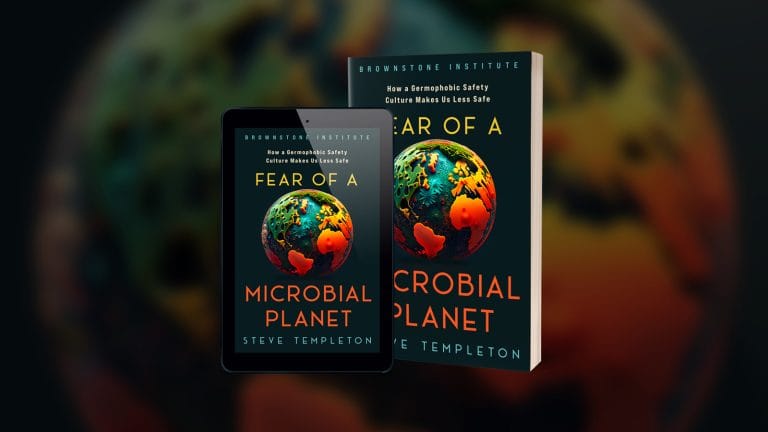
What Makes a Germophobe?
Germophobia isn’t generally considered a condition all by itself. Not all people with OCD are germophobes, but it’s much safer to say that most, if not all, germophobes are further along the OCD spectrum than most.

Germophobia isn’t generally considered a condition all by itself. Not all people with OCD are germophobes, but it’s much safer to say that most, if not all, germophobes are further along the OCD spectrum than most.
One of the things we have learned is just how much regulatory capture factored into the COVID response, how economics turned vaccine technology into an industrial profit machine. One crucial piece of evidence for this came from the Pfizer report.

For years, I have trained residents and students to perform brain death exams. I’ve overseen transplants. I’ve supported grieving families and celebrated recipients. But I’ve also seen the slow erosion of principle under pressure. It’s time to draw a line.
The Moral Cost of Modern Transplant Medicine Continue Reading

The Ninth Circuit has abdicated its power and authority to hold public servants accountable. When the courts cannot be relied upon to hold public servants accountable, who can? And where does that leave us?
The Ninth Circuit Rules—Court-Sanctioned Authoritarianism? Continue Reading
Autism is advertised as a natural divergence. Autism is attributed to a range of causes, from childhood vaccination to the impersonal routines of metropolitan societies. Yet we do not know what autism is.

Medicine must learn to operate in a VUCA (Volatility, Uncertainty, Complexity, and Ambiguity) world. The recognition of the importance of this is beginning, but it must be added to the clinical competencies at every step in the education of health professionals.
Embracing Ambiguity and Outliers in a VUCA World Continue Reading

Creating human substitutes with AI is technically clever and somehow deeply pathetic. More so when effort is made to convince us it is better than the real thing. Many will fall for it, and in the process, degrade humanity itself.

The history of corporate liability shields teaches us a clear lesson: when companies are freed from accountability, public safety inevitably suffers. We cannot allow the same corporate immunity that transformed the pharmaceutical industry to be replicated in agriculture.
Dr. Feeley’s voice may be silent now, but what he stood for must continue to be heard. He recognised the true human cost, in relationships strained or severed, in connections broken, and in communities turning on themselves.
The focus of this essay is the philosophical position that, in the case of public health, it is acceptable to mandate that members of society accept a medical treatment without granting personal informed consent, justified as necessary.
If “dead enough” becomes a metric, the countdown has already started—not just for the patient, but for our collective faith in medicine’s ability to serve something higher than its own efficiency.

While relief matters deeply for those who need it, we should be wary of the growing trend to over-medicalise women’s health—turning a normal biological transition into a lifelong pharmaceutical dependency.